429 Featured Specimen
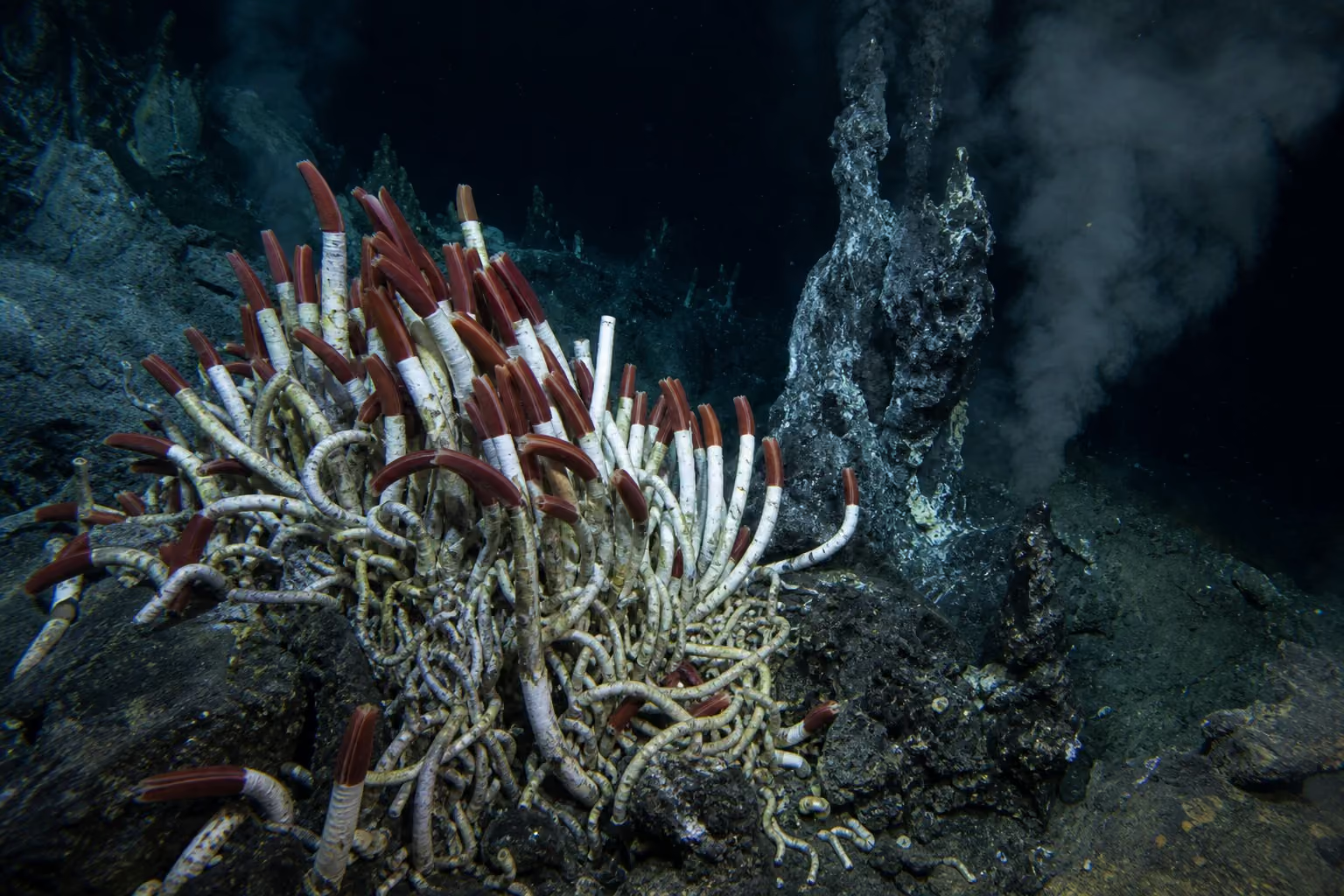
Giant tube worm

Details

Giant tube worm

Riftia pachyptila

Size
0.5–2.4 m · 0.1–1.5 kg
Diet
Other
Activity
Cathemeral
Sociality
Colony
Lifespan
several decades

The giant tube worm forms dense colonies at deep-sea hydrothermal vents. It has no mouth or gut and depends on internal bacteria for nutrition.
Range

Habitat range map
Native range Occasional / Transient
Pacific OceanPacific OceanPacific Ocean

Map: Ecoregions 2017 © RESOLVE (CC BY 4.0) · Natural Earth (PD)

Details

Habitat

It lives around Pacific deep-sea hydrothermal vents. Colonies grow where sulfide-rich vent fluid mixes with oxygenated seawater.

Appearance

Tube length 50-240 cm; weight 100 g-1.5 kg. A red plume extends from a hard white tube, and hemoglobin-rich blood carries both oxygen and sulfide. The body remains protected inside the tube.

Behavior

Cathemeral in the lightless deep sea, it lives in dense colonies. The plume gathers dissolved chemicals and withdraws quickly when disturbed.

Feeding

Its diet is unlike ordinary feeding: symbiotic bacteria use hydrogen sulfide to make organic compounds. The worm absorbs that nutrition instead of eating with a mouth.

Reproduction

Adults release eggs and sperm into the water. Larvae disperse to new vents and establish bacterial symbiosis after settlement.

Notes

It is listed as Least Concern, but vent habitats naturally appear and disappear with geological activity. Deep-sea mining could add local disturbance.