072 Featured Specimen
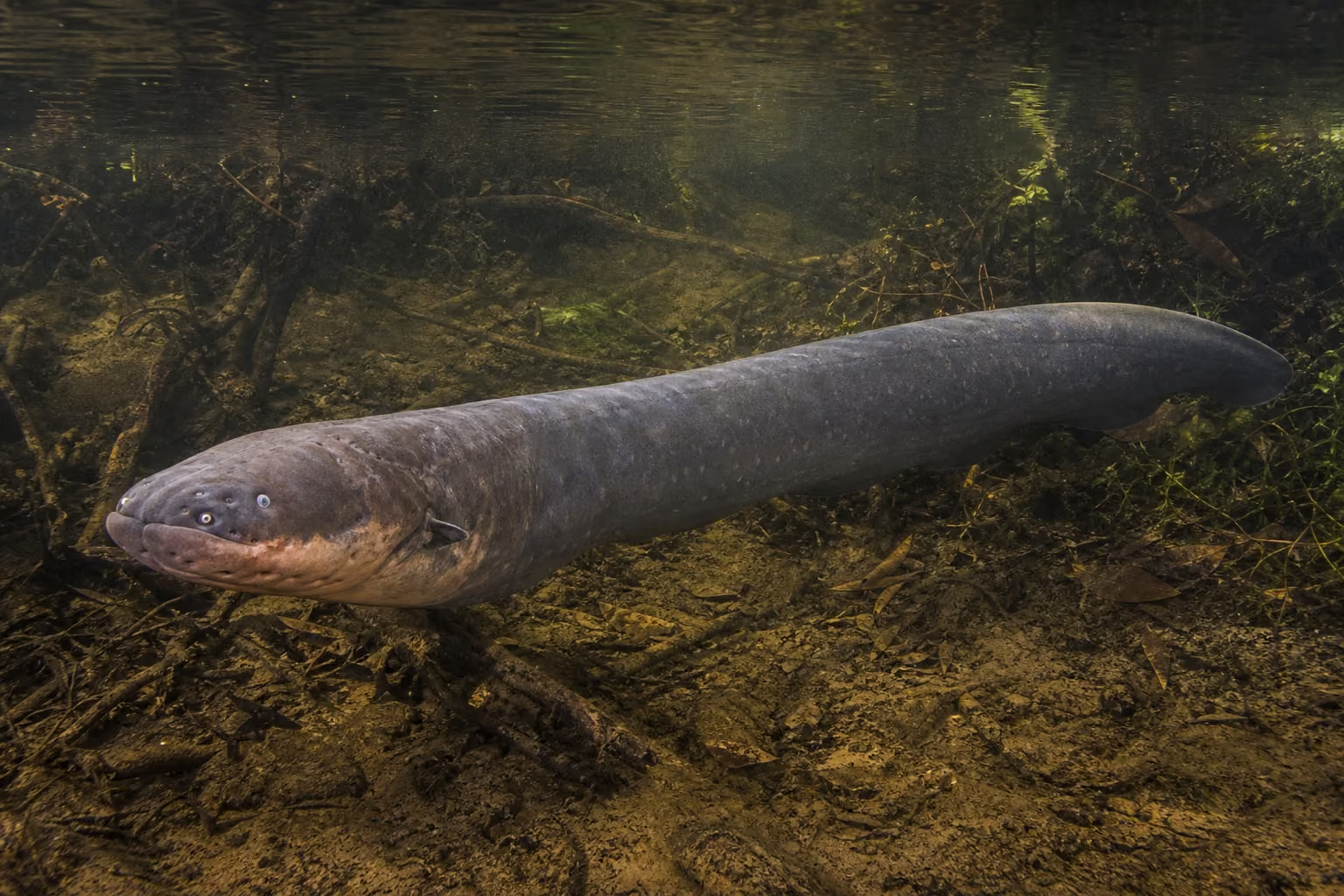
Electric eel

Details

Electric eel

Electrophorus electricus

Size
1.8–2.5 m · 15–20 kg
Diet
Carnivore
Activity
Nocturnal
Sociality
Solitary
Lifespan
Varies by species and environment

A large electrogenic freshwater fish of northern South America whose main electric organ can discharge at least 600 volts, the most powerful jolt of any electric fish. Despite its name it is not a true eel but a relative of catfishes.
Range

Habitat range map
Native range Occasional / Transient
NeotropicalNeotropicalNeotropicalNeotropicalNeotropicalNeotropicalNeotropicalNeotropical

Map: Ecoregions 2017 © RESOLVE (CC BY 4.0) · Natural Earth (PD)

Details

Habitat

It lives in the Amazon and Orinoco river basins, favoring muddy river bottoms, swamps and slow, deep shaded waters. It survives in oxygen-poor water by gulping air at the surface to breathe.

Appearance

The body is long and cylindrical, flattening toward the tail, reaching 180-250 cm and 15-20 kg. The thick, scaleless skin is brown to black with a yellow-to-red underside, and an elongated anal fin running most of the body length powers its undulating swimming.

Behavior

Nocturnal and solitary, it shelters in cover by day. Its eyes are small and vision poor, so it navigates by electrolocation using weak electrical pulses, and when threatened it may leap from the water to deliver a direct, powerful shock.

Feeding

Carnivorous, it preys on fish, frogs and crustaceans. It pinpoints prey with high-frequency electric pulses and stuns it with a strong discharge before swallowing; by curling its body to touch prey at two points, it concentrates the shock for greater effect.

Reproduction

Breeding occurs in the dry season from September to December. The male builds a nest from his saliva, into which the female lays around 1,200 eggs. The eggs hatch after about seven days, and the male guards both the young and the nest for roughly four months.

Notes

Its formidable electric power has long fascinated people and helped inspire early work on batteries and nerve physiology. It is said to be able to kill a horse, yet no human fatality is recorded, and captive individuals have lived more than 20 years.