079 Featured Specimen
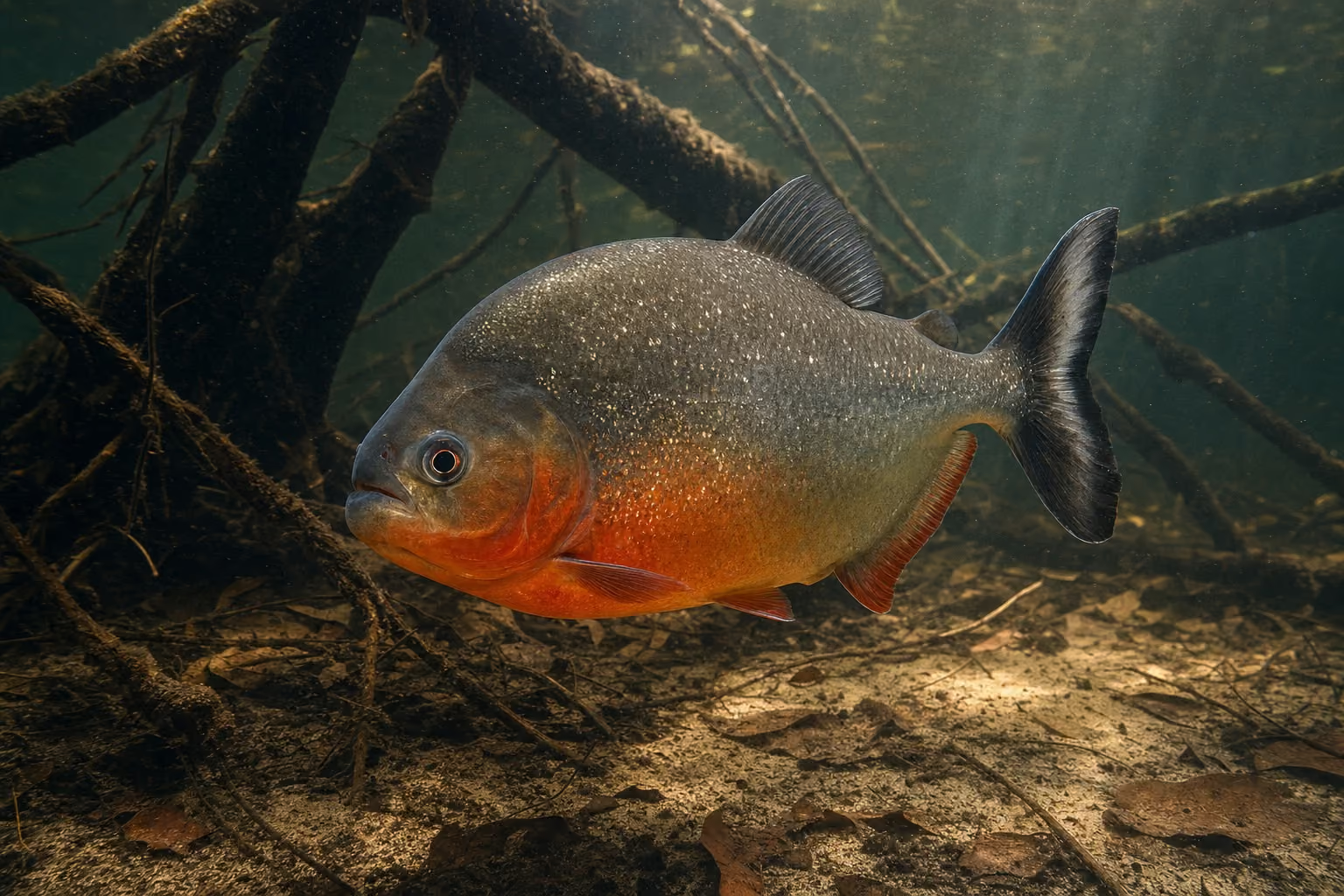
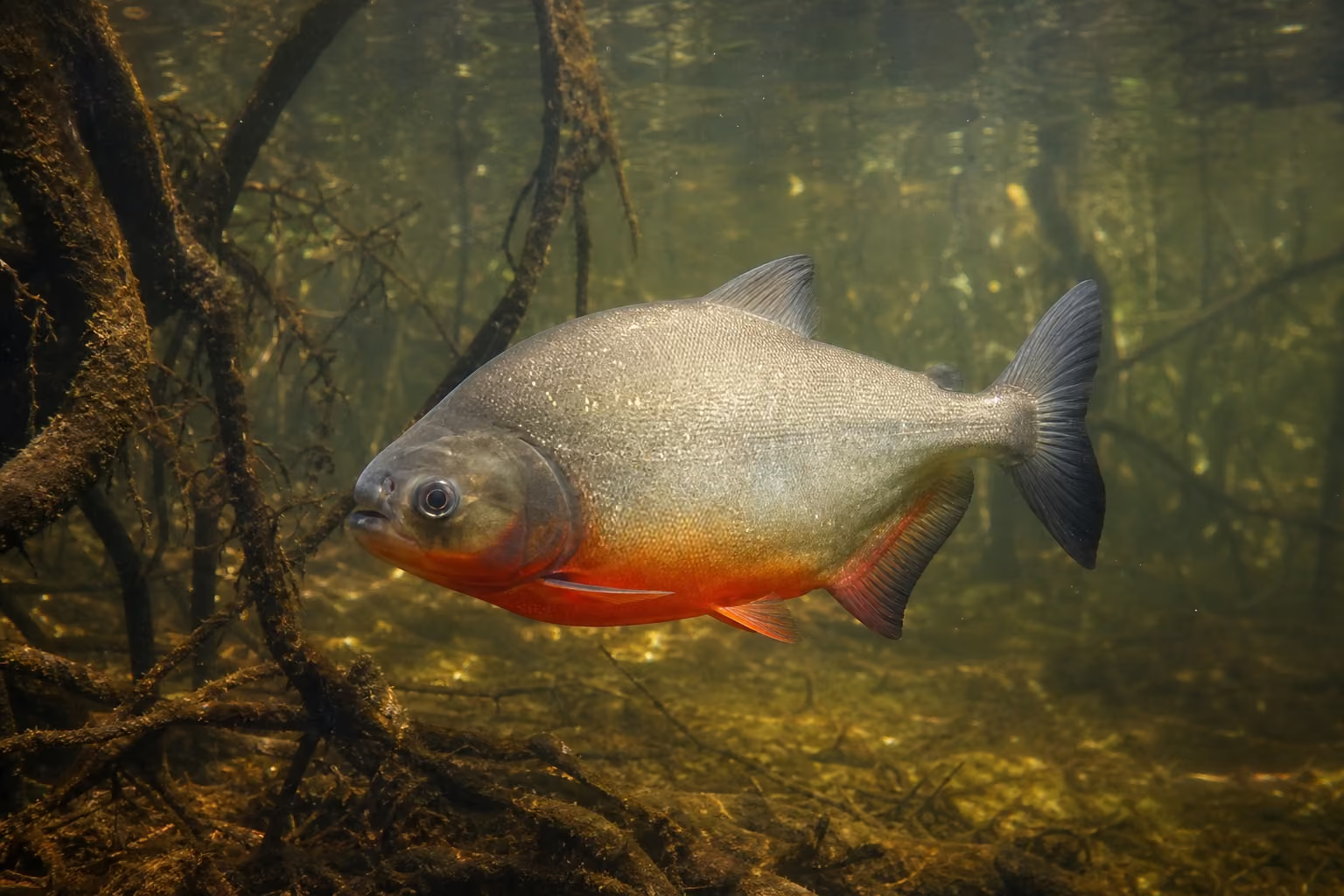
Red-bellied piranha

Details

Red-bellied piranha

Pygocentrus nattereri

Size
20–35 cm · 0.5–1.5 kg
Diet
Omnivore
Activity
Diurnal
Sociality
Loose group
Lifespan
Varies by species and environment

A red-bellied, largely carnivorous omnivore of South American rivers, famed for its triangular interlocking teeth and powerful bite. It usually moves in loose shoals, and despite its ferocious reputation most of its diet comes from scavenging weak or dead prey rather than coordinated pack attacks.
Range

Habitat range map
Native range Occasional / Transient
NeotropicalNeotropicalNeotropicalNeotropicalNeotropicalNeotropicalNeotropicalNeotropical

Map: Ecoregions 2017 © RESOLVE (CC BY 4.0) · Natural Earth (PD)

Details

Habitat

Widespread across the Amazon, Paraguay, Paraná and Essequibo basins and the coastal rivers of northeastern Brazil. It thrives in whitewater, blackwater and clearwater alike, using everything from main channels to lakes, floodplains and flooded forest, and generally favors water between about 15 and 35 degrees Celsius.

Appearance

The deep, strongly compressed oval body runs about 20 to 35 cm long and weighs roughly 500 to 1,500 g. Adults flush red on the belly over silver-flecked scales, with a dark blotch behind the gills. Sharp triangular teeth meet in a tight bite, set off by a jutting lower jaw; females tend to show the deeper red belly.

Behavior

It typically travels in loose shoals, a grouping thought to serve mainly as defense against predators such as river dolphins, caimans and water birds. The fish are vocal, producing distinct sounds during confrontations, fights and chases, using acoustic signals to communicate during aggressive encounters.

Feeding

An omnivore, it takes insects, crustaceans, mollusks, fruit, seeds, fish and carrion. In practice it functions largely as a forager and scavenger, feeding heavily on weak or dead animals; the notorious mass attacks on live prey occur only under extreme hunger.

Reproduction

Breeding peaks in the rainy season, when females lay around 5,000 eggs in a nest among newly submerged vegetation. The eggs hatch in two to three days, and parents guard the nest and young, circling defensively over the brood in unusually attentive care for a freshwater fish.

Notes

It is widespread and locally abundant, with little conservation concern. Popular in the aquarium trade, it is also monitored as an invasive species in parts of North America. Its image as a fish that swarms and devours humans is greatly exaggerated; real bites usually happen only when it is cornered.