078 Featured Specimen
Arapaima

Details

Arapaima

Arapaima gigas

Size
2–3 m · 100–200 kg
Diet
Carnivore
Activity
Cathemeral
Sociality
Solitary
Lifespan
Varies by species and environment

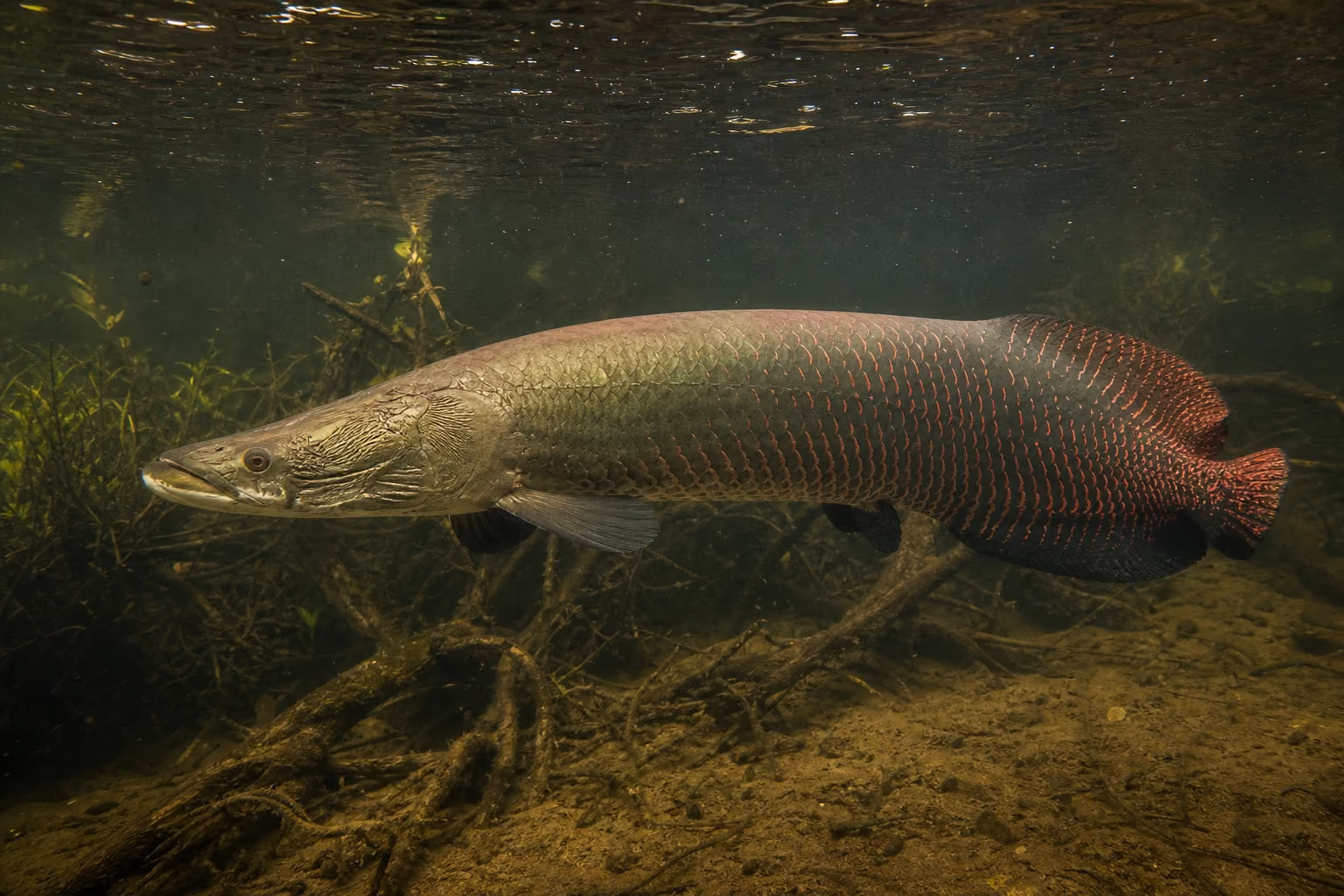
One of the largest freshwater fishes on Earth, the arapaima of the Amazon basin commonly reaches two to three metres in length. It is an obligate air-breather, gulping air at the surface through a lung-like swim bladder, which lets it survive in oxygen-poor tropical waters. It belongs to an ancient lineage of bony-tongued fishes often called living fossils.
Range

Habitat range map
Native range Occasional / Transient
NeotropicalNeotropicalNeotropicalNeotropicalNeotropicalNeotropicalNeotropicalNeotropical

Map: Ecoregions 2017 © RESOLVE (CC BY 4.0) · Natural Earth (PD)

Details

Habitat

It ranges through the Amazon and Tocantins-Araguaia river systems of Brazil, Peru and neighbouring countries, favouring sluggish backwaters and floodplain swamps. During the wet season it moves into flooded forest to breed, retreating to lakes and river channels as water levels fall.

Appearance

Adults typically measure two to three metres and the largest exceed four metres, weighing from 100 up to 200 kilograms. The long, cylindrical body is grey to grey-green, and mature fish flush red across the rear half. Its large, armour-like scales are hard enough to resist piranha bites and can reach about ten centimetres across.

Behavior

A large, largely solitary predator, it must surface every 5 to 15 minutes to breathe air through the lung-like tissue of its swim bladder. When alarmed it can thrash and leap powerfully, sometimes capsizing canoes.

Feeding

Carnivorous, it preys mainly on smaller fish and crustaceans such as shrimp. It also takes insects, and occasionally birds or small animals, from near the surface, pinning prey against the rasp-like bony plate inside its mouth.

Reproduction

During low-water periods a pair excavates a nest hollow in the substrate and spawns there, laying on the order of a few hundred eggs. After hatching the male leads the defence of the shoal of young for several months, and a gland on the parent's head secretes substances that nourish the fry.

Notes

Long a vital food fish for Amazonian peoples, it has traditionally been taken by harpoon. Its need to surface regularly makes it easy to overfish, and international trade is regulated under CITES Appendix II.