526 Featured Specimen
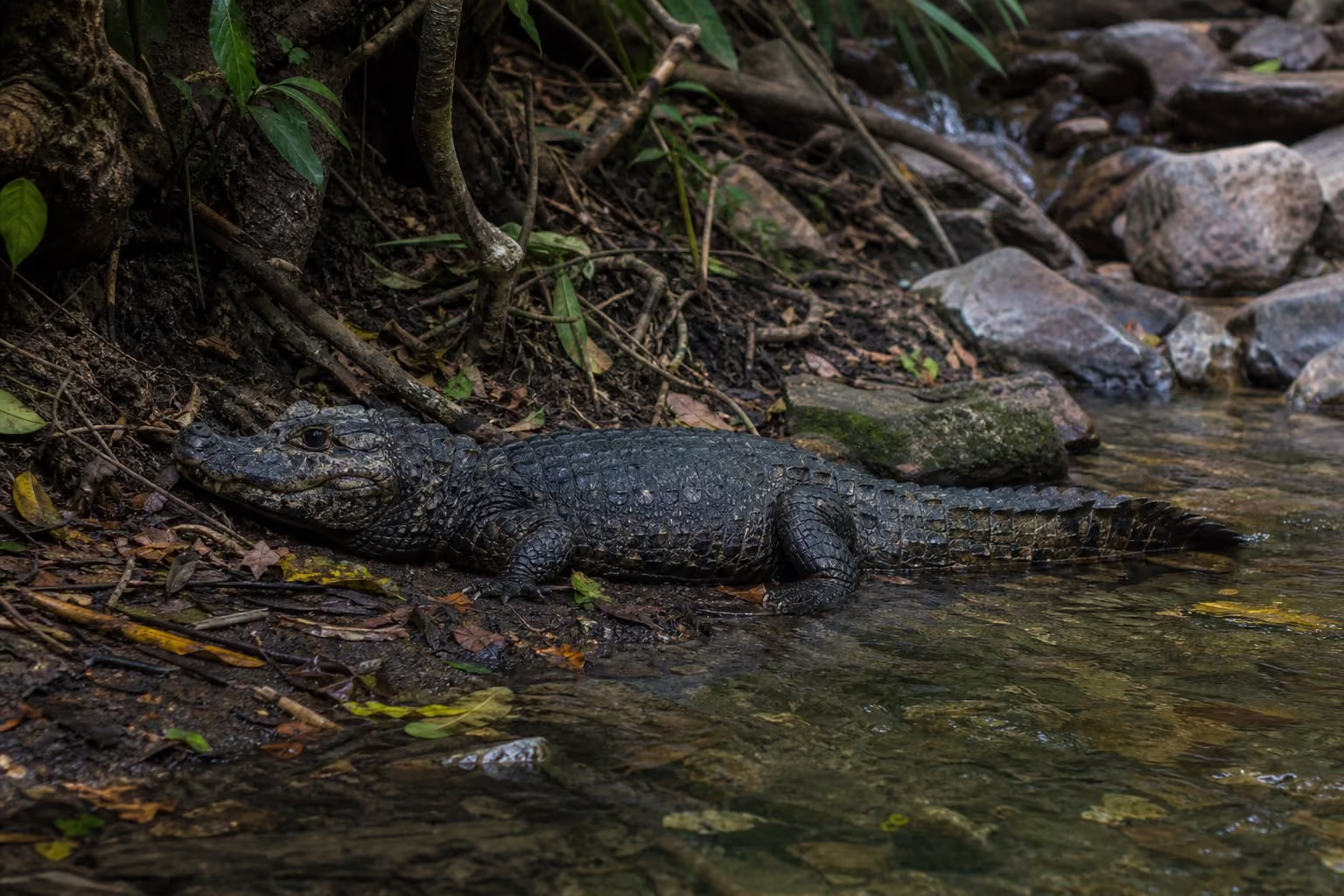
Dwarf crocodile

Details

Dwarf crocodile

Osteolaemus tetraspis

Size
Total length 1.5–1.9 m · 18–32 kg
Diet
Carnivore
Activity
Nocturnal
Sociality
Solitary
Lifespan

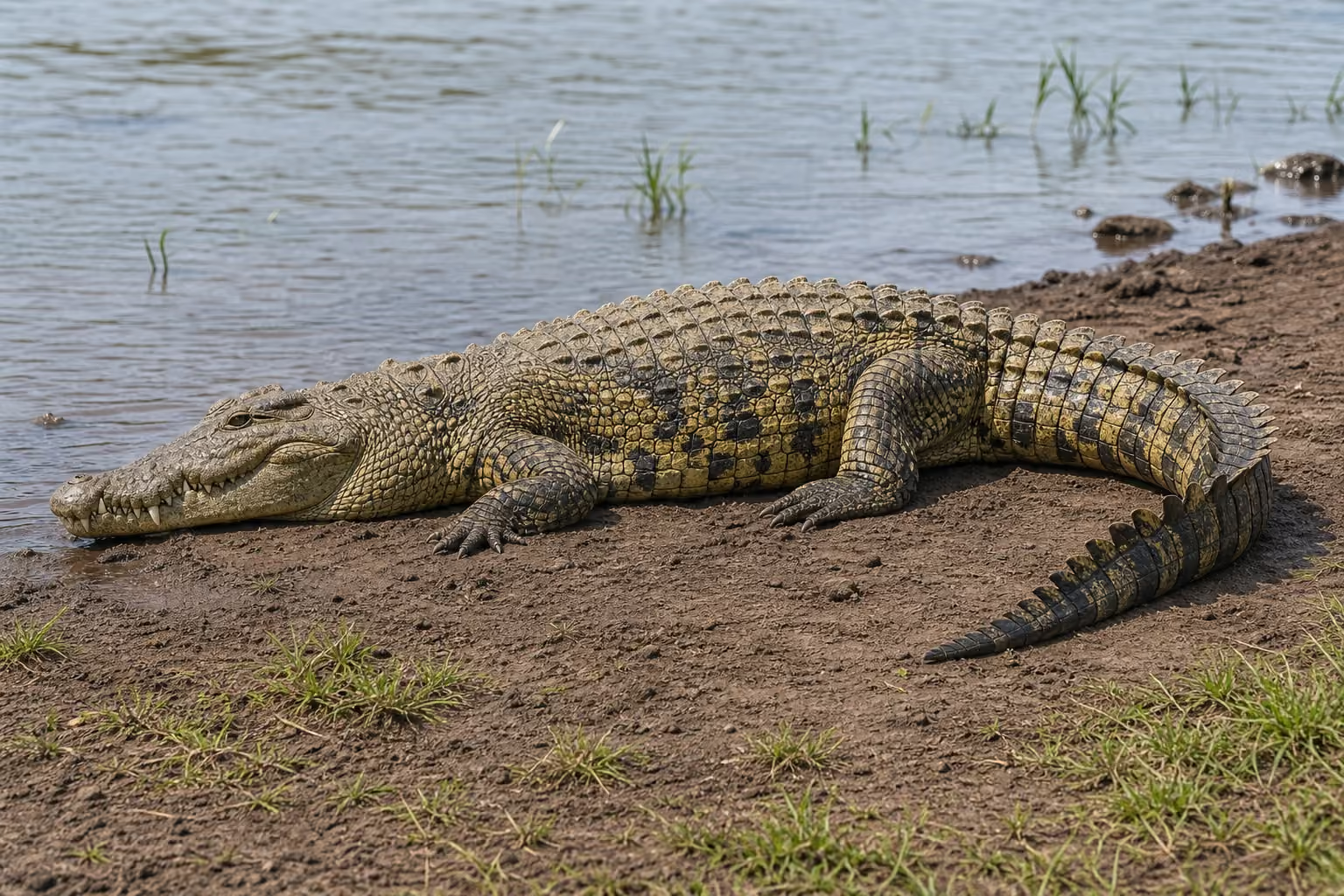
The world's smallest living crocodile, reaching only about 1.5–1.9 m and 18–32 kg. A stocky, retiring reptile with a short, broad, caiman-like snout and unusually heavy armour of bony osteoderms that extend even onto the belly and neck.
Range

Habitat range map
Native range Occasional / Transient
AfrotropicalAfrotropicalAfrotropicalAfrotropical

Map: Ecoregions 2017 © RESOLVE (CC BY 4.0) · Natural Earth (PD)

Details

Habitat

Found across the Afrotropics in the rainforests of sub-Saharan West and Central Africa, from Senegal east to Uganda and south to Angola. It favours slow or still forest waters — streams, swamps, pools and mangroves — and shuns the main channels of large rivers.

Appearance

At roughly 1.5–1.9 m and 18–32 kg it is the smallest crocodilian. The snout is short and blunt, lacking ridges. It is dark above and yellowish below with black blotches, and is exceptionally well armoured, with bony plates over the neck, back and tail as well as the belly.

Behavior

Timid and mainly nocturnal, it hides by day in pools or in burrows it digs itself and rarely basks in the open. One of the most terrestrial of all crocodilians, it ranges widely on land to forage, especially after rain, and lives a largely solitary life.

Feeding

A generalist carnivore, it takes fish, crabs, shrimp, frogs, snails, insects and millipedes, along with small vertebrates such as water birds, bats and shrews. The main prey shifts with region and season.

Reproduction

At the start of the wet season, around April to June, the female builds a mound nest of rotting vegetation whose decay warms the eggs. A clutch is usually about 10 eggs, occasionally up to 20; the young hatch after 85–105 days at around 28 cm and the female guards the nest and hatchlings.

Notes

Listed as Vulnerable by the IUCN and on CITES Appendix I, it is threatened mainly by hunting for bushmeat and by habitat loss from deforestation. A cave-dwelling population in Gabon is famous for turning orange, apparently as alkaline bat guano erodes the skin.