244 Featured Specimen
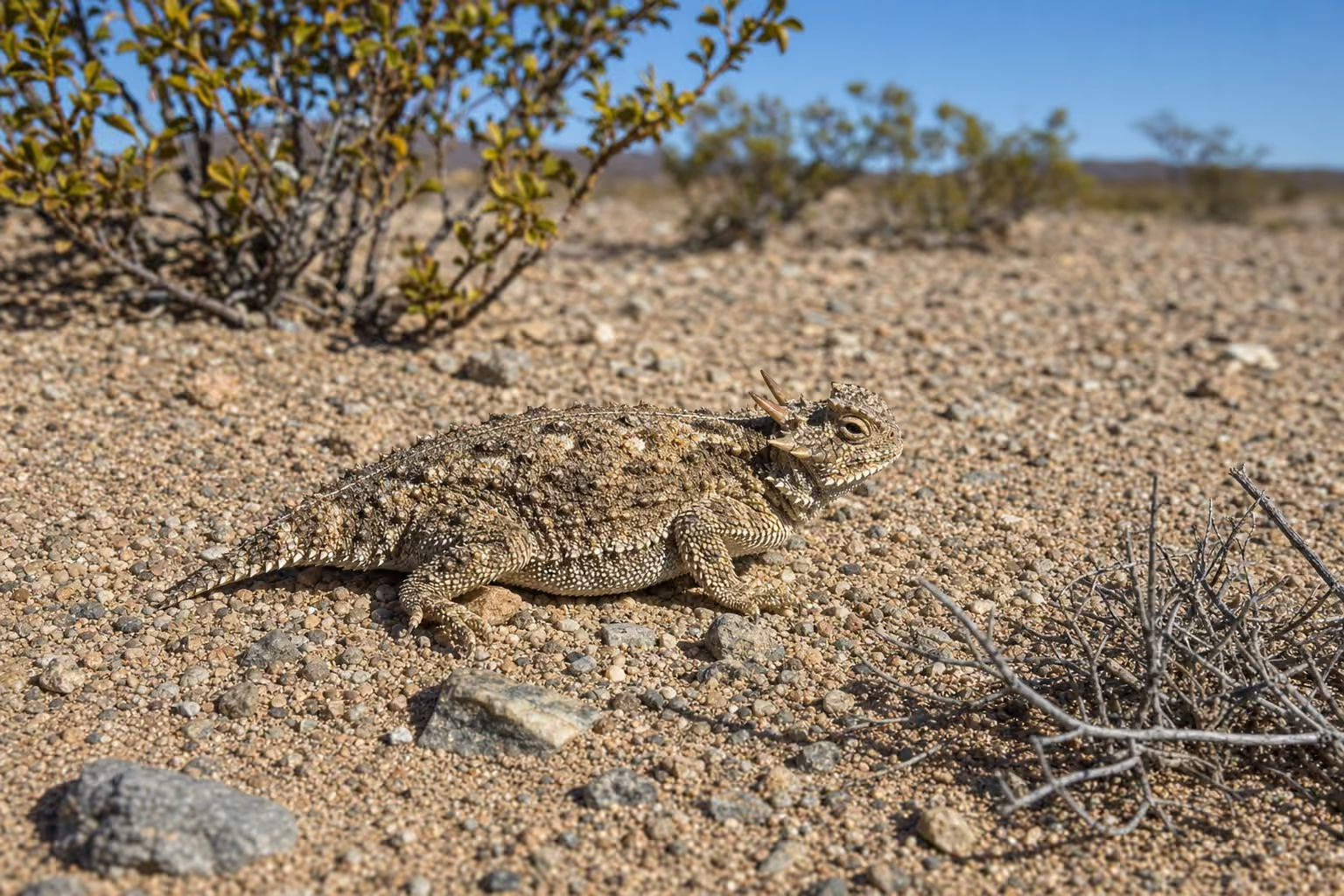
Desert horned lizard

Details

Desert horned lizard

Phrynosoma platyrhinos

Size
7–12 cm · 10–30 g
Diet
Carnivore
Activity
Diurnal
Sociality
Solitary
Lifespan
10-40 years

The desert horned lizard is a small Nearctic desert lizard. Diurnal and solitary, it relies on a flattened body and sandy colors to disappear on the ground.
Range

Habitat range map
Native range Occasional / Transient
NearcticNearcticNearcticNearcticNearcticNearcticNearcticNearcticNearcticNearcticNearcticNearcticNearcticNearcticNearcticNearcticNearcticNearcticNearcticNearcticNearcticNearcticNearcticNearcticNearcticNearcticNearcticNearcticNearcticNearcticNearcticNearcticNearcticNearcticNearcticNearcticNearcticNearcticNearcticNearcticNearctic

Map: Ecoregions 2017 © RESOLVE (CC BY 4.0) · Natural Earth (PD)

Details

Habitat

It uses desert, sandy shrubland, and dry open ground. Basking sites, loose sand, and quick shelter are important.

Appearance

Length is about 7-12 cm and weight about 10-30 g. A flat rounded body, short tail, head spines, and sand-colored mottling define it.

Behavior

It is active by day but retreats into shade or sand when heat is severe. When threatened, it may flatten and freeze to avoid detection.

Feeding

It is carnivorous, feeding mainly on ants and other small insects. It waits on the surface and snaps up prey that comes close.

Reproduction

Eggs are laid underground in warm seasons. Hatchlings are tiny and grow while relying on camouflage and small insect prey.

Notes

Its status is listed as Least Concern. It is tightly adapted to desert microhabitats and local surface-insect communities.