243 Featured Specimen
Corn snake

Details

Corn snake

Pantherophis guttatus

Size
0.6–1.8 m · 300–900 g
Diet
Carnivore
Activity
Diurnal
Sociality
Solitary
Lifespan
10-40 years

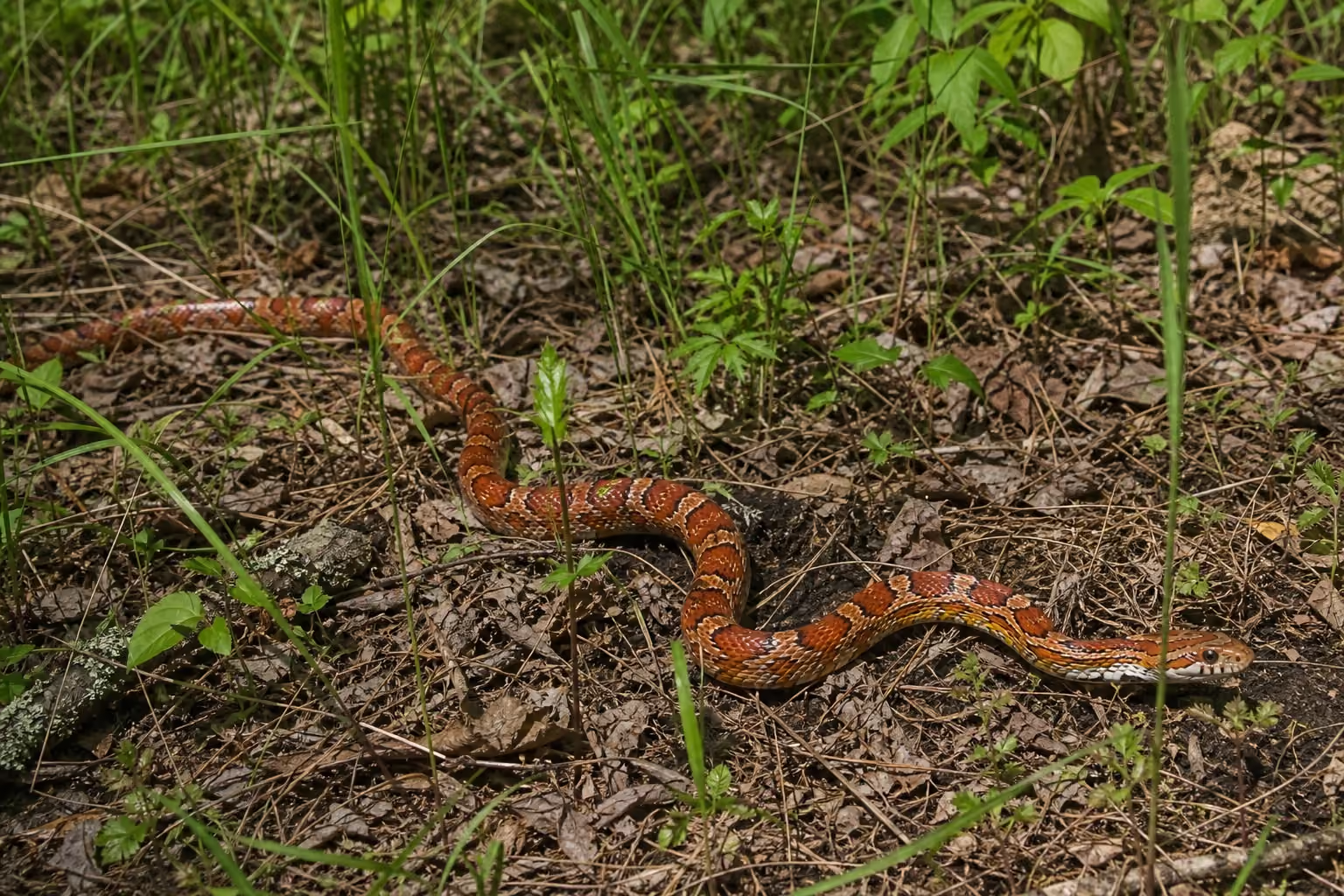
The corn snake is a harmless North American colubrid celebrated for its bold red, black-rimmed back blotches and a black-and-white belly checkerboard that recalls Indian corn. Gentle and undemanding, it has become one of the most widely kept snakes in the world.
Range

Habitat range map
Native range Occasional / Transient
NearcticNearcticNearcticNearcticNearcticNearcticNearcticNearcticNearcticNearcticNearcticNearcticNearcticNearcticNearcticNearcticNearcticNearcticNearcticNearcticNearcticNearcticNearcticNearcticNearcticNearcticNearcticNearcticNearcticNearcticNearcticNearcticNearcticNearcticNearcticNearcticNearcticNearcticNearcticNearcticNearctic

Map: Ecoregions 2017 © RESOLVE (CC BY 4.0) · Natural Earth (PD)

Details

Habitat

It ranges across the southeastern and central United States within the Nearctic realm, favoring overgrown fields, forest edges, pine woods, and palmetto flatwoods. Largely ground-dwelling but a capable climber, it also turns up around barns and abandoned buildings, from sea level to about 1,800 m.

Appearance

Adults measure roughly 60 to 180 cm and weigh about 300 to 900 g. The orange to reddish-brown body carries a row of black-edged red blotches down the back, while the white belly bears the squared black checkerboard pattern that gives the snake its name. The pupils are round and the head slender.

Behavior

Corn snakes are generally solitary, with behavior shifting around breeding and feeding. When threatened they vibrate the tail in a defensive display, and they locate prey mainly by scent. Studies credit them with spatial-learning abilities comparable to birds and rodents.

Feeding

A carnivore, it feeds chiefly on small rodents such as cotton rats and white-footed mice, and also takes birds and their eggs, amphibians, and reptiles. Prey is seized, coiled, and killed by constriction before being swallowed.

Reproduction

It is oviparous, the female laying about 12 to 25 eggs in a warm, hidden spot roughly a month after mating. The eggs hatch in around 60 to 75 days, producing hatchlings about 13 cm long. There is no parental care.

Notes

Listed as Least Concern by the IUCN, the corn snake is second only to the ball python among pet snakes thanks to its calm temperament. It earns its keep controlling crop-raiding rodents and typically lives 10 to 15 years in the wild.