536 Featured Specimen
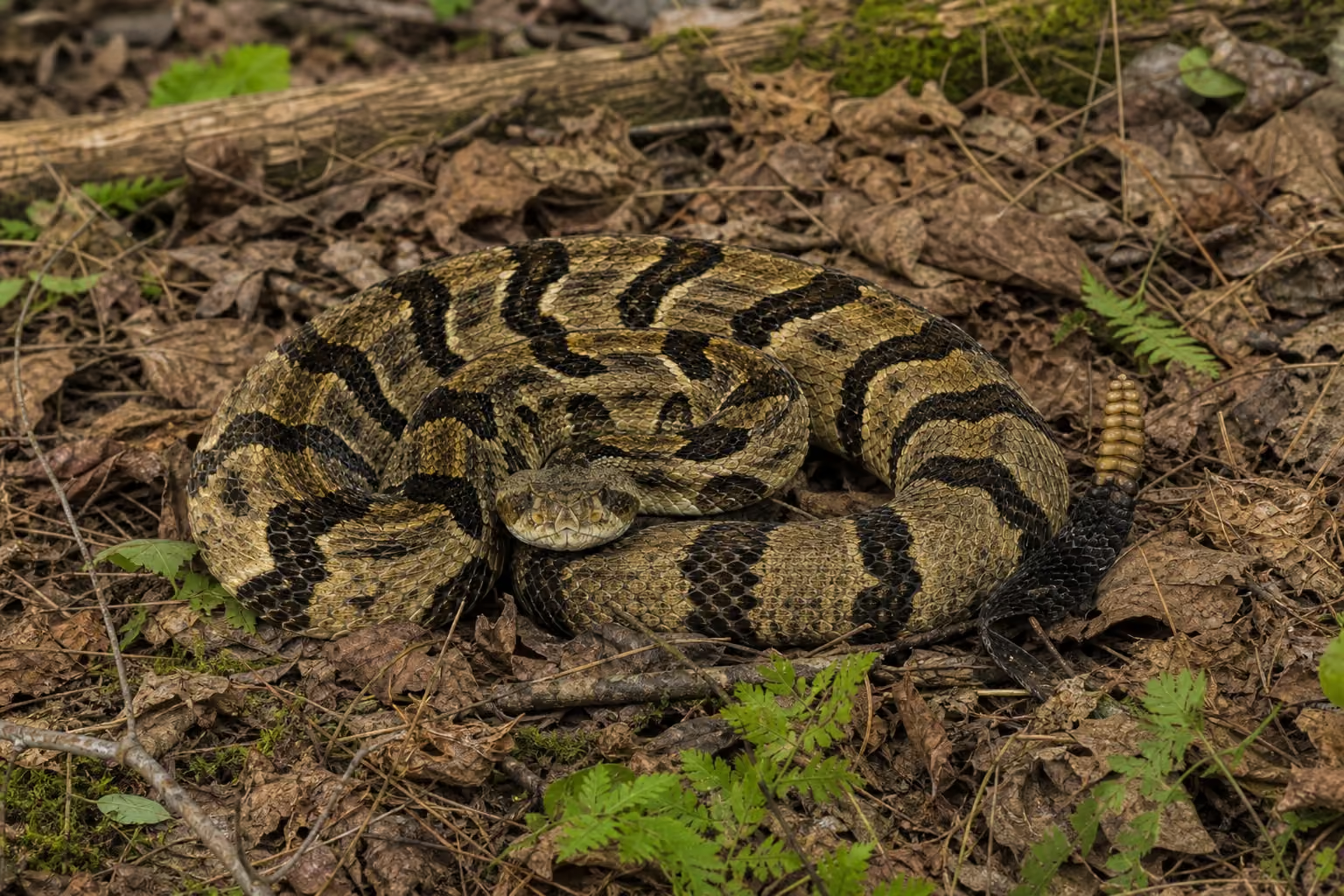
Timber rattlesnake

Details

Timber rattlesnake

Crotalus horridus

Size
Total length 0.9–1.5 m · 0.5–1.5 kg
Diet
Carnivore
Activity
Cathemeral
Sociality
Solitary
Lifespan

The timber rattlesnake is a large pit viper of eastern North American forests. Its black tail rattle and dark crossbands make it an emblematic woodland snake.
Range

Habitat range map
Native range Occasional / Transient
NearcticNearcticNearcticNearcticNearcticNearcticNearcticNearcticNearcticNearcticNearcticNearcticNearcticNearcticNearcticNearcticNearcticNearcticNearcticNearcticNearcticNearcticNearcticNearcticNearcticNearcticNearcticNearcticNearcticNearcticNearcticNearcticNearcticNearcticNearcticNearcticNearcticNearcticNearcticNearcticNearctic

Map: Ecoregions 2017 © RESOLVE (CC BY 4.0) · Natural Earth (PD)

Details

Habitat

It uses deciduous forest, rocky ridges, mountain slopes and grassy edges across the eastern United States. Rock fissures and communal dens are vital for winter.

Appearance

Adults are 91-152 cm long and about 500-1500 g. Dark crossbands mark a gray or yellow-brown body, and the tail is usually velvety black.

Behavior

Activity shifts with temperature, so the snake may be active by day or night. It is an ambush hunter and usually rattles before striking defensively.

Feeding

Small mammals such as mice, squirrels and rabbits dominate the diet. Heat-sensitive pits help locate prey before a venomous strike.

Reproduction

Females give birth to live young, often only every few years. Northern populations mature slowly and have long intervals between litters.

Notes

The species is Least Concern globally, but it has vanished from many northern sites and is protected in several states. Roads, persecution and den disturbance are persistent threats.