064 Featured Specimen
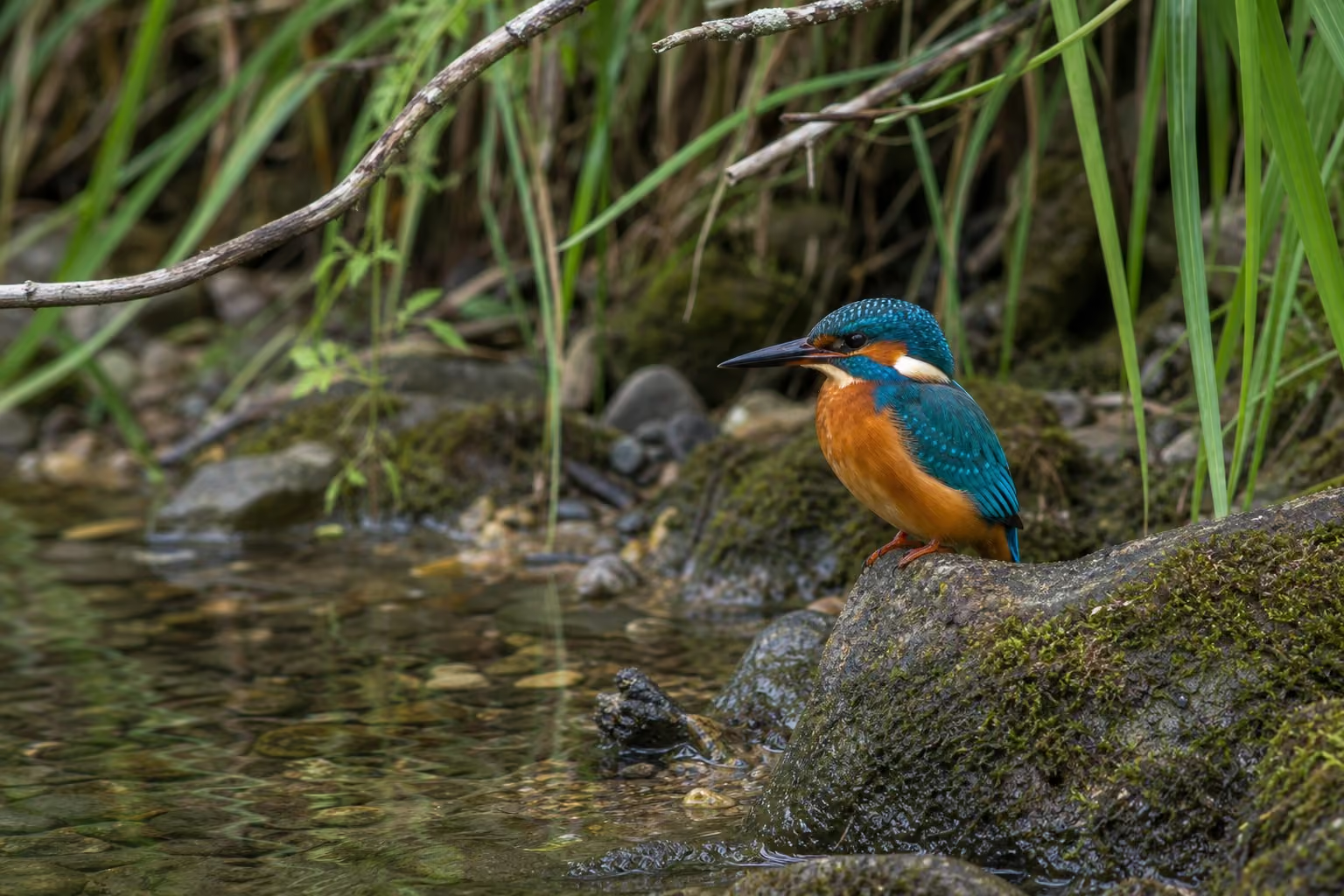
Common kingfisher

Details

Common kingfisher

Alcedo atthis

Size
16–18 cm · 30–45 g
Diet
Carnivore
Activity
Diurnal
Sociality
Solitary
Lifespan
Several years to decades

A small, jewel-bright waterside bird that flashes electric blue as it darts low over the water. The blue is not a pigment but a structural colour, shifting with the angle of light. A master of the plunge-dive, it strikes prey headfirst from a perch.
Range

Habitat range map
Native range Occasional / Transient
PalearcticPalearcticPalearcticPalearcticPalearcticPalearcticPalearcticPalearcticPalearcticPalearcticPalearcticPalearcticPalearcticPalearcticPalearcticPalearcticPalearcticPalearcticPalearcticPalearcticPalearcticPalearcticPalearcticPalearcticIndomalayanIndomalayanIndomalayanIndomalayanIndomalayanIndomalayanIndomalayanIndomalayanIndomalayanIndomalayanIndomalayanIndomalayanIndomalayanIndomalayanIndomalayan

Map: Ecoregions 2017 © RESOLVE (CC BY 4.0) · Natural Earth (PD)

Details

Habitat

It ranges widely across Eurasia, North Africa, India and Southeast Asia, favouring clear, slow streams, rivers and lakes with well-vegetated banks. It also turns up along mangrove creeks and even small streams near towns, and is found across Japan.

Appearance

A sparrow-sized bird, 16–18 cm long and weighing 30–45 g, with green-blue upperparts and rufous orange underparts. The sexes look alike except for the bill: all black in the male, with a red-orange base to the lower mandible in the female.

Behavior

Active by day, it is solitary outside the breeding season and fiercely territorial, defending a stretch of river it must control to feed. It uses favourite stones and branches as lookouts, often whitewashed with droppings, and calls a shrill metallic whistle in flight.

Feeding

A carnivore, it takes mostly fish, which can make up the great majority of its diet; one Czech study found over 99% of prey were fish. It watches from a perch a metre or two above the water, plunges to seize prey within 25 cm of the surface, then beats large catches against a branch before swallowing them headfirst.

Reproduction

Pairs excavate a tunnel 60–90 cm long in an earthen bank, ending in a nest chamber. Courtship includes the male presenting fish to the female. Clutches hold two to ten glossy white eggs, incubated about 19–20 days; the young leave the nest at 24–25 days, and two or three broods may be raised in a season.

Notes

Listed as Least Concern, it remains vulnerable locally to water pollution that depletes small fish and to bank engineering that removes nesting sites. The streamlined nose of Japan's 500-series Shinkansen was famously inspired by the bird's bill, which lets it enter water with barely a splash.