643 Featured Specimen
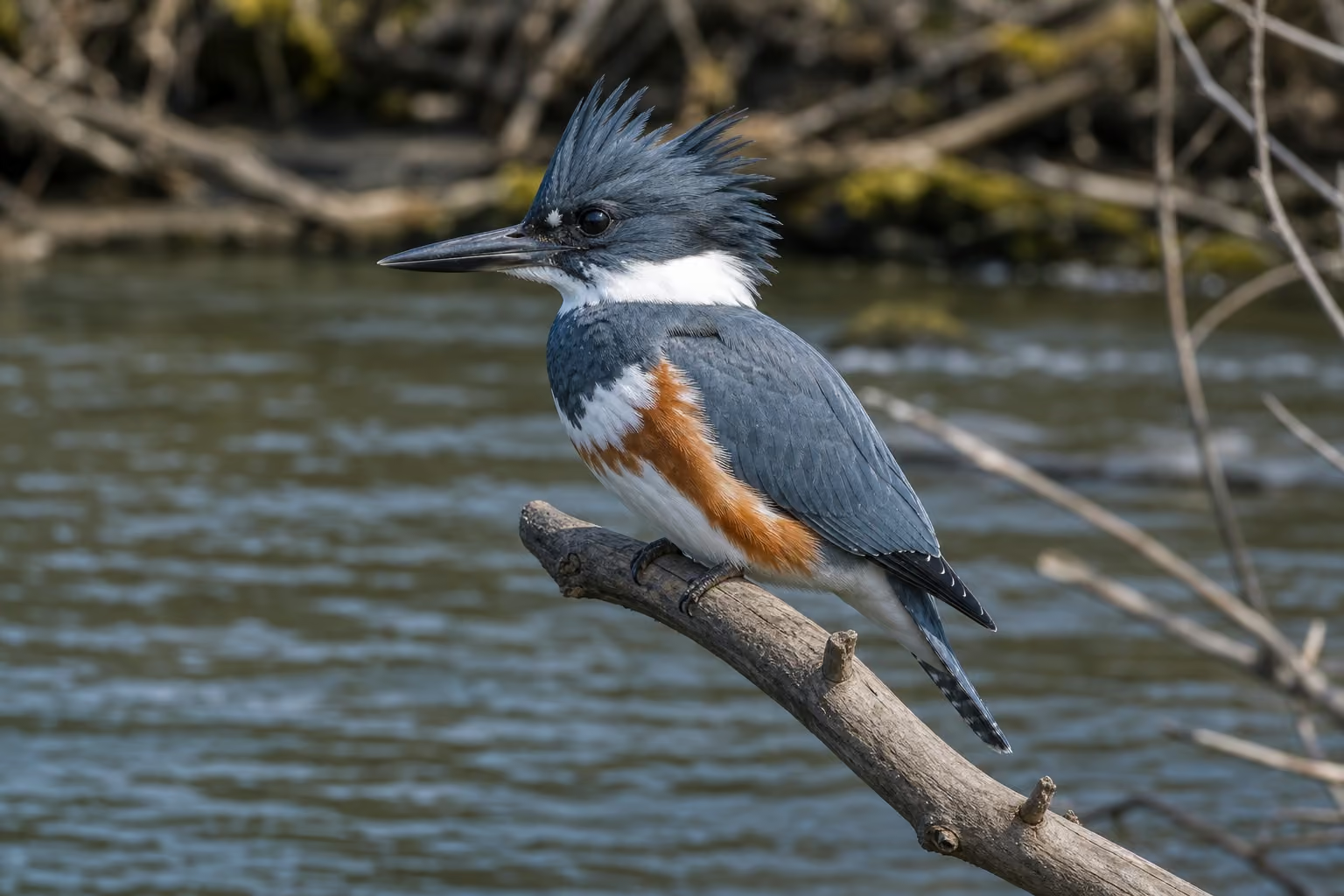
Belted kingfisher

Details

Belted kingfisher

Megaceryle alcyon

Size
28–35 cm · 113–178 g
Diet
Carnivore
Activity
Diurnal
Sociality
Solitary
Lifespan

A large North American kingfisher with a shaggy crest and blue-gray breast band, often hovering before diving into water.
Range

Habitat range map
Native range Occasional / Transient
NearcticNearcticNearcticNearcticNearcticNearcticNearcticNearcticNearcticNearcticNearcticNearcticNearcticNearcticNearcticNearcticNearcticNearcticNearcticNearcticNearcticNearcticNearcticNearcticNearcticNearcticNearcticNearcticNearcticNearcticNearcticNearcticNearcticNearcticNearcticNearcticNearcticNearcticNearcticNearcticNearcticNeotropicalNeotropicalNeotropicalNeotropicalNeotropicalNeotropicalNeotropicalNeotropical

Map: Ecoregions 2017 © RESOLVE (CC BY 4.0) · Natural Earth (PD)

Details

Habitat

Uses rivers, lakes, ponds, wetlands, and coasts where perches overlook water and earthen banks allow burrow nesting.

Appearance

The head is large with a ragged crest. Blue-gray upperparts, white underparts, and a breast band are typical; females add a rufous band.

Behavior

It watches from branches or wires, sometimes hovering before a plunge. Loud rattling calls mark territories.

Feeding

Small fish are the main prey, along with crayfish, frogs, and aquatic insects. Prey is often beaten on a perch before swallowing.

Reproduction

Pairs dig long horizontal burrows into banks or sandy cliffs, nesting in a chamber at the end.

Notes

Females are more colorful than males, an unusual pattern among birds, and suitable nesting banks are essential.