523 Featured Specimen
Chinese alligator

Details

Chinese alligator

Alligator sinensis

Size
Total length 1.5–2.1 m · 36–45 kg
Diet
Carnivore
Activity
Nocturnal
Sociality
Solitary
Lifespan

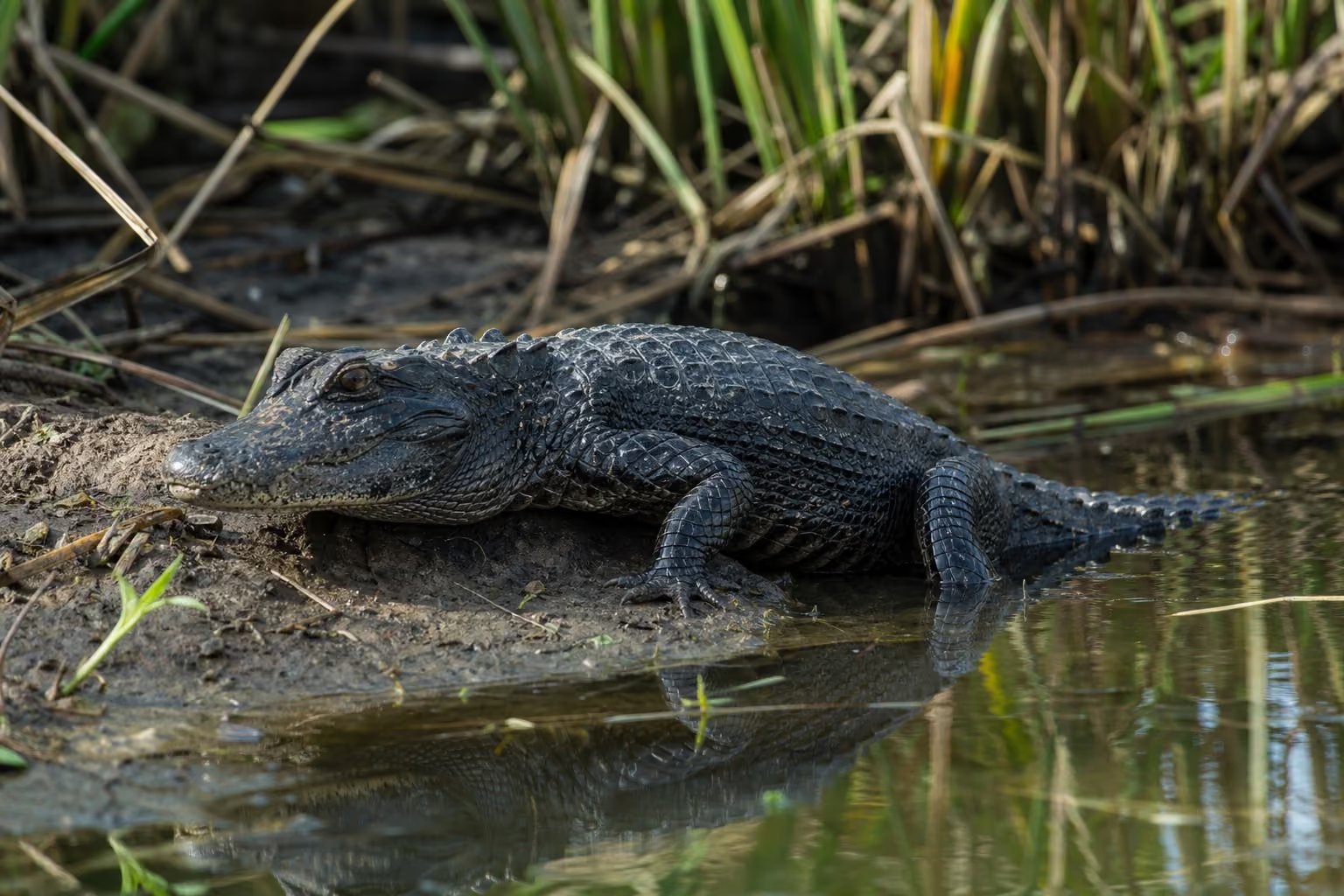
A relict of the lower Yangtze and one of the world's smallest crocodilians, the Chinese alligator is a heavily armored, dark reptile that hibernates in burrows for nearly half the year. Critically endangered, only a few hundred survive in the wild.
Range

Habitat range map
Native range Occasional / Transient
PalearcticPalearcticPalearcticPalearcticPalearcticPalearcticPalearcticPalearcticPalearcticPalearcticPalearcticPalearcticPalearcticPalearcticPalearcticPalearcticPalearcticPalearcticPalearcticPalearcticPalearcticPalearcticPalearcticPalearctic

Map: Ecoregions 2017 © RESOLVE (CC BY 4.0) · Natural Earth (PD)

Details

Habitat

Endemic to the lower Yangtze basin, chiefly in China's Anhui Province, it lives in slow rivers, lakes, ponds and wetlands. Adapted to subtropical-to-temperate fresh water, its wild range is now reduced to a few tiny pockets.

Appearance

A small crocodilian, roughly 150-210 cm long and 36-45 kg, almost entirely black or dark gray. It has a short, broad snout, a fully armored body plated even on the belly, bony plates on the upper eyelids, a broad tail, and around 72-76 teeth.

Behavior

Solitary and largely nocturnal in summer, it shelters by day from heat and people. Through winter it brumates in branching burrows up to 10-25 m long for nearly six months. In the breeding season adults gather to bellow in low-frequency choruses.

Feeding

A carnivore and opportunistic feeder, it takes mainly snails and other mollusks along with fish, crustaceans and insects, and occasionally birds or small mammals. Its blunt rear teeth are specialized for crushing hard shells.

Reproduction

Breeding in early summer, the female builds a mound nest of vegetation and lays 10-40 eggs, usually 20-30. The eggs are the smallest of any crocodilian and hatch in about 70 days; hatchlings emerge around 20-22 cm long, and the mother guards nest and young.

Notes

Listed as Critically Endangered, the alligator has been reduced to a small relict wild population by habitat loss, pesticides and hunting, even as thousands now thrive in captive-breeding programs. Its quiet, water-bound life is thought to have helped inspire the myth of the Chinese dragon.