517 Featured Specimen
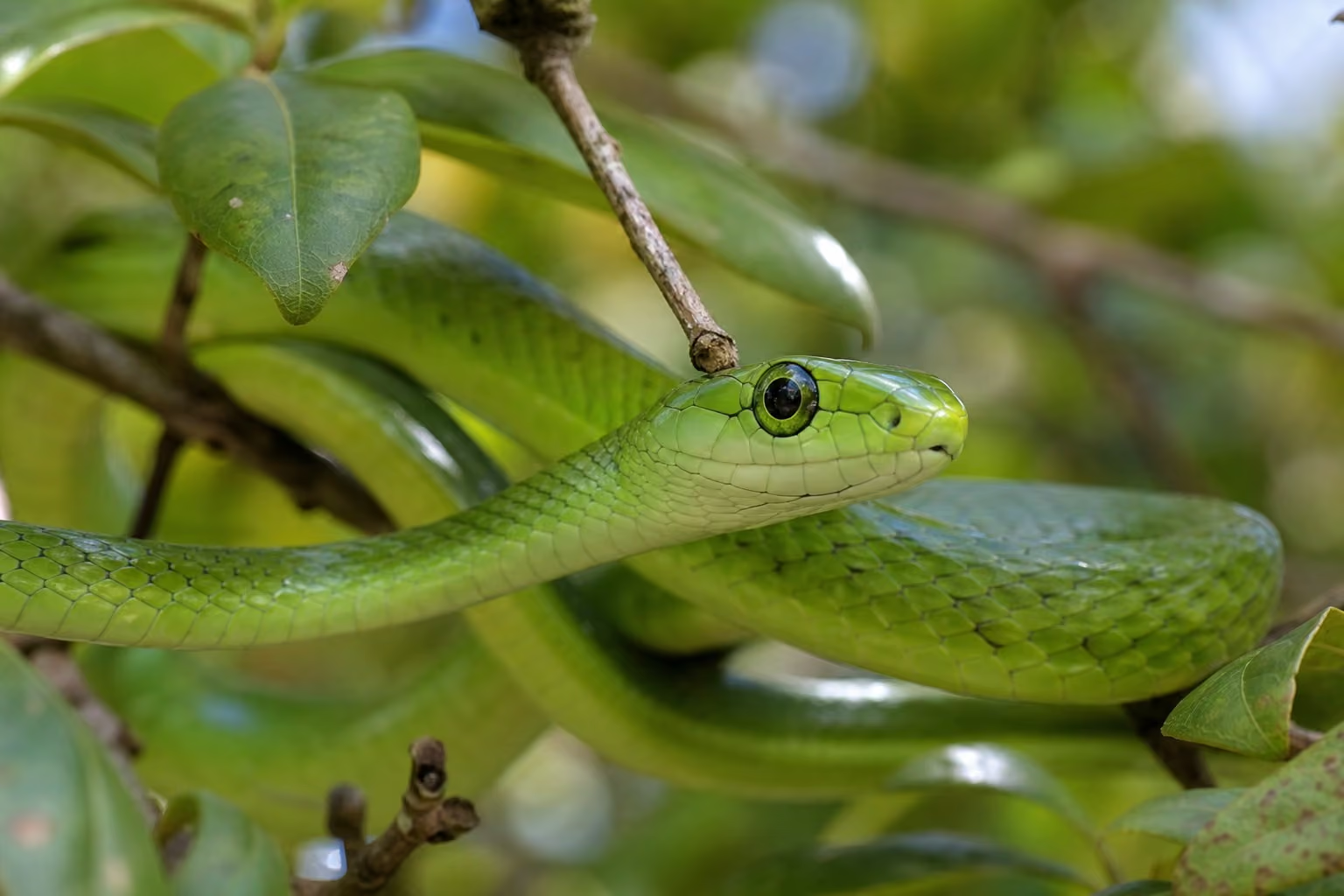
Boomslang

Details

Boomslang

Dispholidus typus

Size
Total length 1–1.8 m · 175–510 g
Diet
Carnivore
Activity
Diurnal
Sociality
Solitary
Lifespan

An arboreal rear-fanged snake of sub-Saharan Africa with some of the continent's most potent venom. Its egg-shaped head carries exceptionally large eyes, and the sexes differ sharply in colour — bright green males, drab brown females. Its haemotoxic venom acts slowly, so serious symptoms may not appear until hours after a bite.
Range

Habitat range map
Native range Occasional / Transient
AfrotropicalAfrotropicalAfrotropicalAfrotropical

Map: Ecoregions 2017 © RESOLVE (CC BY 4.0) · Natural Earth (PD)

Details

Habitat

Ranges widely across sub-Saharan Africa, from The Gambia and Senegal east and south through many countries to Namibia and South Africa. It favours lowland forests but also occupies savannas, grasslands, and karoo scrub, always preferring places where it can climb.

Appearance

Adults average 100–160 cm and may exceed 183 cm, weighing roughly 175–510 g. Males are light green edged with black or blue, while females are brown to greenish-brown; both have an egg-shaped head and very large, keen eyes. Three large grooved fangs sit beneath each eye at the rear of the jaw.

Behavior

The boomslang is almost exclusively arboreal, moving deftly from branch to branch through the canopy. Generally shy and reclusive, when cornered it inflates its neck dramatically and rears into an S-shaped striking pose.

Feeding

It preys mainly on chameleons and other tree-dwelling lizards and frogs, also taking small birds and mammals and raiding the eggs of birds and reptiles. Prey is bitten and then swallowed whole, and the species will occasionally eat other snakes, including its own kind.

Reproduction

Egg-laying, the female deposits on average 8 to 14 leathery eggs (up to around 30) in tree hollows or rotting logs. Incubation is relatively long, about three months, and hatchlings emerge at roughly 29–38 cm already showing the colour differences between the sexes.

Notes

Despite being rear-fanged, it delivers a powerfully haemotoxic venom; in 1957 the renowned herpetologist Karl Schmidt died after a bite, overturning the belief that rear-fanged snakes were harmless. A dedicated antivenom is now produced in South Africa.