084 Featured Specimen
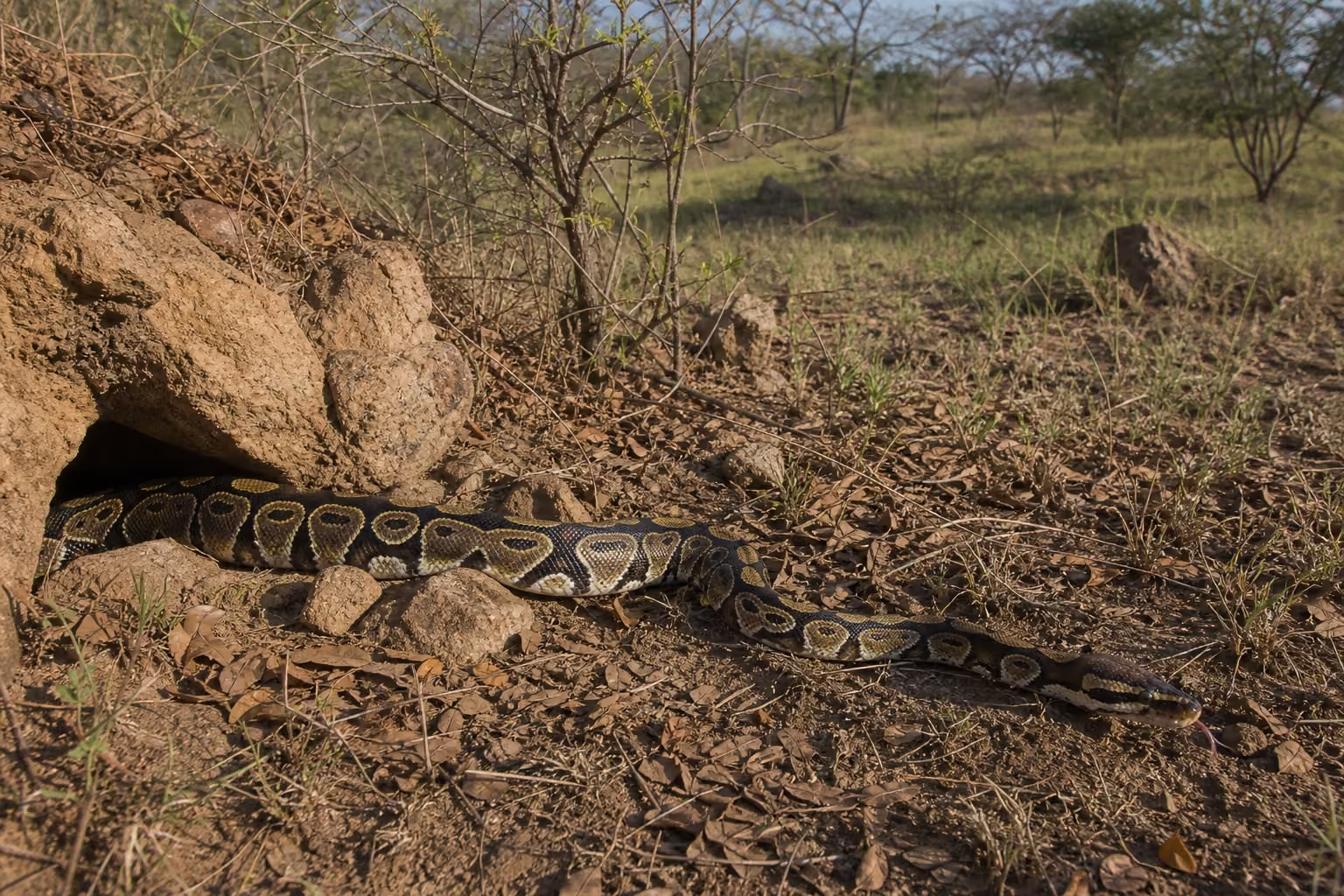
Ball python

Details

Ball python

Python regius

Size
0.9–1.8 m · 1–3 kg
Diet
Carnivore
Activity
Nocturnal
Sociality
Solitary
Lifespan
Varies by species and environment

A small, stocky python of West and Central African grasslands and savannas, named for its habit of curling into a tight ball with its head tucked safely in the center when threatened. Docile by nature, it is one of the world's most popular pet snakes.
Range

Habitat range map
Native range Occasional / Transient
AfrotropicalAfrotropicalAfrotropicalAfrotropical

Map: Ecoregions 2017 © RESOLVE (CC BY 4.0) · Natural Earth (PD)

Details

Habitat

Ranges across West and Central Africa from Senegal through Cameroon to Sudan and Uganda. It favours grasslands, savannas, and sparsely wooded country, sheltering in rodent burrows, termite mounds, and other underground hiding places.

Appearance

A stocky snake with a relatively small head and smooth scales, reaching 90 to 180 cm in length and weighing 1 to 3 kg, with females the larger sex. The dark brown to black body carries light brown blotches above and a pale, dark-flecked belly; both sexes bear pelvic spurs used in mating.

Behavior

Nocturnal and crepuscular, it is active from dusk to dawn and spends most of the day hidden in burrows. It lives a solitary life and may aestivate underground during the dry season; males tend to be more semi-arboreal, females more terrestrial.

Feeding

A carnivore that preys mostly on small mammals and birds. Snakes under about 70 cm take mainly birds, while those over 100 cm feed chiefly on mammals.

Reproduction

Oviparous, the female lays three to eleven large, leathery eggs and coils around them to brood until they hatch after roughly 55 to 60 days. Once the young emerge, she leaves them to fend for themselves with no further care.

Notes

Poaching for the international exotic pet trade is its chief threat, alongside hunting for skin, meat, and traditional medicine and habitat loss to farming. It is hugely popular in captivity, where more than 7,500 colour morphs have been bred, and it is revered as sacred by the Igbo of Nigeria and in northwestern Ghana.