514 Featured Specimen
Black mamba

Details

Black mamba

Dendroaspis polylepis

Size
Total length 2–4.5 m · 0.5–2.4 kg
Diet
Carnivore
Activity
Diurnal
Sociality
Solitary
Lifespan

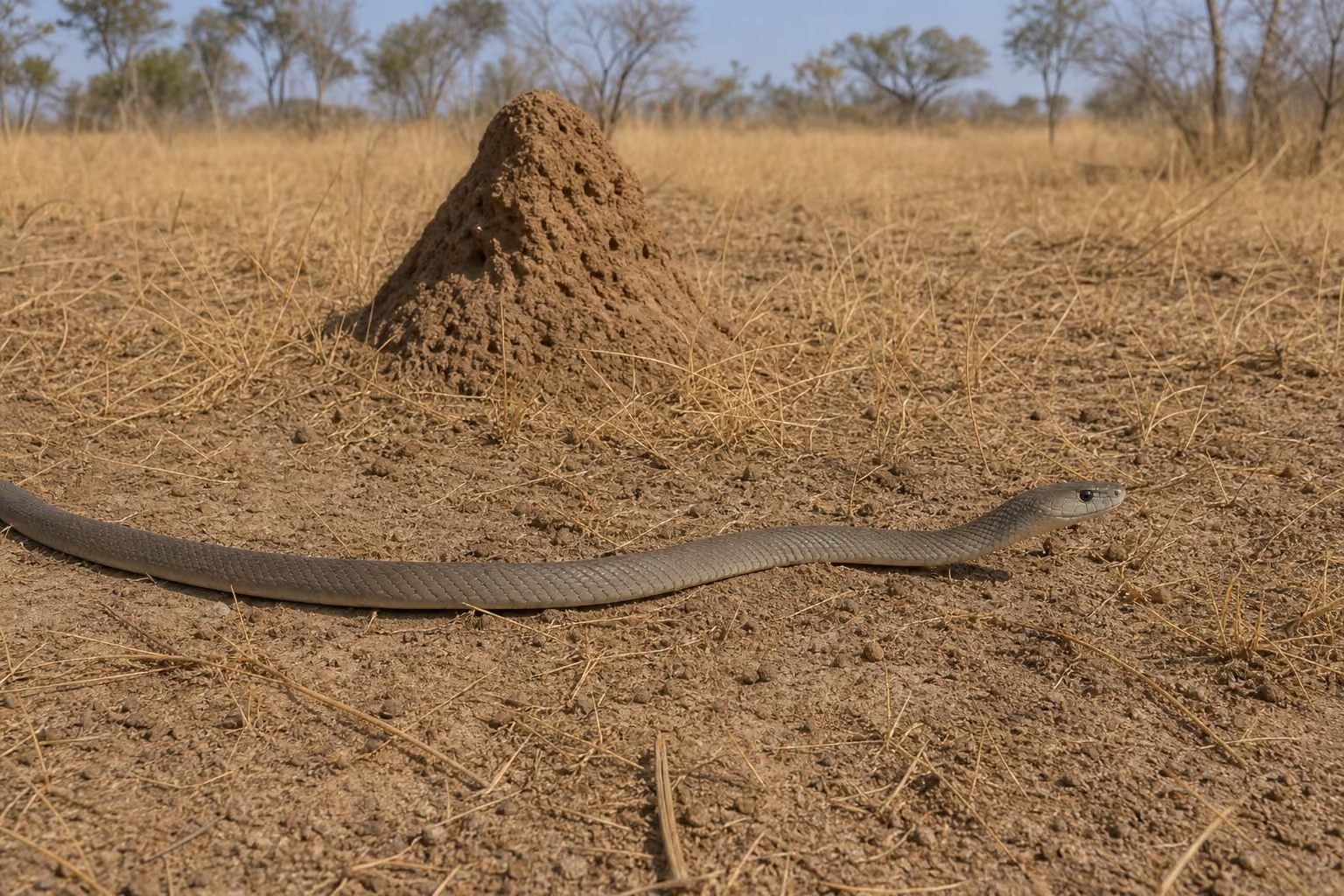
Africa's longest venomous snake and, after the king cobra, the second-longest in the world, the black mamba is named not for its body color but for the inky blue-black lining of its mouth, flashed in threat. Its fast-acting neurotoxic venom makes it one of the most feared snakes in sub-Saharan Africa.
Range

Habitat range map
Native range Occasional / Transient
AfrotropicalAfrotropicalAfrotropicalAfrotropical

Map: Ecoregions 2017 © RESOLVE (CC BY 4.0) · Natural Earth (PD)

Details

Habitat

It ranges widely across sub-Saharan Africa, favoring moderately dry country such as savanna, light woodland, scrub and rocky outcrops, and also entering moist savanna and lowland forest. It is usually found below about 1,000 m and is at home both on the ground and in trees.

Appearance

A slender, lightly built snake reaching 2 to 4.5 m in length, it is rarely truly black: coloration runs from olive and yellowish-brown to khaki or gunmetal grey. Its defining feature is the dark blue-black interior of the mouth, gaped open when the snake is alarmed, which gives the species its name.

Behavior

The black mamba is diurnal, basking on rocks in the morning and afternoon, and lives a solitary life centered on a permanent lair in a hollow tree, termite mound or rock crevice. Fast-moving and quick to strike, it is nonetheless shy by nature, but when cornered it rears, gapes and defends itself with rapid, accurate bites.

Feeding

A carnivore, it preys on warm-blooded animals: small mammals such as rodents and hyraxes, and birds including nestlings raided from tree nests. It typically bites to inject venom, releases the prey, and waits for the paralyzing venom to take effect before swallowing it whole.

Reproduction

The black mamba lays eggs, breeding in the cooler part of the year. A female produces a clutch of roughly 6 to 17 eggs, and the hatchlings emerge measuring about 40 to 60 cm. Growth is rapid, and young snakes may approach 2 m within their first year.

Notes

A single bite can deliver 100 to 120 mg of potent neurotoxic venom, with symptoms appearing remarkably fast and proving deadly without antivenom. Despite this fearsome reputation, the snake generally avoids people, and most bites follow when it is cornered. Its wide range and stable numbers keep it of low conservation concern.