068 Featured Specimen
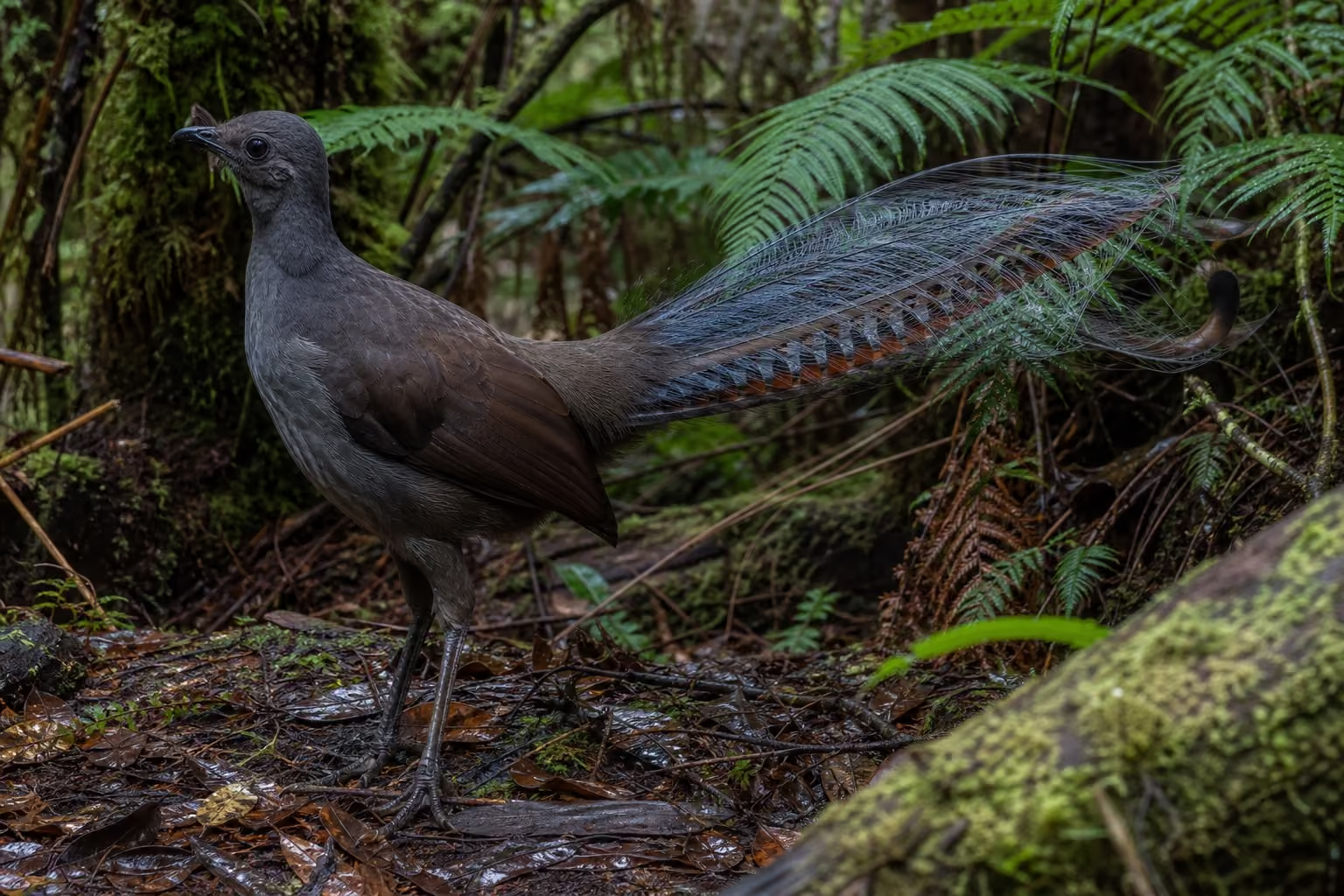
Superb lyrebird

Details

Superb lyrebird

Menura novaehollandiae

Size
0.8–1 m · 0.7–1.1 kg
Diet
Omnivore
Activity
Diurnal
Sociality
Solitary
Lifespan
Several years to decades

One of the world's largest songbirds, found in the forests of southeastern Australia and famous for the male's spectacular lyre-shaped tail. It is also an unrivalled mimic, reproducing the calls of other birds and even artificial sounds with astonishing precision.
Range

Habitat range map
Native range Occasional / Transient
AustralasianAustralasianAustralasianAustralasianAustralasianAustralasianAustralasianAustralasianAustralasianAustralasianAustralasianAustralasianAustralasianAustralasianAustralasianAustralasianAustralasian

Map: Ecoregions 2017 © RESOLVE (CC BY 4.0) · Natural Earth (PD)

Details

Habitat

It lives in southeastern Australia, from Victoria to southeastern Queensland, in subtropical and temperate rainforest and moist sclerophyll forest. It favours wet woodland with an open floor of damp leaf litter, and an introduced population has become established in Tasmania.

Appearance

At 80–100 cm long and 700–1,100 g, it ranks among the largest of all songbirds. The plumage is dark brown above and greyish-brown below, with reddish flight feathers. Males carry an ornate tail up to 70 cm long, formed of outer lyre-shaped feathers and silvery filamentary plumes; this finery takes several years to develop.

Behavior

A ground-dwelling bird and a weak flier, it spends its life alone within a small home range. Males clear bare earthen mounds where they raise the tail over the body and dance while mimicking other species. Imitation makes up 70–80 percent of the male's song, and birds have famously copied chainsaws, car alarms, and camera shutters.

Feeding

It is omnivorous, taking mainly invertebrates such as earthworms and insects from the soil and leaf litter, along with fungi. Using powerful feet, it scratches vigorously through topsoil and rotting wood to uncover prey, in the process turning over vast amounts of litter and speeding nutrient cycling.

Reproduction

Breeding in winter, females range across the territories of several males. A female builds a large domed nest alone and usually lays a single egg, which she incubates for about seven weeks. She raises the chick without help, continuing to care for the young for several months after fledging.

Notes

The IUCN lists it as Least Concern, and it remains common across its range. Because it lives on the ground, it is vulnerable to vehicle collisions and to introduced predators such as the red fox. A celebrated national emblem, it appears on the Australian ten-cent coin.