096 Featured Specimen
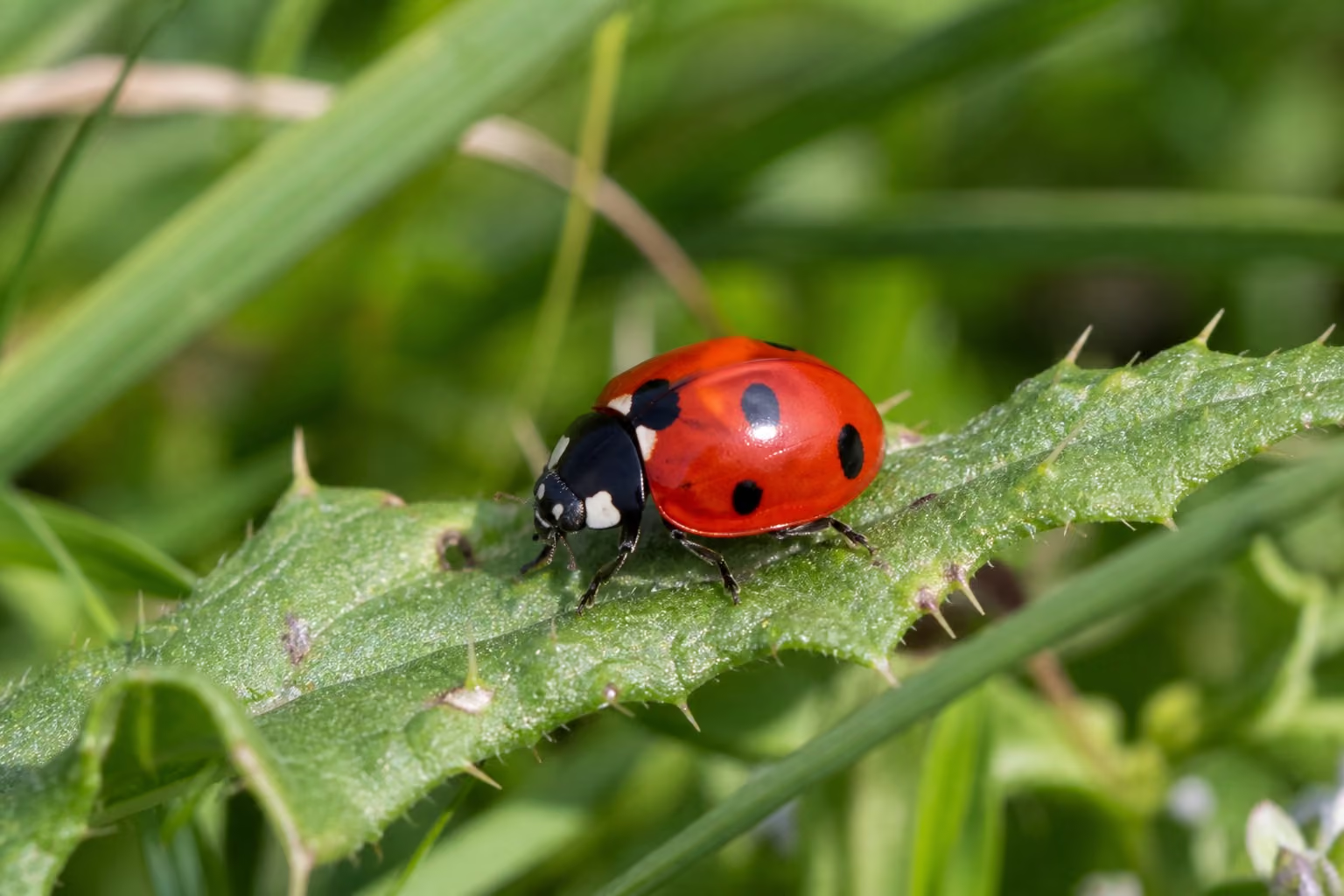
Seven-spot ladybird

Details

Seven-spot ladybird

Coccinella septempunctata

Size
0.5–0.8 cm · 0–1 g
Diet
Carnivore
Activity
Diurnal
Sociality
Loose group
Lifespan
Varies by species and environment

The seven-spot ladybird is a familiar red beetle marked with seven black spots. Both adults and larvae are important small predators of aphids in fields, gardens, and wild plants.
Range

Habitat range map
Native range Occasional / Transient
PalearcticPalearcticPalearcticPalearcticPalearcticPalearcticPalearcticPalearcticPalearcticPalearcticPalearcticPalearcticPalearcticPalearcticPalearcticPalearcticPalearcticPalearcticPalearcticPalearcticPalearcticPalearcticPalearcticPalearcticNearcticNearcticNearcticNearcticNearcticNearcticNearcticNearcticNearcticNearcticNearcticNearcticNearcticNearcticNearcticNearcticNearcticNearcticNearcticNearcticNearcticNearcticNearcticNearcticNearcticNearcticNearcticNearcticNearcticNearcticNearcticNearcticNearcticNearcticNearcticNearcticNearcticNearcticNearcticNearcticNearctic

Map: Ecoregions 2017 © RESOLVE (CC BY 4.0) · Natural Earth (PD)

Details

Habitat

Native across much of the Palearctic and established in the Nearctic, it lives in grasslands, field margins, woodland edges, gardens, and parks. It follows aphid-rich plants and overwinters in sheltered litter or crevices.

Appearance

Adults are about 0.5-0.8 cm long and extremely light. The rounded red wing covers carry seven black spots, and the black pronotum bears pale patches. When disturbed, it can release bitter yellow defensive fluid from the leg joints.

Behavior

Diurnal, it walks over plants alone or in loose groups while searching for prey. Adults fly between feeding sites, and in cold seasons many may gather together in dormancy shelters.

Feeding

Carnivorous, both adults and larvae feed mainly on aphids. They also take scale insects and small insect eggs, moving among plants where prey is abundant.

Reproduction

Females lay clusters of yellow eggs near aphid colonies. The dark, elongate larvae hatch and feed actively before pupating on vegetation. Several generations may occur in favourable warm seasons.

Notes

It is valued as a natural enemy of crop and garden pests. The bright red-and-black colour pattern warns predators of its distasteful chemical defence.