029 Featured Specimen
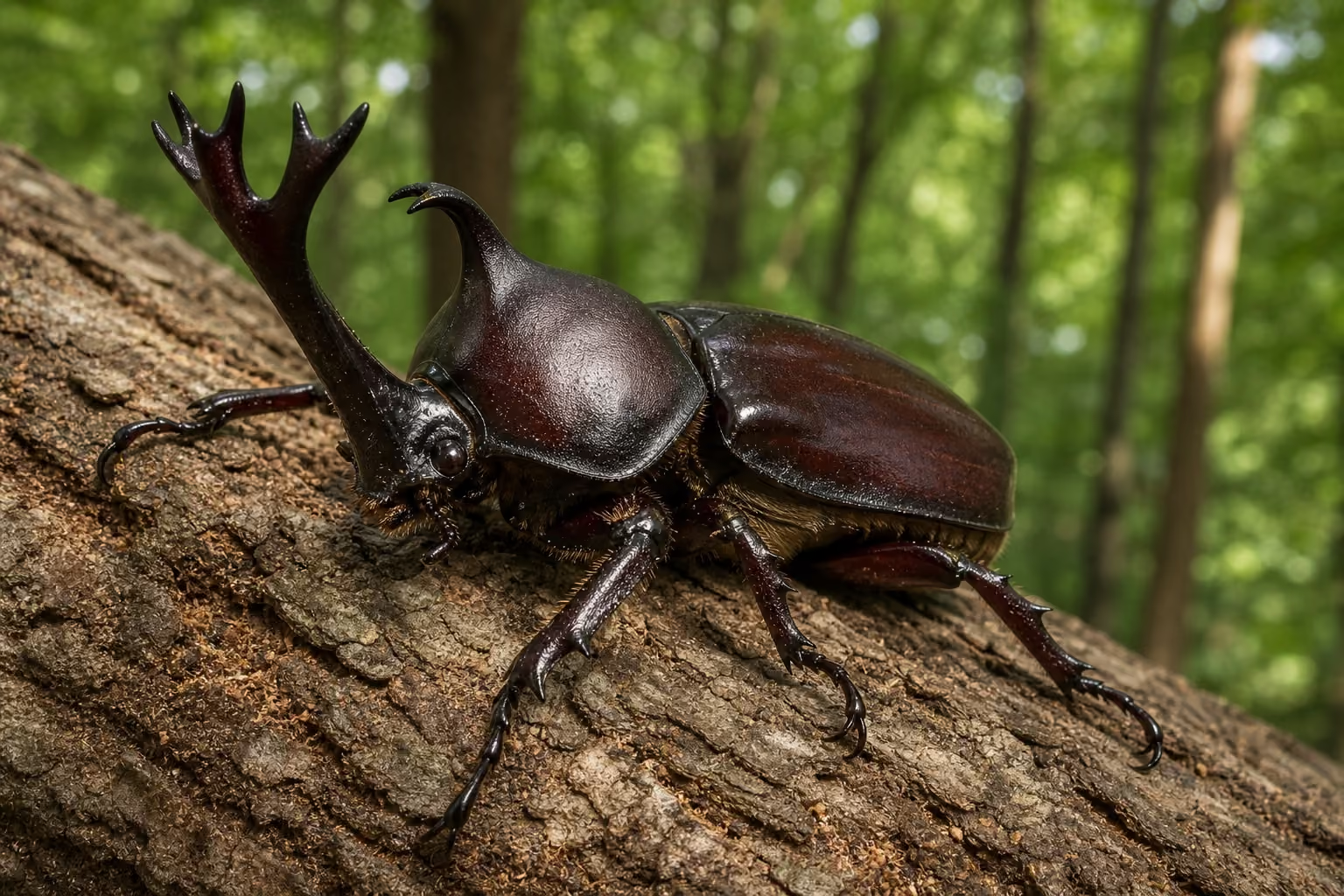
Japanese rhinoceros beetle

Details

Japanese rhinoceros beetle

Trypoxylus dichotomus

Size
3–8 cm
Diet
Nectarivore
Activity
Nocturnal
Sociality
Solitary
Lifespan
Adults live for a few months

A beetle renowned for the large, pitchfork-shaped horn that crowns the male's head. In summer it gathers at the oozing sap of oak trees, where rival males joust horn-to-horn for the best feeding spots. It is one of the most beloved insects in Japan.
Range

Habitat range map
Native range Occasional / Transient

Map: Ecoregions 2017 © RESOLVE (CC BY 4.0) · Natural Earth (PD)

Details

Habitat

It ranges across East Asia, from Honshu, Shikoku and Kyushu in Japan through the Korean Peninsula, China and Taiwan. It favours broad-leaved deciduous woodland in lowland hills and low mountains.

Appearance

Body length runs roughly 3 to 8 cm, with the largest horned males reaching the upper end of that range. Coloration varies from reddish-brown to near-black. Only males carry horns on the head and thorax; the cephalic horn forks into a Y at its tip and bears several points in big individuals. Females lack horns.

Behavior

It is nocturnal, becoming active at dusk and settling to rest at sunrise. Largely solitary, beetles nonetheless converge on sap-rich trees, where males shove with their horns and try to flip rivals off the feeding site.

Feeding

Adults feed mainly on the sap that seeps from wounded oaks such as sawtooth and konara oak, and will also lap ripe fruit. The larvae grow on humus and leaf mould in the soil, ignoring living wood and undecayed deadwood.

Reproduction

A female lays about 20 to 30 eggs in the soil, occasionally up to 50. The larvae pass through three instars, with the third instar burrowing deep to overwinter; they pupate the following early summer, so adults emerge roughly one year after the eggs are laid.

Notes

A fixture of the Japanese summer, it has been sold commercially since the 1970s and remains a hugely popular pet insect. Once collected mainly from the wild, it is now widely captive-bred and is a classic subject for children's summer nature studies.