039 Featured Specimen
Red kangaroo

Details

Red kangaroo

Osphranter rufus

Size
1–1.6 m · 18–90 kg
Diet
Herbivore
Activity
Crepuscular
Sociality
Herd
Lifespan
12-18 years

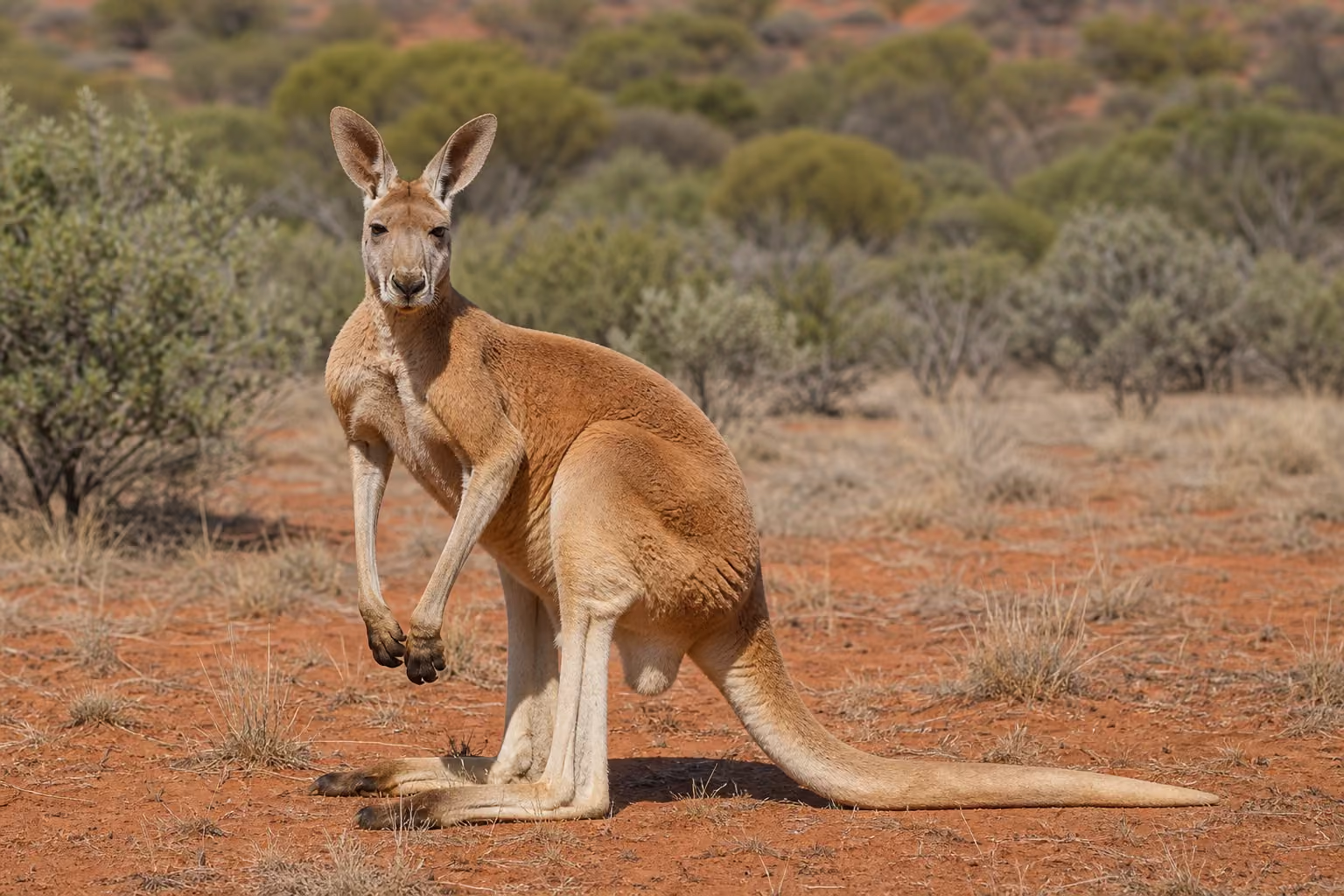
The largest living marsupial, a creature of Australia's dry inland that travels by bounding on its powerful hind legs. Males are reddish-brown while females wear a distinctive bluish-grey coat.
Range

Habitat range map
Native range Occasional / Transient

Map: Ecoregions 2017 © RESOLVE (CC BY 4.0) · Natural Earth (PD)

Details

Habitat

It ranges across central and western Australia, favouring arid grasslands, scrub, and deserts where annual rainfall falls below about 500 mm. It avoids the fertile south and coastal rainforest, thriving instead in dry, water-poor country.

Appearance

Body length spans 100-160 cm and weight ranges from 18 to 90 kg, with males far larger than females. Males show short red-brown fur fading to pale buff beneath, while females are blue-grey. A thick, long tail and muscular hind legs power its hopping.

Behavior

It usually forms small groups of a few animals, though many may gather around food and water. During the heat it rests in shade and licks its forelimbs to cool down, and rival males box, gripping with the forelimbs and kicking with the hind legs. It can hop at close to 60 km/h.

Feeding

A herbivore, it eats mainly fresh green grasses and other plants, selecting moist young growth in dry country. It also practises a form of pseudo-rumination, regurgitating food to chew it a second time.

Reproduction

Gestation is short, around 33 days, after which a tiny joey is born and grows inside the mother's pouch. The young begins to emerge near 200 days and leaves permanently at about 235 days. Through embryonic diapause, a female can hold a second embryo in arrested development and breed almost continuously.

Notes

Populations are stable and the species faces little risk, helped by farm expansion and artificial waterholes. Yet it is treated as a pest that competes with livestock for grass and has long been harvested for meat and leather. Wild individuals have been recorded living over 20 years.