437 Featured Specimen
Coyote

Details

Coyote

Canis latrans

Size
0.8–1 m · 7–21 kg
Diet
Omnivore
Activity
Crepuscular
Sociality
Loose group
Lifespan
10–14 years

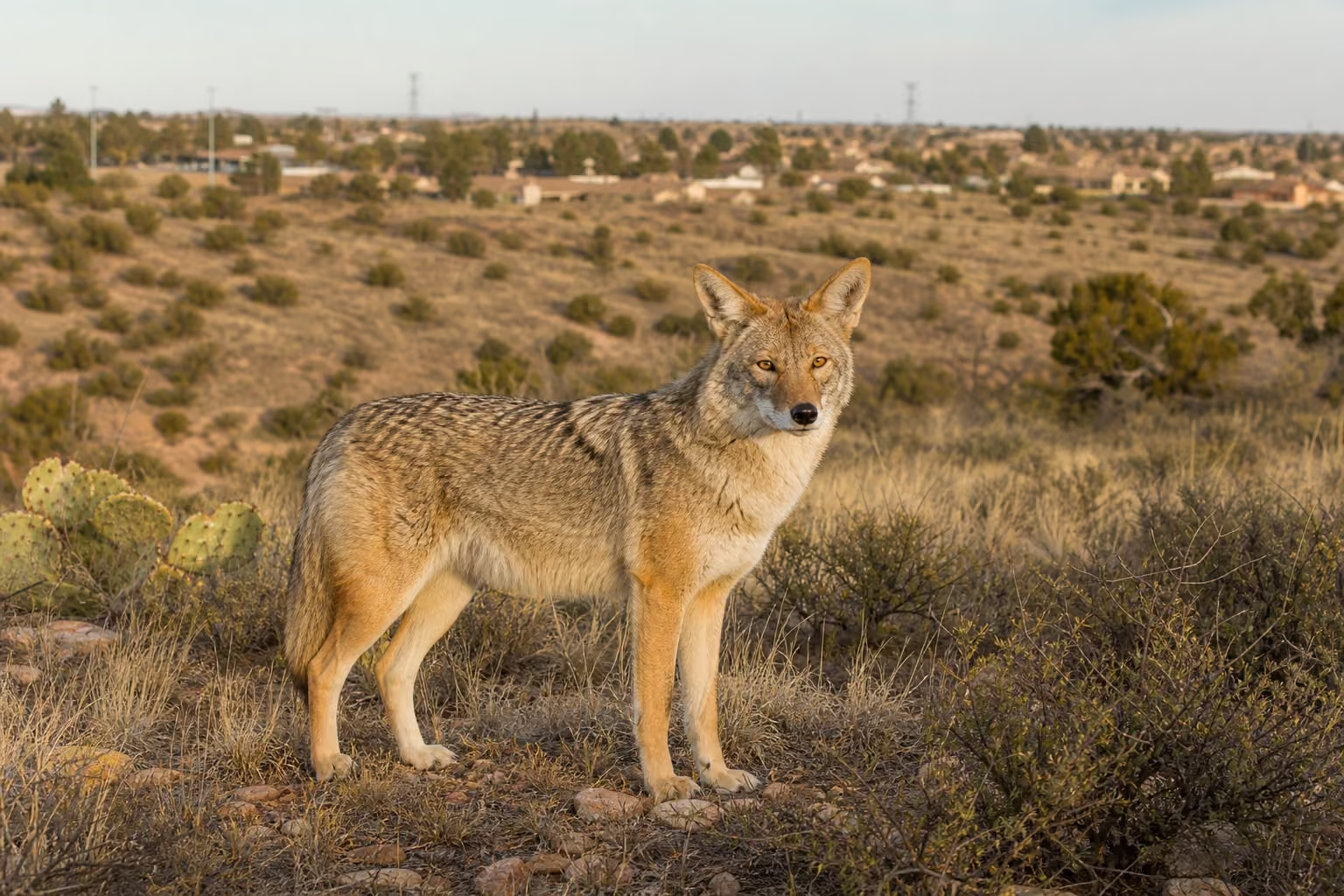
The coyote is a highly adaptable canid centered in North America. It uses grasslands, deserts, forests, and cities, feeding alone or in small loose groups.
Range

Habitat range map
Native range Occasional / Transient
NearcticNearcticNearcticNearcticNearcticNearcticNearcticNearcticNearcticNearcticNearcticNearcticNearcticNearcticNearcticNearcticNearcticNearcticNearcticNearcticNearcticNearcticNearcticNearcticNearcticNearcticNearcticNearcticNearcticNearcticNearcticNearcticNearcticNearcticNearcticNearcticNearcticNearcticNearcticNearcticNearcticNeotropicalNeotropicalNeotropicalNeotropicalNeotropicalNeotropicalNeotropicalNeotropical

Map: Ecoregions 2017 © RESOLVE (CC BY 4.0) · Natural Earth (PD)

Details

Habitat

It ranges from the Nearctic into the northern Neotropics, occupying grassland, desert, forest, farmland, suburbs, and urban areas. It balances open ground with cover.

Appearance

Length 75-100 cm; weight 7-21 kg. Grey-brown fur, a narrow muzzle, large ears, and a bushy tail give it a lean look. It is smaller and leggier than a wolf.

Behavior

Crepuscular and loosely social, it may travel alone, in pairs, or in small groups. Howls, yips, and barks keep contact across territories.

Feeding

An omnivore, it eats rodents, rabbits, fruit, insects, carrion, and food from human landscapes. Diet changes readily with season and place.

Reproduction

Pairs breed and raise pups in dens. Parents and sometimes older young help feed and guard the litter.

Notes

It is listed as Least Concern. Its spread has been helped in some areas by human alteration of predator communities, while urban conflict depends heavily on waste and pet management.