013 Featured Specimen
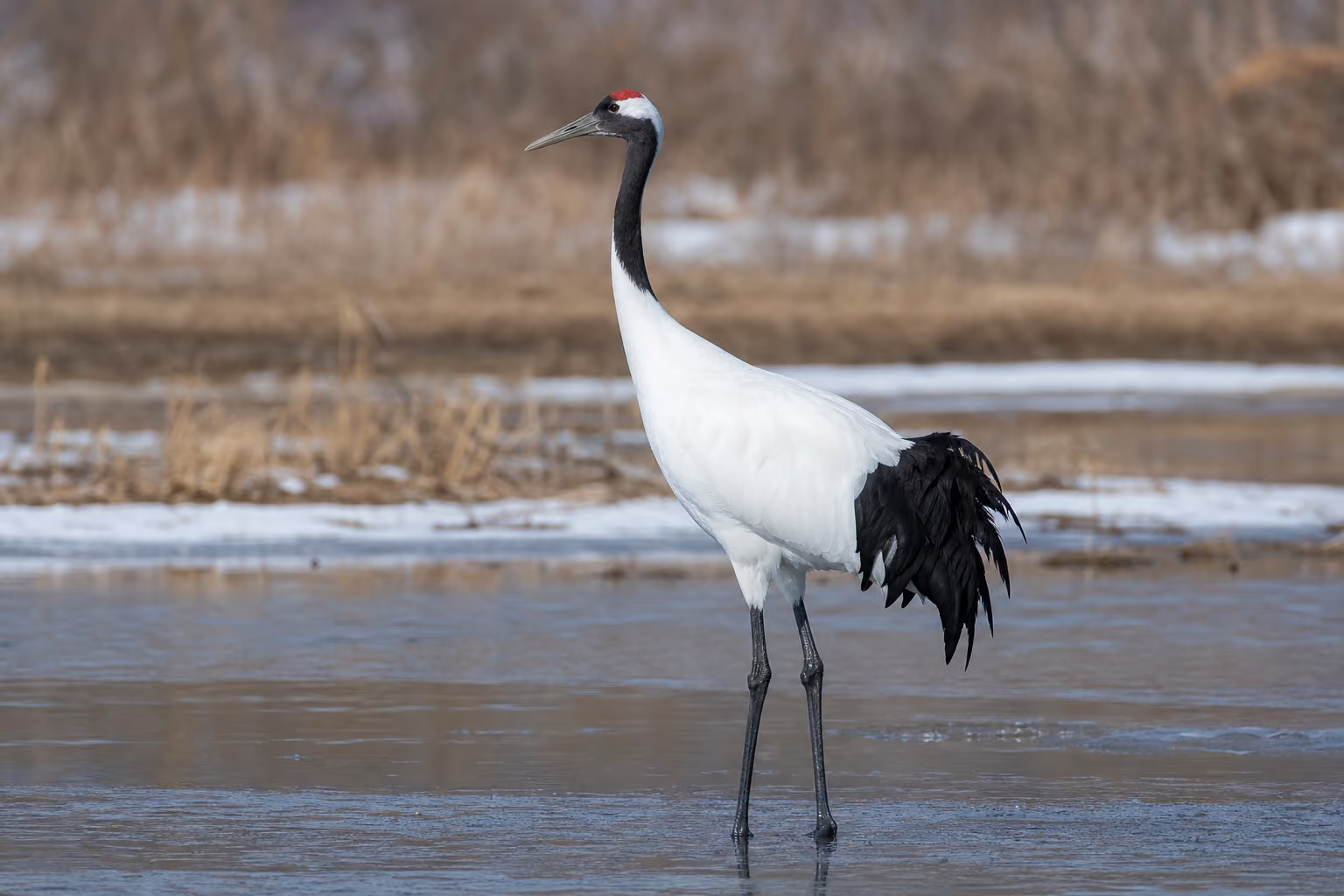
Red-crowned crane

Details

Red-crowned crane

Grus japonensis

Size
1.4–1.6 m · 7–10 kg
Diet
Omnivore
Activity
Diurnal
Sociality
Pair
Lifespan
20–30 years

One of the largest cranes in East Asia, instantly known by the patch of bare red skin crowning its head. Its snow-white body, set off by black neck and wing feathers, and its leaping pair courtship dances make it one of the most celebrated birds in the region.
Range

Habitat range map
Native range Occasional / Transient

Map: Ecoregions 2017 © RESOLVE (CC BY 4.0) · Natural Earth (PD)

Details

Habitat

It lives in marshes, rivers, shallows and farmland. A resident population stays year-round in eastern Hokkaido, while continental birds breed around the Amur basin and migrate south to the Korean Peninsula and coastal China for winter.

Appearance

A large crane 140-160 cm long and 7-10 kg in weight, with a wingspan exceeding two metres. The plumage is white with black on the throat and neck, and the bare crown skin turns a brighter red in the breeding season. The legs are dark.

Behavior

Pairs are thought to mate for life, holding territories and gathering into family groups and flocks in winter. Their long, coiled windpipe lets them carry calls for kilometres, and bonded pairs perform unison duets with thrown-back heads as well as leaping dances.

Feeding

Omnivorous, it takes fish such as loach and carp, frogs, shrimp and crabs, and insects and their larvae, alongside shoots, seeds and other plant matter. It forages with its head low, jabbing its bill into mud or striking swiftly like a heron to seize prey.

Reproduction

Breeding occurs in spring, when a pair builds a mounded nest over a metre across in shallow wetland. The clutch is usually one or two eggs, incubated by both sexes for about 31-36 days. Chicks can fly roughly 100 days after hatching and stay with their parents for months afterward.

Notes

Once thought extinct in Japan after heavy hunting, the species was rediscovered in the Kushiro marshes in 1924, and feeding and protection have helped the Japanese population recover. Continental flocks, however, have declined sharply through habitat loss, while collisions are a leading threat in Hokkaido. Long revered across East Asia as a symbol of longevity and good fortune.