051 Featured Specimen
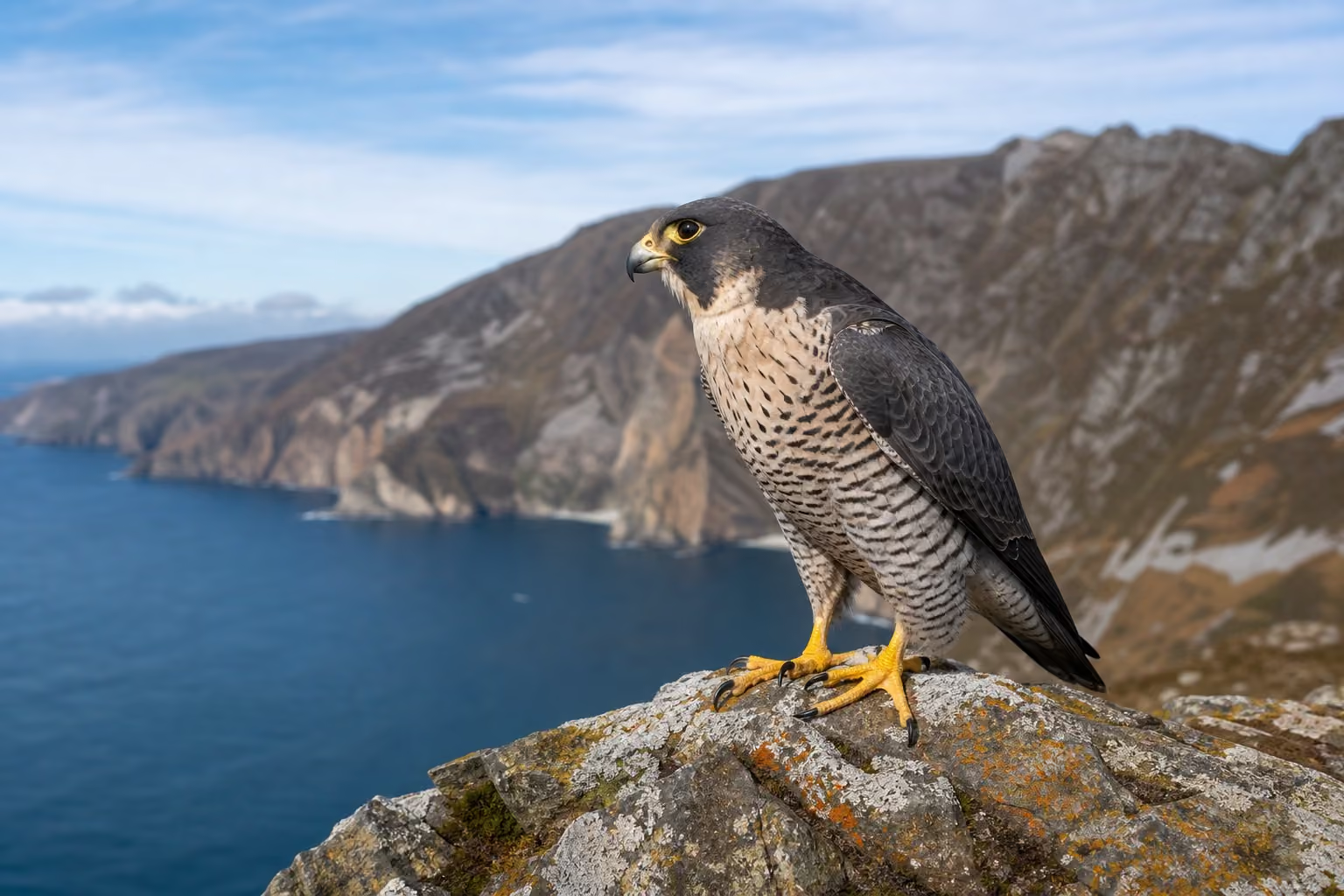
Peregrine falcon

Details

Peregrine falcon

Falco peregrinus

Size
Wingspan 0.8–1.2 m · 0.3–1.5 kg
Diet
Carnivore
Activity
Diurnal
Sociality
Pair
Lifespan
Several years to decades

One of the most widespread raptors on Earth, the peregrine falcon hunts by climbing high and plunging into a steep dive, or stoop, that exceeds 300 km/h. It is reckoned among the fastest animals alive.
Range

Habitat range map
Native range Occasional / Transient
PalearcticPalearcticPalearcticPalearcticPalearcticPalearcticPalearcticPalearcticPalearcticPalearcticPalearcticPalearcticPalearcticPalearcticPalearcticPalearcticPalearcticPalearcticPalearcticPalearcticPalearcticPalearcticPalearcticPalearcticNearcticNearcticNearcticNearcticNearcticNearcticNearcticNearcticNearcticNearcticNearcticNearcticNearcticNearcticNearcticNearcticNearcticNearcticNearcticNearcticNearcticNearcticNearcticNearcticNearcticNearcticNearcticNearcticNearcticNearcticNearcticNearcticNearcticNearcticNearcticNearcticNearcticNearcticNearcticNearcticNearcticNeotropicalNeotropicalNeotropicalNeotropicalNeotropicalNeotropicalNeotropicalNeotropicalAfrotropicalAfrotropicalAfrotropicalAfrotropicalIndomalayanIndomalayanIndomalayanIndomalayanIndomalayanIndomalayanIndomalayanIndomalayanIndomalayanIndomalayanIndomalayanIndomalayanIndomalayanIndomalayanIndomalayanAustralasianAustralasianAustralasianAustralasianAustralasianAustralasianAustralasianAustralasianAustralasianAustralasianAustralasianAustralasianAustralasianAustralasianAustralasianAustralasianAustralasian

Map: Ecoregions 2017 © RESOLVE (CC BY 4.0) · Natural Earth (PD)

Details

Habitat

Found on nearly every continent except Antarctica, it ranges from Arctic tundra to deserts. It favours cliffs, river valleys and coastlines, and increasingly treats tall city buildings as artificial crags.

Appearance

The wingspan reaches about 80 to 120 cm and weight 330 to 1,500 g, females noticeably larger than males. A blue-grey back, white barred underparts, a black hood with bold moustache markings, and yellow cere and feet are distinctive.

Behavior

Pairs hold permanent territories and often mate for life. Birds of mild regions stay year-round, while Arctic populations migrate long distances; even in level flight the falcon reaches around 100 km/h.

Feeding

A bird specialist, it preys chiefly on pigeons, starlings and other birds taken on the wing. The famous stoop ends with a strike of the wing or talons, the prey then seized in flight.

Reproduction

Three to four eggs are laid in a scrape on a cliff ledge or building, usually in spring. The female does most of the roughly 29 to 32 day incubation, and chicks fledge at about 35 to 42 days; maturity comes at one to three years.

Notes

Organochlorine pesticides such as DDT thinned its eggshells and crashed populations in the mid-20th century, but bans and captive breeding drove a remarkable recovery. Prized in falconry for millennia, its speed lends its name to fast machines.