325 Featured Specimen
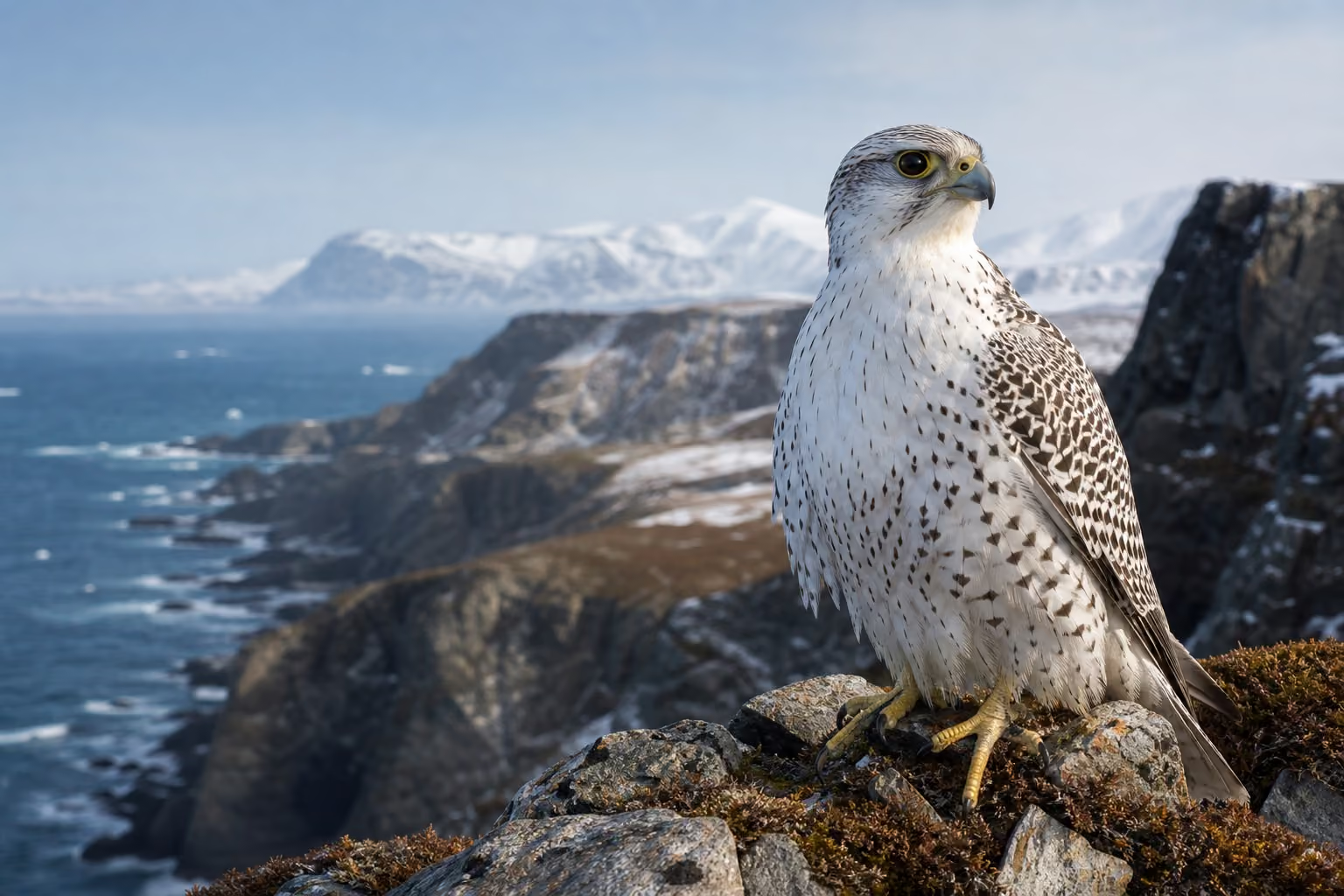
Gyrfalcon

Details

Gyrfalcon

Falco rusticolus

Size
48–65 cm · 0.8–2.1 kg
Diet
Carnivore
Activity
Diurnal
Sociality
Pair
Lifespan
12–20 years

The gyrfalcon is a large falcon of Arctic and subarctic open country. Plumage ranges from white to dark, and the bird pursues cold-country prey with speed and power.
Range

Habitat range map
Native range Occasional / Transient
Arctic OceanArctic OceanArctic OceanPalearcticPalearcticPalearcticPalearcticPalearcticPalearcticPalearcticPalearcticPalearcticPalearcticPalearcticPalearcticPalearcticPalearcticPalearcticPalearcticPalearcticPalearcticPalearcticPalearcticPalearcticPalearcticPalearcticPalearcticNearcticNearcticNearcticNearcticNearcticNearcticNearcticNearcticNearcticNearcticNearcticNearcticNearcticNearcticNearcticNearcticNearcticNearcticNearcticNearcticNearcticNearcticNearcticNearcticNearcticNearcticNearcticNearcticNearcticNearcticNearcticNearcticNearcticNearcticNearcticNearcticNearcticNearcticNearcticNearcticNearctic

Map: Ecoregions 2017 © RESOLVE (CC BY 4.0) · Natural Earth (PD)

Details

Habitat

It occurs around the Arctic Ocean and northern Palearctic and Nearctic tundra, rocky uplands, and sea cliffs. Nesting sites include cliff ledges and old nests of other large birds.

Appearance

Length is 48-65 cm and weight 800-2100 g. It is one of the largest falcons, with long wings, a relatively long tail, and plumage that may be white, grey, brown, or dark.

Behavior

Diurnal pairs hold large territories. They hunt with fast low flight or stoops from height, taking birds in the air and prey on the ground.

Feeding

A carnivore, it feeds on ptarmigan, seabirds, and small mammals. Seasonal prey availability around the breeding range strongly shapes its diet.

Reproduction

Eggs are laid on cliff ledges or in old nests of ravens and other birds. Breeding begins early in cold regions, with the male bringing prey while the female incubates.

Notes

It is listed as Least Concern. Its northern ecology links it closely to prey cycles and potential changes in Arctic environments.