740 Featured Specimen
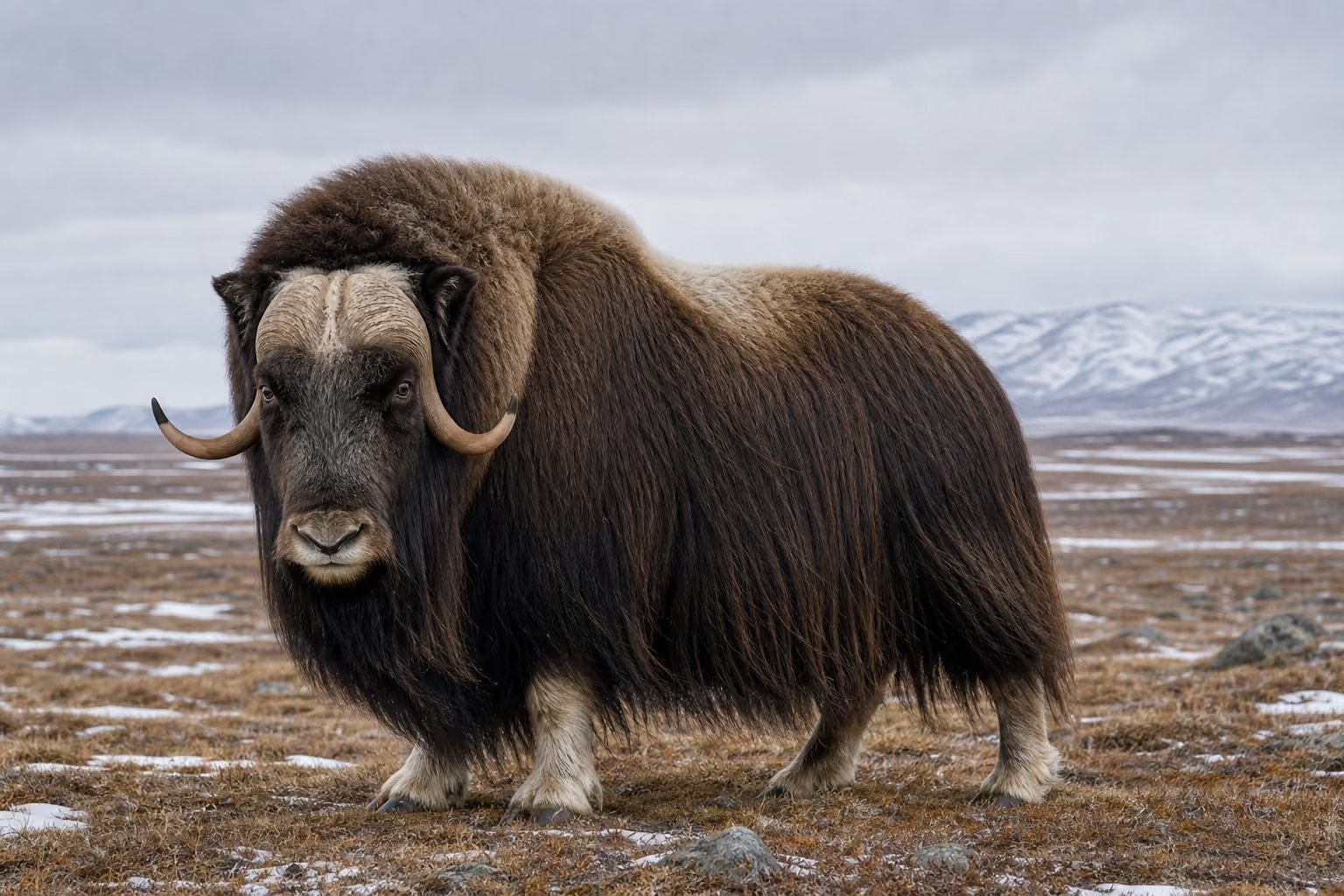
Muskox

Details

Muskox

Ovibos moschatus

Size
1.9–2.5 m · 180–410 kg
Diet
Herbivore
Activity
Cathemeral
Sociality
Herd
Lifespan

A large bovine of Arctic tundra and open northern grasslands. Its long guard hairs and dense underwool are adaptations to severe cold.
Range

Habitat range map
Native range Occasional / Transient
PalearcticPalearcticPalearcticPalearcticPalearcticPalearcticPalearcticPalearcticPalearcticPalearcticPalearcticPalearcticPalearcticPalearcticPalearcticPalearcticPalearcticPalearcticPalearcticPalearcticPalearcticPalearcticPalearcticPalearcticNearcticNearcticNearcticNearcticNearcticNearcticNearcticNearcticNearcticNearcticNearcticNearcticNearcticNearcticNearcticNearcticNearcticNearcticNearcticNearcticNearcticNearcticNearcticNearcticNearcticNearcticNearcticNearcticNearcticNearcticNearcticNearcticNearcticNearcticNearcticNearcticNearcticNearcticNearcticNearcticNearctic

Map: Ecoregions 2017 © RESOLVE (CC BY 4.0) · Natural Earth (PD)

Details

Habitat

Muskoxen occupy Arctic tundra, open slopes, coastal plains, and windswept areas where winter snow can be shallow enough for feeding.

Appearance

The body is stocky with high shoulders and long hair hanging along the flanks. Both sexes have curved horns, with males developing a heavy horn boss.

Behavior

They live in herds and may form tight defensive groups against predators. Winter movements are often slow and energy-conserving.

Feeding

They graze grasses and sedges and browse willow, lichens, and mosses. Summer feeding builds reserves for long winter conditions.

Reproduction

Breeding occurs from late summer into autumn. Females give birth to a single calf in spring, and calves soon follow the herd.

Notes

Some regional populations were lost to hunting, but protection and reintroductions have restored muskoxen to parts of their former range.