800 Featured Specimen
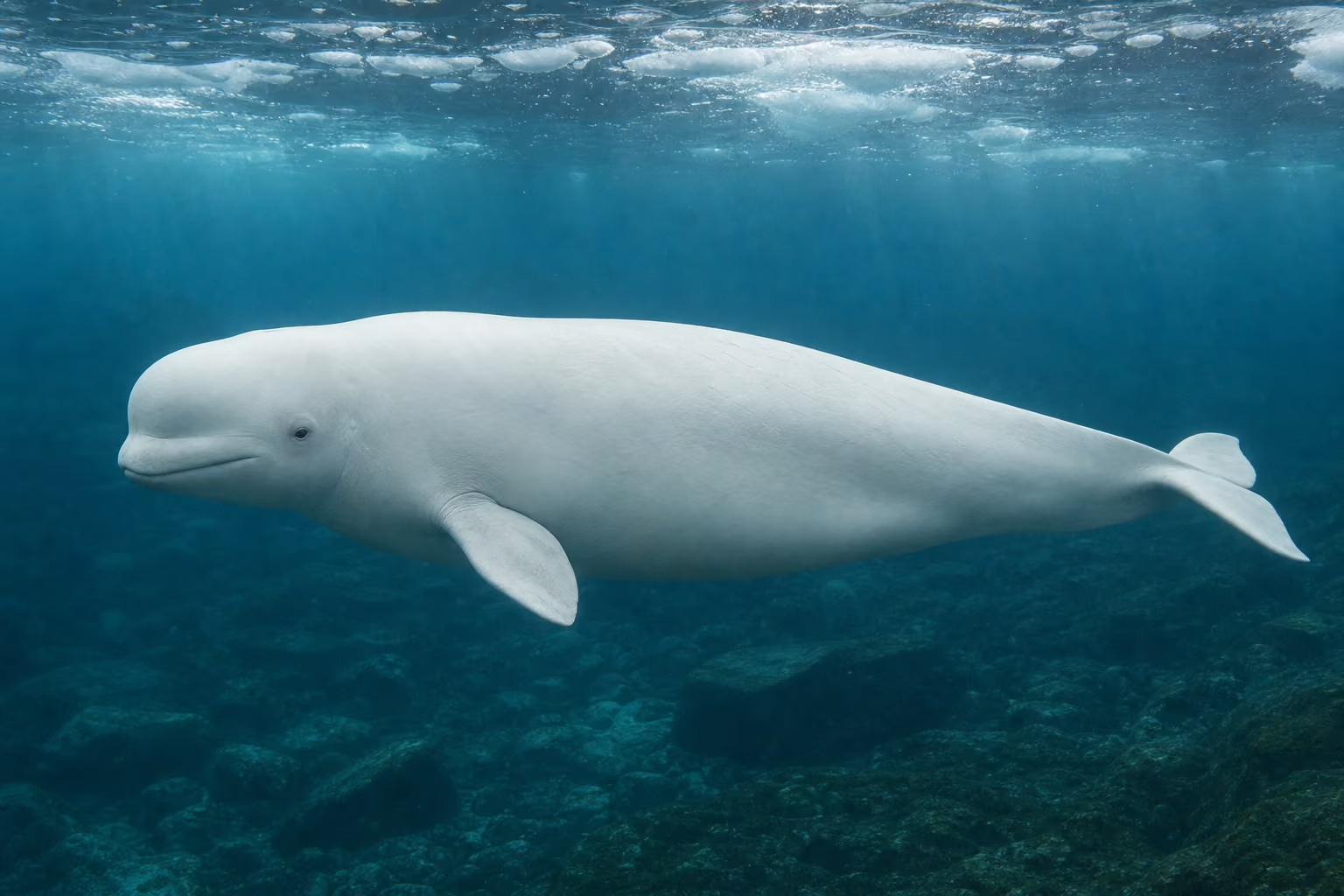
Beluga whale

Details

Beluga whale

Delphinapterus leucas

Size
Total length 3–5.5 m · 0.7–1.6 t
Diet
Carnivore
Activity
Cathemeral
Sociality
Social
Lifespan

A white toothed whale of Arctic and subarctic waters. Its rounded forehead, flexible neck, and many calls earned the nickname sea canary.
Range

Habitat range map
Native range Occasional / Transient
Arctic OceanArctic OceanArctic OceanPalearcticPalearcticPalearcticPalearcticPalearcticPalearcticPalearcticPalearcticPalearcticPalearcticPalearcticPalearcticPalearcticPalearcticPalearcticPalearcticPalearcticPalearcticPalearcticPalearcticPalearcticPalearcticPalearcticPalearcticNearcticNearcticNearcticNearcticNearcticNearcticNearcticNearcticNearcticNearcticNearcticNearcticNearcticNearcticNearcticNearcticNearcticNearcticNearcticNearcticNearcticNearcticNearcticNearcticNearcticNearcticNearcticNearcticNearcticNearcticNearcticNearcticNearcticNearcticNearcticNearcticNearcticNearcticNearcticNearcticNearctic

Map: Ecoregions 2017 © RESOLVE (CC BY 4.0) · Natural Earth (PD)

Details

Habitat

Belugas use Arctic seas, subarctic bays, estuaries, shallow coasts, and seasonal ice edges. Summer aggregations often occur in estuaries and warm shallows.

Appearance

Adults are white, lack a dorsal fin, and have a rounded melon. A flexible neck lets them turn the head more than most whales.

Behavior

They live in groups and use calls and echolocation for contact and feeding. Seasonal movements follow ice openings, breathing areas, and prey.

Feeding

They eat fish, squid, shrimp, crabs, and bottom-dwelling animals, often searching shallow seafloors and suction-feeding prey.

Reproduction

Females bear single calves that are gray at birth and whiten with age. Strong mother-calf bonds develop within social groups.

Notes

Status varies by population. Climate change, vessel noise, pollution, and Arctic development affect their habitat and movements.