782 Featured Specimen
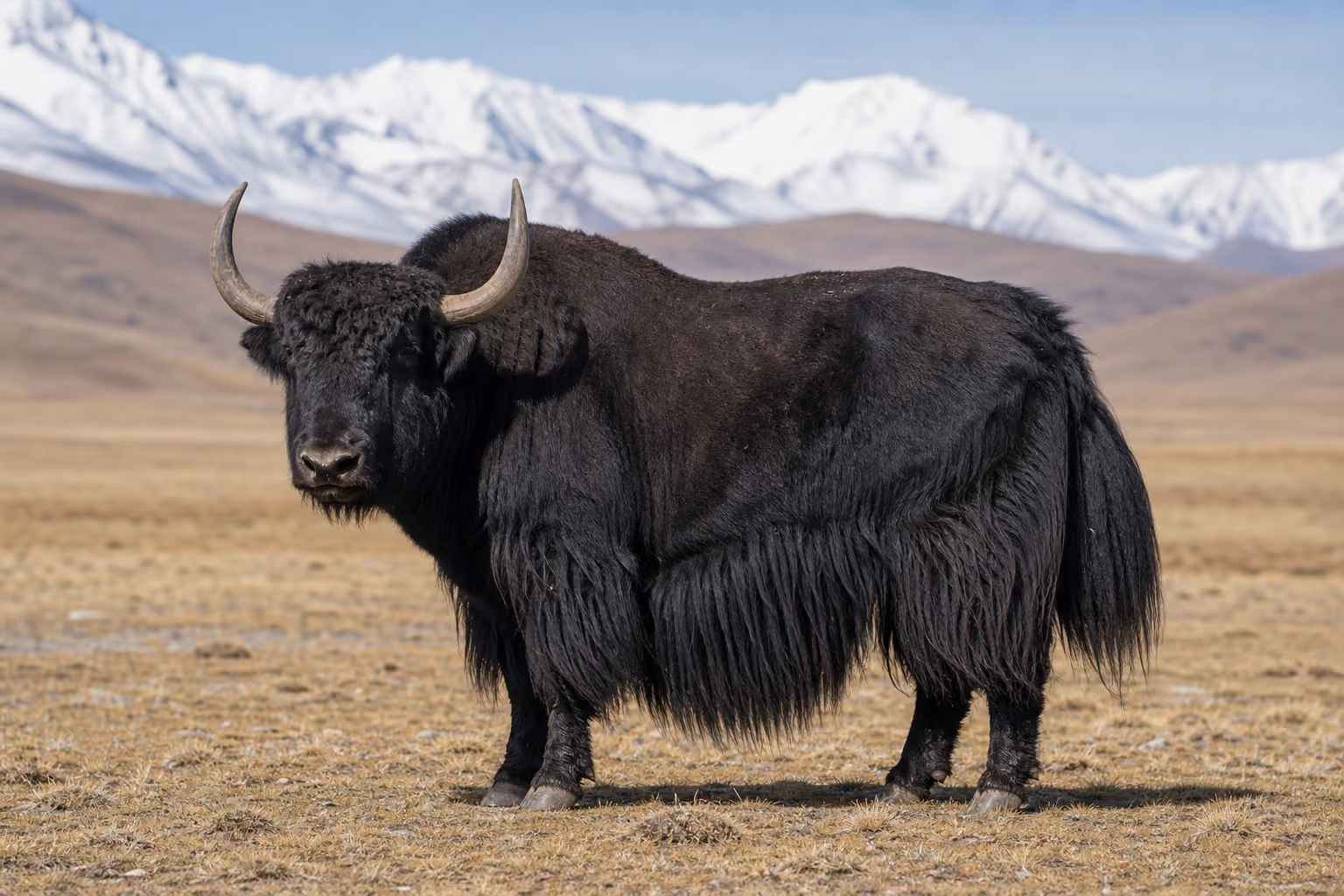
Wild yak

Details

Wild yak

Bos mutus

Size
2.5–3.3 m · 0.3–1 t
Diet
Herbivore
Activity
Diurnal
Sociality
Herd
Lifespan

A massive wild cattle of the Tibetan Plateau. Long dark hair, great size, and adaptations to cold, wind, and thin air define it.
Range

Habitat range map
Native range Occasional / Transient
PalearcticPalearcticPalearcticPalearcticPalearcticPalearcticPalearcticPalearcticPalearcticPalearcticPalearcticPalearcticPalearcticPalearcticPalearcticPalearcticPalearcticPalearcticPalearcticPalearcticPalearcticPalearcticPalearcticPalearctic

Map: Ecoregions 2017 © RESOLVE (CC BY 4.0) · Natural Earth (PD)

Details

Habitat

Wild yaks inhabit high-elevation grassland, cold semi-desert, mountain valleys, and snowy plateaus. They tolerate severe cold and low oxygen.

Appearance

They have long dark brown to black hair, a bushy tail, high shoulders, and large horns. Males are especially massive.

Behavior

Females and young form herds, while adult males are often solitary or in small groups. Herds range widely across open plateau landscapes.

Feeding

They graze on alpine herbs, grasses, sedges, and lichens. In snow, they may dig to reach vegetation and build condition during short growing seasons.

Reproduction

Males join female herds during the rut. Females give birth to a single calf that stays close in cold open habitats.

Notes

Hybridization with domestic yaks, hunting, and grazing pressure are major conservation concerns for wild populations.