046 Featured Specimen
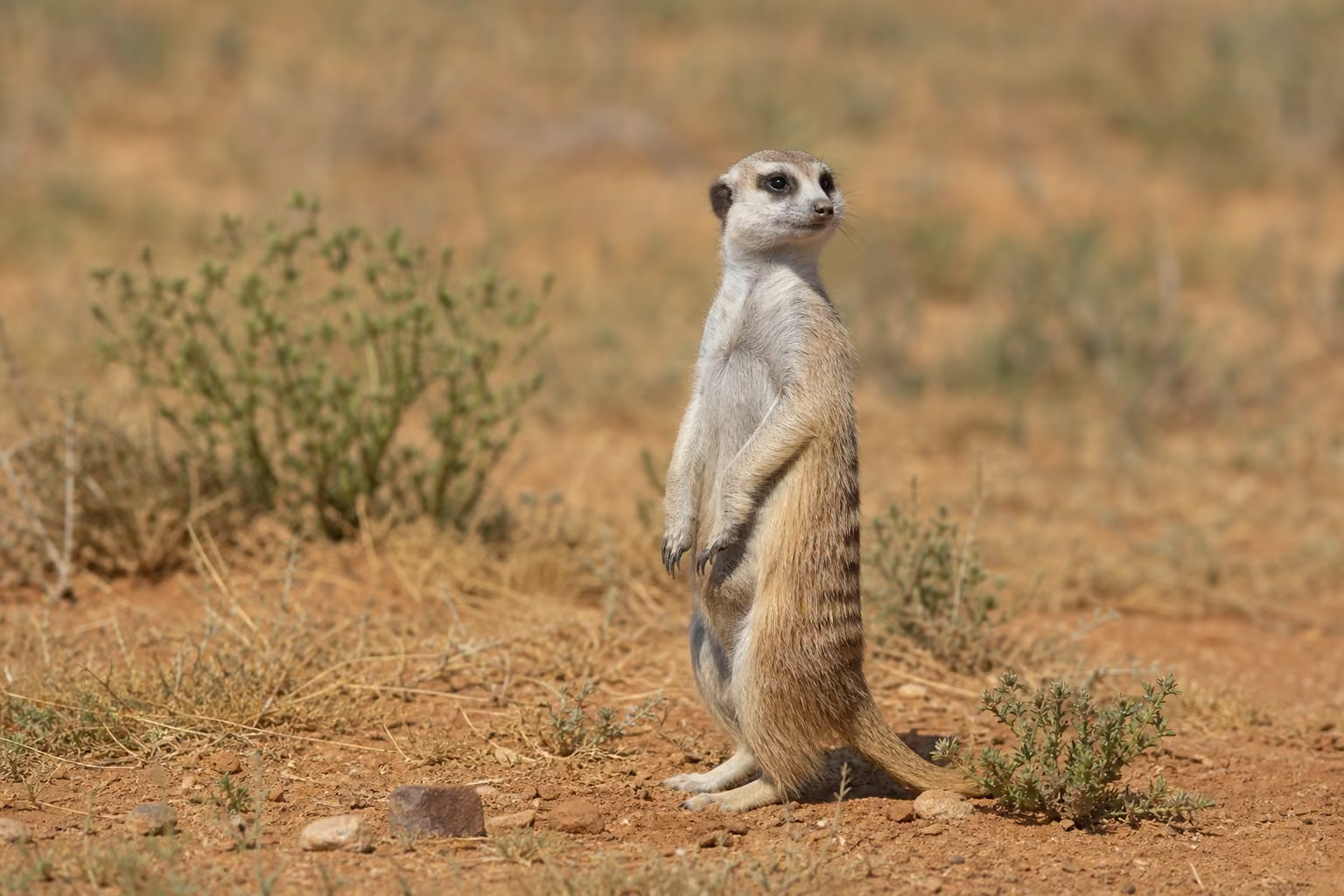
Meerkat

Details

Meerkat

Suricata suricatta

Size
25–35 cm · 0.6–1 kg
Diet
Omnivore
Activity
Diurnal
Sociality
Social
Lifespan
6-10 years

A small, highly social mongoose of southern Africa's drylands, famous for the cooperative habit of posting a sentry that stands upright on its hind legs while the rest of the group forages.
Range

Habitat range map
Native range Occasional / Transient

Map: Ecoregions 2017 © RESOLVE (CC BY 4.0) · Natural Earth (PD)

Details

Habitat

Found across the arid Kalahari of southwestern Botswana, southern and western Namibia, and northern and western South Africa, barely reaching Angola. It favours open, sparsely wooded ground, living among short grasses, shrubs and rocky terrain near dry riverbeds.

Appearance

A slender animal 25-35 cm long and weighing 600-1,000 g, with a light grey to yellowish-brown coat marked by dark bands across the back. Black patches ring the eyes and ears, the thin tapering tail ends in black, and curved foreclaws suit digging; large eyes filling over a fifth of the skull give wide binocular vision.

Behavior

Diurnal and intensely social, meerkats form packs of 2-30 that excavate burrow systems of two or three tunnel levels. They take turns as sentinels, one standing guard while others feed and giving alarm calls at the first sign of danger.

Feeding

Chiefly insectivorous, feeding heavily on beetles and the larvae of moths and butterflies, plus other arthropods, amphibians, reptiles, small birds and plant matter. They forage 5-8 hours a day, digging systematically near the burrow, and are immune to scorpion venom.

Reproduction

Breeding peaks in the rainy season; after a gestation of about 60-70 days a litter of three to seven pups is born. A dominant pair monopolises breeding while non-breeding subordinate helpers care for the young, and mothers even teach pups how to safely handle venomous scorpions.

Notes

Listed as Least Concern with stable populations, the meerkat is threatened mainly by low rainfall and temperature extremes. In South Africa it is valued for controlling rodents and crop pests, but its aggression and strong odour make it unsuitable as a pet.