060 Featured Specimen
Mandarin duck

Details

Mandarin duck

Aix galericulata

Size
41–49 cm · 430–690 g
Diet
Omnivore
Activity
Diurnal
Sociality
Pair
Lifespan
Several years to decades

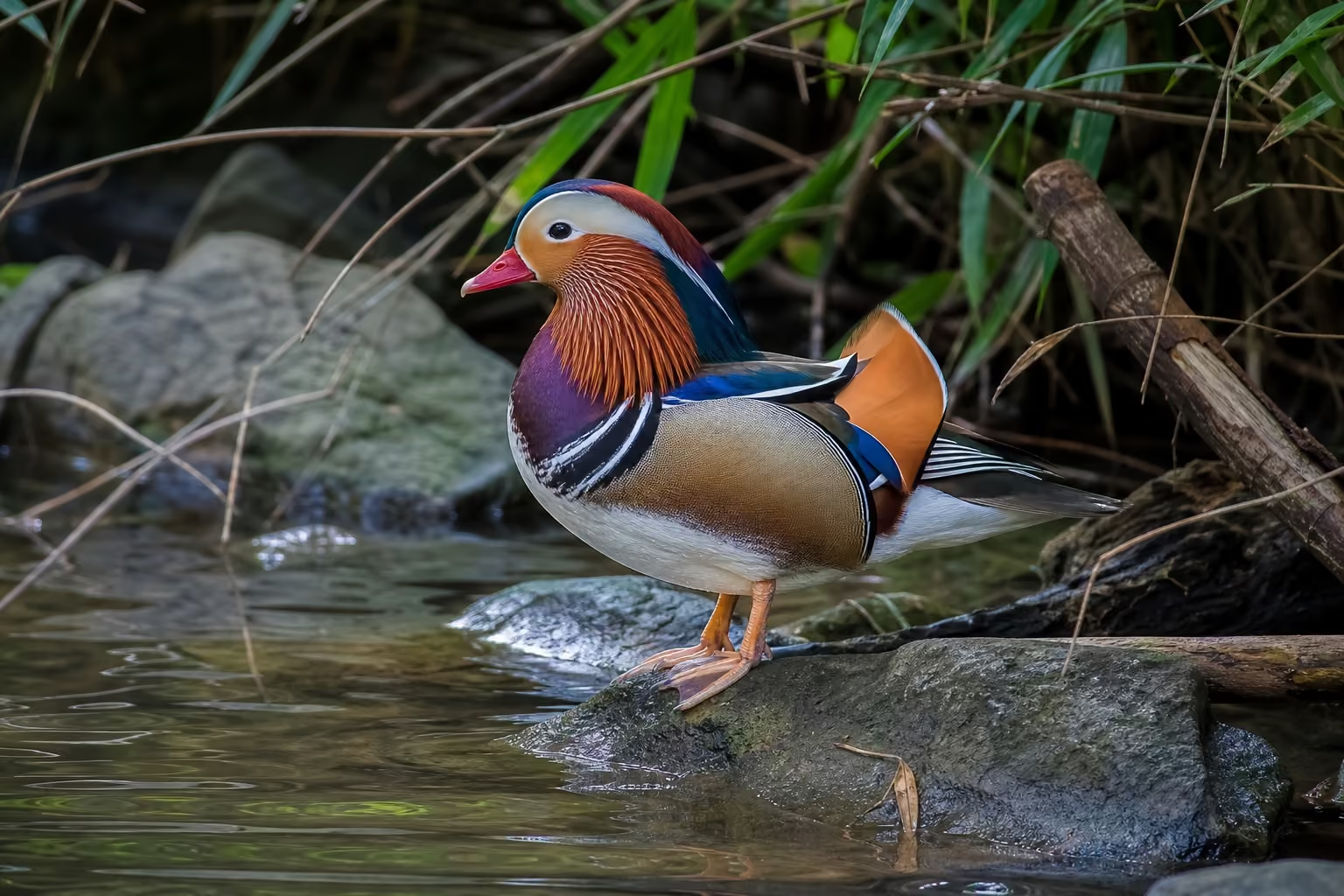
A small, spectacularly colored duck famed for the drake's plumage. Each male raises a pair of orange "sail" feathers like ship's sails and haunts quiet, tree-lined waters across East Asia, where it is a celebrated emblem of devoted couples.
Range

Habitat range map
Native range Occasional / Transient
PalearcticPalearcticPalearcticPalearcticPalearcticPalearcticPalearcticPalearcticPalearcticPalearcticPalearcticPalearcticPalearcticPalearcticPalearcticPalearcticPalearcticPalearcticPalearcticPalearcticPalearcticPalearcticPalearcticPalearctic

Map: Ecoregions 2017 © RESOLVE (CC BY 4.0) · Natural Earth (PD)

Details

Habitat

Native to East and Northeast Asia, it favors densely wooded streams, lakes and ponds, keeping to shaded margins rather than open water. It breeds from lowlands up to valleys around 1,500 m. Introduced populations now thrive in Britain and parts of Europe and North America.

Appearance

It measures 41–49 cm long and weighs 430–690 g. The breeding drake sports a red bill, a white crescent above the eye, orange facial whiskers and a purple breast barred with white, crowned by upright orange sail-like feathers. The female is a subtle grey-brown with a white eye-ring; eclipse males resemble her.

Behavior

Shy and easily startled, it pairs or gathers in small flocks, with dozens to hundreds massing in deep winter. Unusually for a duck it perches and roosts in trees, sheltering beneath overhanging branches near the water.

Feeding

An omnivore with a strong plant bias, it takes acorns, beech mast, seeds and aquatic plants alongside snails, insects and small fish. It forages by dabbling on the water and walking ashore, feeding mainly at dawn and dusk.

Reproduction

The female nests in a tree cavity often more than 10 m above ground, laying nine to twelve eggs in April or May. She alone incubates them for 28–30 days; once hatched, the ducklings leap unaided from the nest and follow her to water.

Notes

Listed as Least Concern by the IUCN, though it remains threatened across much of Japan and is the official bird of several prefectures. Long held as a symbol of marital harmony, the species in fact tends to take a new partner each winter.