609 Featured Specimen
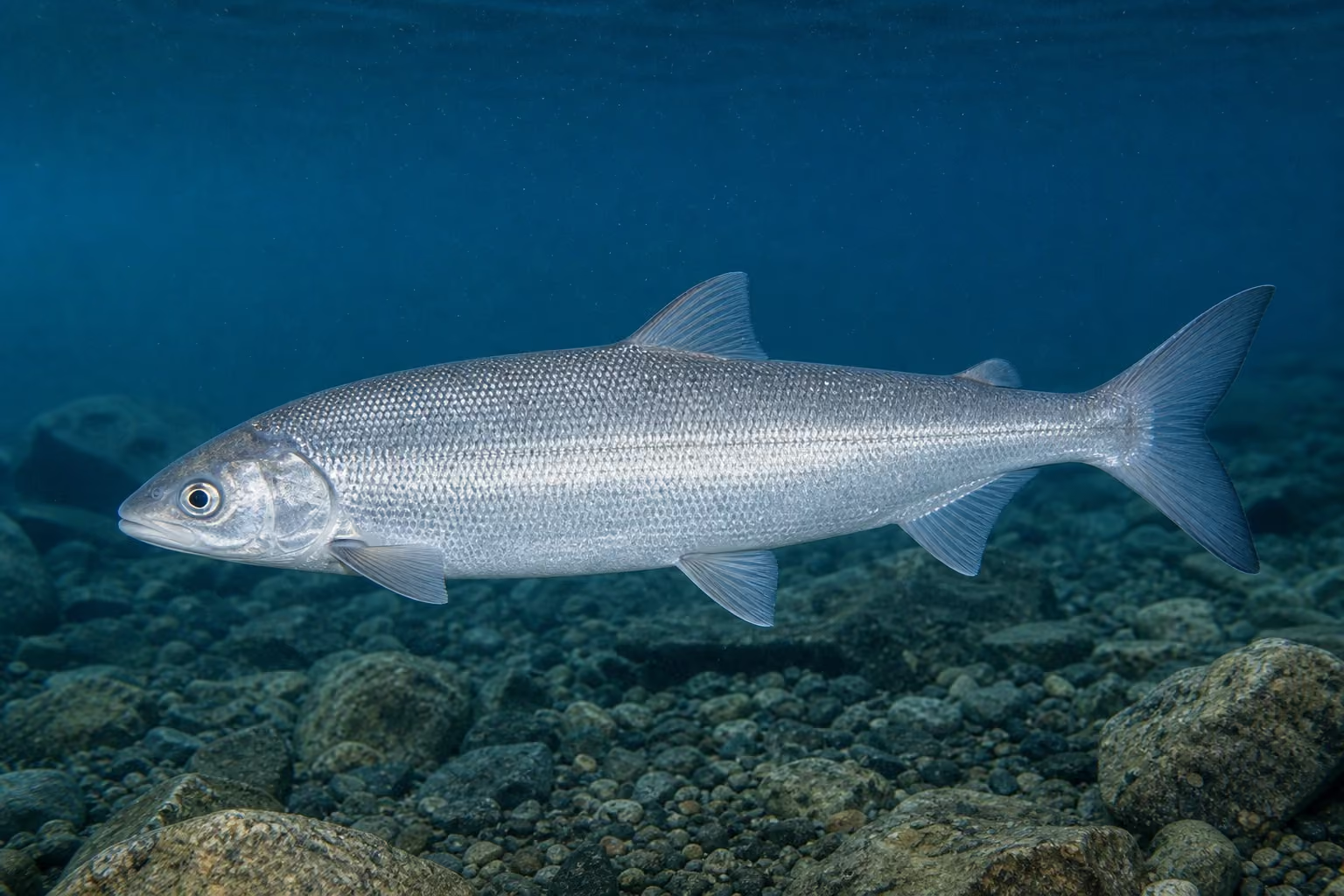
Lake whitefish

Details

Lake whitefish

Coregonus clupeaformis

Size
25–70 cm · 0.3–9 kg
Diet
Carnivore
Activity
Cathemeral
Sociality
Loose group
Lifespan

A cold-water salmonid of northern North American lakes, foraging near the bottom and supporting regional fisheries.
Range

Habitat range map
Native range Occasional / Transient
NearcticNearcticNearcticNearcticNearcticNearcticNearcticNearcticNearcticNearcticNearcticNearcticNearcticNearcticNearcticNearcticNearcticNearcticNearcticNearcticNearcticNearcticNearcticNearcticNearcticNearcticNearcticNearcticNearcticNearcticNearcticNearcticNearcticNearcticNearcticNearcticNearcticNearcticNearcticNearcticNearctic

Map: Ecoregions 2017 © RESOLVE (CC BY 4.0) · Natural Earth (PD)

Details

Habitat

Lives in large lakes and cold rivers of Canada and the northern United States, including the Great Lakes, using deep cold water in summer.

Appearance

The body is silvery-white and moderately deep, with a small downward mouth and an adipose fin on the back.

Behavior

Loose groups move near lake bottoms. Fish shift between shallow and deep water seasonally and gather near shore to spawn.

Feeding

It eats aquatic insect larvae, mollusks, small crustaceans, and fish eggs, picking prey from the bottom.

Reproduction

Spawning occurs in autumn over shallow rocky or gravelly bottoms. Eggs develop through winter and hatch in spring.

Notes

Lake whitefish is important to commercial and Indigenous fisheries in northern North America and is affected by water quality and invasive species.