073 Featured Specimen
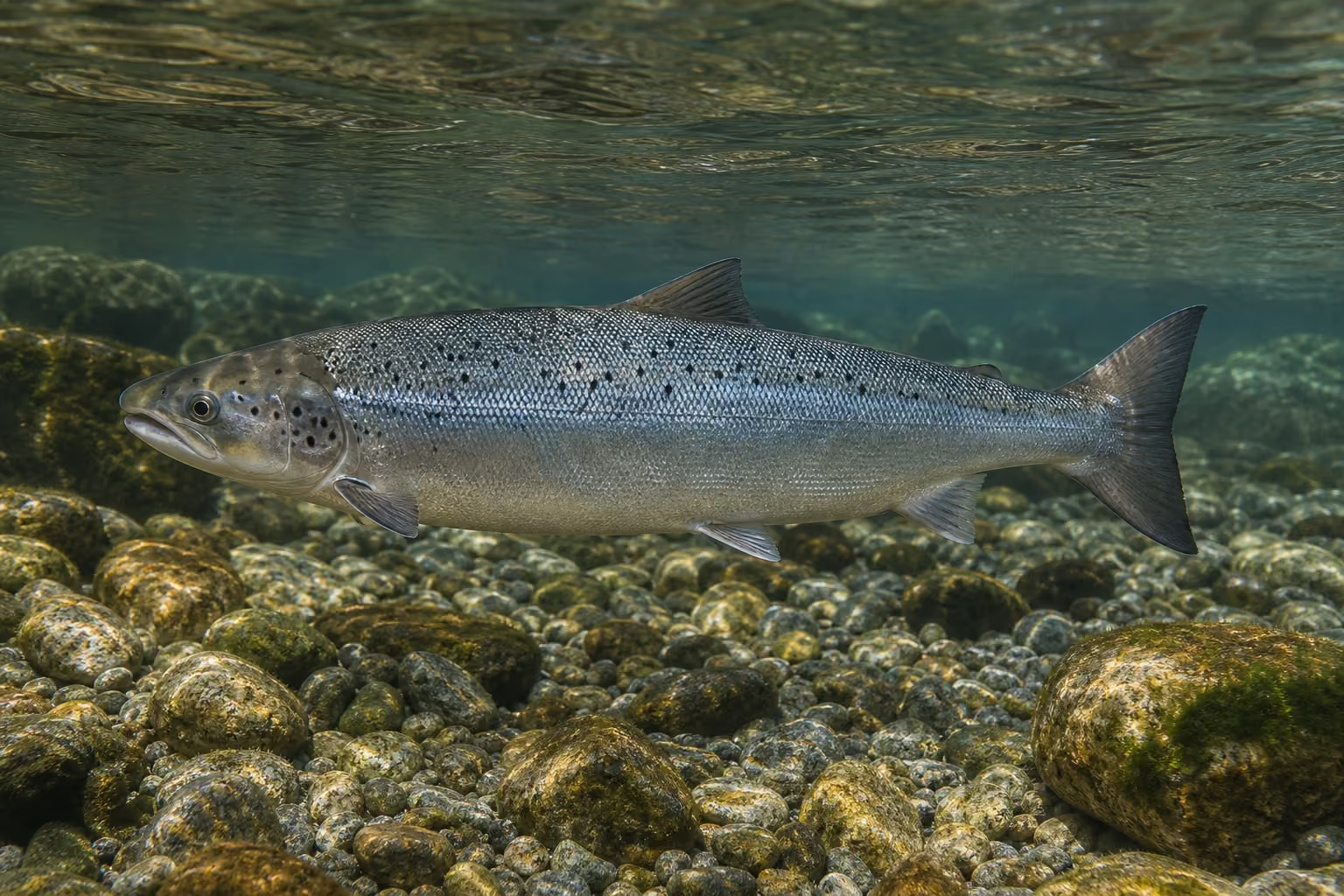
Atlantic salmon

Details

Atlantic salmon

Salmo salar

Size
0.5–1.2 m · 2–30 kg
Diet
Carnivore
Activity
Seasonal
Sociality
Loose group
Lifespan
Varies by species and environment

A salmonid born in rivers that grows large at sea and returns to its natal stream to spawn. Unlike Pacific salmon, many survive spawning and head back to sea, able to breed again in later years.
Range

Habitat range map
Native range Occasional / Transient
Atlantic OceanAtlantic OceanAtlantic OceanAtlantic OceanAtlantic OceanPalearcticPalearcticPalearcticPalearcticPalearcticPalearcticPalearcticPalearcticPalearcticPalearcticPalearcticPalearcticPalearcticPalearcticPalearcticPalearcticPalearcticPalearcticPalearcticPalearcticPalearcticPalearcticPalearcticPalearcticNearcticNearcticNearcticNearcticNearcticNearcticNearcticNearcticNearcticNearcticNearcticNearcticNearcticNearcticNearcticNearcticNearcticNearcticNearcticNearcticNearcticNearcticNearcticNearcticNearcticNearcticNearcticNearcticNearcticNearcticNearcticNearcticNearcticNearcticNearcticNearcticNearcticNearcticNearcticNearcticNearctic

Map: Ecoregions 2017 © RESOLVE (CC BY 4.0) · Natural Earth (PD)

Details

Habitat

Found throughout the North Atlantic and the rivers draining into it, from northern Portugal to Norway and Iceland in Europe and from Labrador to New England in North America. After going to sea it feeds and grows in the cold, near-Arctic waters of the open North Atlantic.

Appearance

A large fish reaching about 50 to 120 cm and 2 to 30 kg. At sea it is dark blue-green above with bright silvery flanks and scattered dark spots over the head and back; freshwater juveniles (parr) carry red spots along the side, and breeding males take on a green or reddish tinge.

Behavior

Famous for its homing instinct, an adult that has spent several years at sea locates its birth river with remarkable accuracy and runs upstream to it. Migration and spawning follow the seasons, and the fish gather in loose schools as they move down to the sea or back up to spawn.

Feeding

Carnivorous, it shifts diet with its life stage. Stream-dwelling young take caddisflies, mayflies and other aquatic insect larvae and small invertebrates, while at sea it preys actively on small fish such as capelin and herring along with shrimp-like krill and amphipods.

Reproduction

Adults run upstream from autumn into early winter, where the female digs a gravel nest, or redd, with her tail and covers the deposited eggs with gravel. Most spawners are exhausted and die afterward, but a portion survive, return to the sea, and spawn again in a later year.

Notes

Almost all Atlantic salmon sold today is farmed, with Norway supplying over half the world's farmed output. Wild populations have declined across much of their range from dam construction, water pollution and introduced parasites, and many rivers are the focus of restoration efforts.