018 Featured Specimen
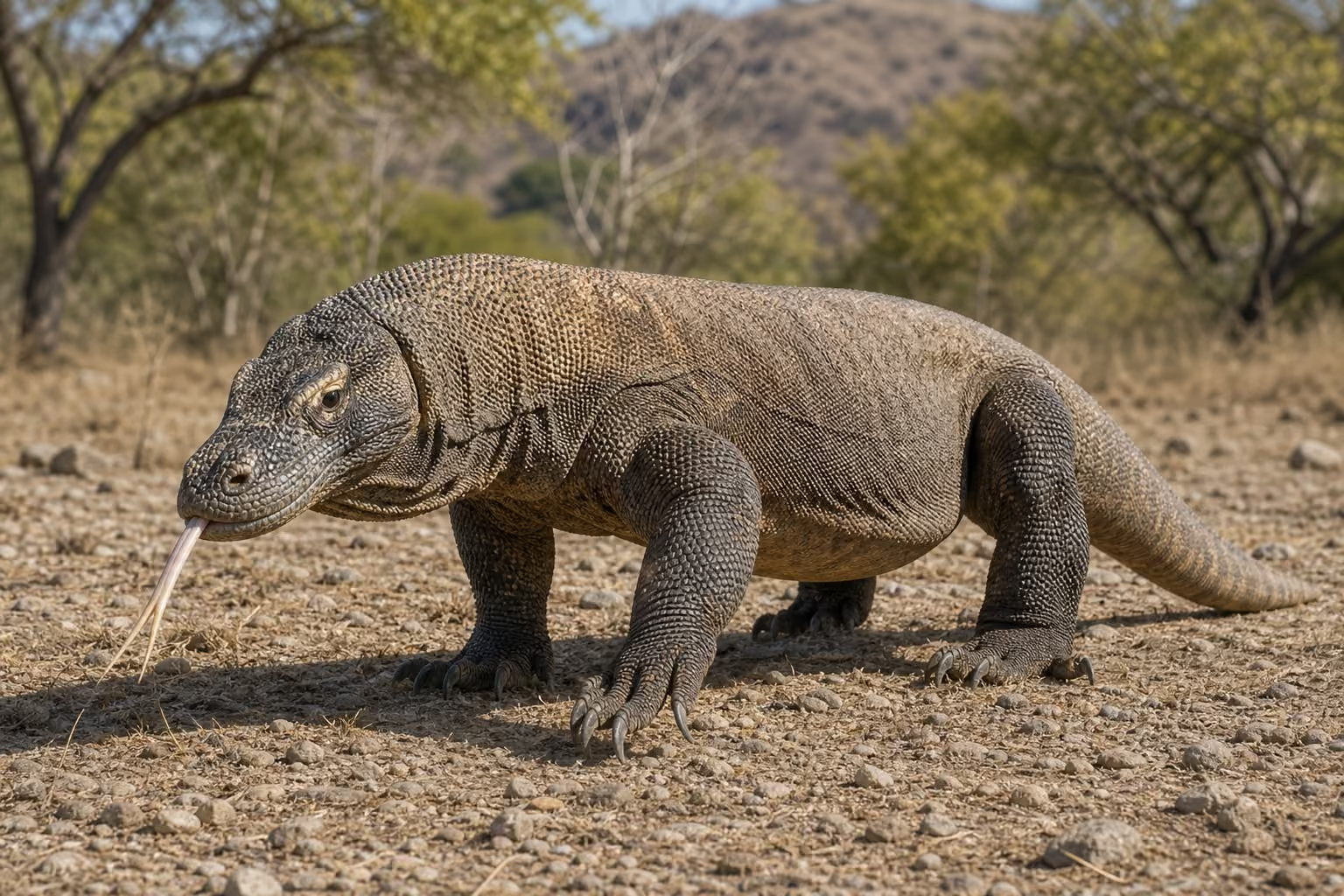
Komodo dragon

Details

Komodo dragon

Varanus komodoensis

Size
2–3 m · 70 kg
Diet
Carnivore
Activity
Diurnal
Sociality
Solitary
Lifespan
20–30 years

The largest lizard alive today, surviving only on a handful of Indonesian islands. A keen sense of smell lets this apex predator track prey across long distances, and it can bring down animals far larger than itself with a venomous bite.
Range

Habitat range map
Native range Occasional / Transient

Map: Ecoregions 2017 © RESOLVE (CC BY 4.0) · Natural Earth (PD)

Details

Habitat

It lives on Komodo, Rinca, Gili Motang, and Gili Dasami, and parts of Flores. It favours hot, dry lowlands — open grassland, savanna, and tropical deciduous forest — moving into riverine woodland in the wet season. The largest population is protected within Komodo National Park.

Appearance

Reaching 200 to 300 cm and weighing around 70 kg, it is the world's heaviest lizard. The skin is dark grey, sometimes washed with brown on the neck and back, and armoured with bony scales. Its roughly 60 serrated teeth slice flesh cleanly and are replaced in cycles.

Behavior

It is solitary, gathering only to feed or breed. As an ectotherm, it begins moving once the morning sun warms its body, basking before it forages. It can sprint at nearly 20 km/h over short distances, swims and dives well, and shelters in burrows it digs one to three metres wide.

Feeding

A carnivore, it preys mainly on large mammals such as deer, wild pigs, and buffalo, and also scavenges carrion. It ambushes prey from cover, then bites and tears with serrated teeth. The wound delivers venom that prevents blood clotting, so quarry weakens from blood loss; it then bolts huge quantities of flesh.

Reproduction

Mating runs from May to August, and in September females dig into slopes or megapode mounds to lay clutches of 10 to 30 eggs. After seven to eight months of incubation, the young hatch around April. Hatchlings spend their first years in trees, avoiding cannibalistic adults, and take several years to mature.

Notes

An endangered species confined to a tiny range, it is threatened by farmland expansion, hunting that depletes its prey, and climate-driven habitat loss; it has already vanished from Padar Island. Protected within Komodo National Park, females have even been recorded reproducing by parthenogenesis.