008 Featured Specimen
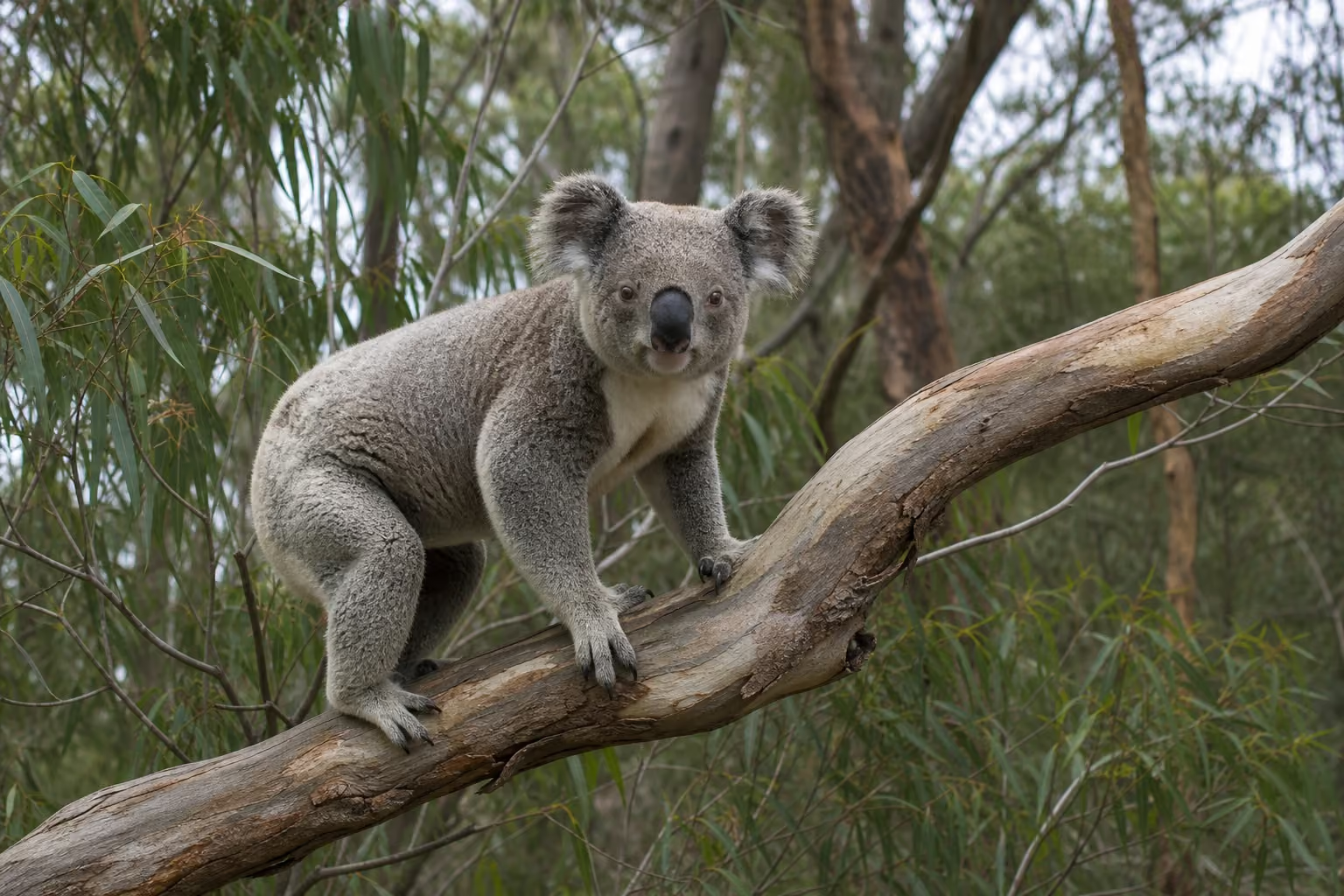
Koala

Details

Koala

Phascolarctos cinereus

Size
60–85 cm · 4–15 kg
Diet
Herbivore
Activity
Nocturnal
Sociality
Solitary
Lifespan
10–15 years

A tree-dwelling marsupial of eastern Australia, instantly recognised by its stout tailless body, large dark nose and round, fluffy ears. It is specialised on low-nutrient eucalyptus leaves and spends most of the day asleep in the treetops.
Range

Habitat range map
Native range Occasional / Transient

Map: Ecoregions 2017 © RESOLVE (CC BY 4.0) · Natural Earth (PD)

Details

Habitat

Found in coastal eastern and south-eastern Australia, from Queensland through New South Wales and Victoria to South Australia. It favours open eucalyptus woodland and, in drier country, depends on riparian forest along watercourses.

Appearance

Measuring roughly 60 to 85 cm long and weighing 4 to 15 kg, it has a stout, tailless body and a large head. Fur ranges from silver-grey to chocolate brown, with northern animals smaller and paler than southern ones. Males are larger, with a curved nose and a scent gland on the chest.

Behavior

Koalas are solitary and largely sedentary, holding individual home ranges. To conserve energy they rest or sleep close to twenty hours a day and are active mainly at night. In the breeding season males give deep, resonant bellows that carry far through the forest to attract mates.

Feeding

A herbivore, it feeds almost entirely on eucalyptus leaves, strongly preferring around thirty of the many available species. It eats up to about 400 g of foliage spread over several feeding bouts, ferments the toxic leaves in an exceptionally long caecum, and usually draws its water from the leaves themselves.

Reproduction

Breeding runs from spring into summer, with a short gestation of about 33 to 36 days. A single joey is usual, born weighing barely half a gram and crawling into the pouch, where it develops for six to seven months before riding on the mother and weaning at about a year. Females mature near three years, males near four.

Notes

Habitat clearing, bushfires, vehicle strikes and dog attacks are leading threats, and chlamydial disease has lowered breeding success in many populations. Once numbering in the millions, koalas have declined sharply, and as a national icon they sit at the centre of Australian conservation and tourism.