275 Featured Specimen
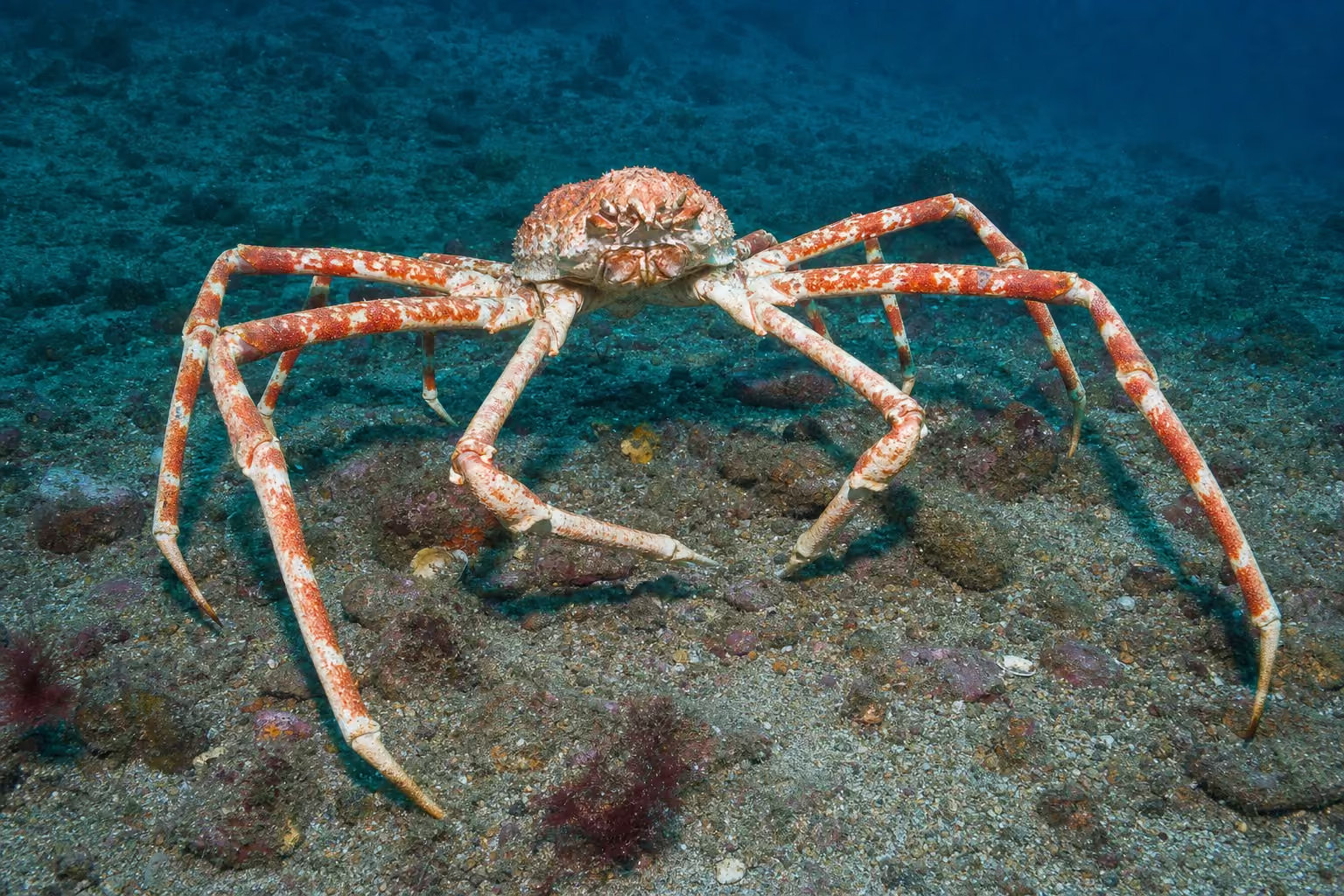
Japanese spider crab

Details

Japanese spider crab

Macrocheira kaempferi

Size
1.5–3.8 m · 10–19 kg
Diet
Omnivore
Activity
Diurnal
Sociality
Solitary
Lifespan
1-5 years

The Japanese spider crab is one of the world's largest crabs, living in Pacific and Palearctic waters. It is a solitary omnivore that walks on long legs across the seafloor.
Range

Habitat range map
Native range Occasional / Transient
Pacific OceanPacific OceanPacific OceanPalearcticPalearcticPalearcticPalearcticPalearcticPalearcticPalearcticPalearcticPalearcticPalearcticPalearcticPalearcticPalearcticPalearcticPalearcticPalearcticPalearcticPalearcticPalearcticPalearcticPalearcticPalearcticPalearcticPalearctic

Map: Ecoregions 2017 © RESOLVE (CC BY 4.0) · Natural Earth (PD)

Details

Habitat

It uses deeper seafloors of the northwest Pacific, including waters around Japan. Sandy-muddy bottoms and nearby rocky cover are typical.

Appearance

Leg span is about 150-380 cm, with weight about 10-19 kg. A relatively small body carries extremely long legs, often orange with pale markings.

Behavior

It is solitary and treated here as diurnal. It moves slowly along the bottom, and is especially vulnerable after molting until the shell hardens.

Feeding

It is omnivorous, taking animal matter, shellfish, and carrion from the seafloor. Its long legs help it search over a broad area.

Reproduction

Females carry fertilized eggs under the abdomen. Larvae hatch into the water column, then develop through molts before settling to bottom life.

Notes

Its conservation status is LC. Despite its spectacular size, it is a quiet inhabitant of deeper coastal seafloors.