705 Featured Specimen
Himalayan monal

Details

Himalayan monal

Lophophorus impejanus

Size
63–72 cm · 1.8–2.4 kg
Diet
Omnivore
Activity
Diurnal
Sociality
Loose group
Lifespan

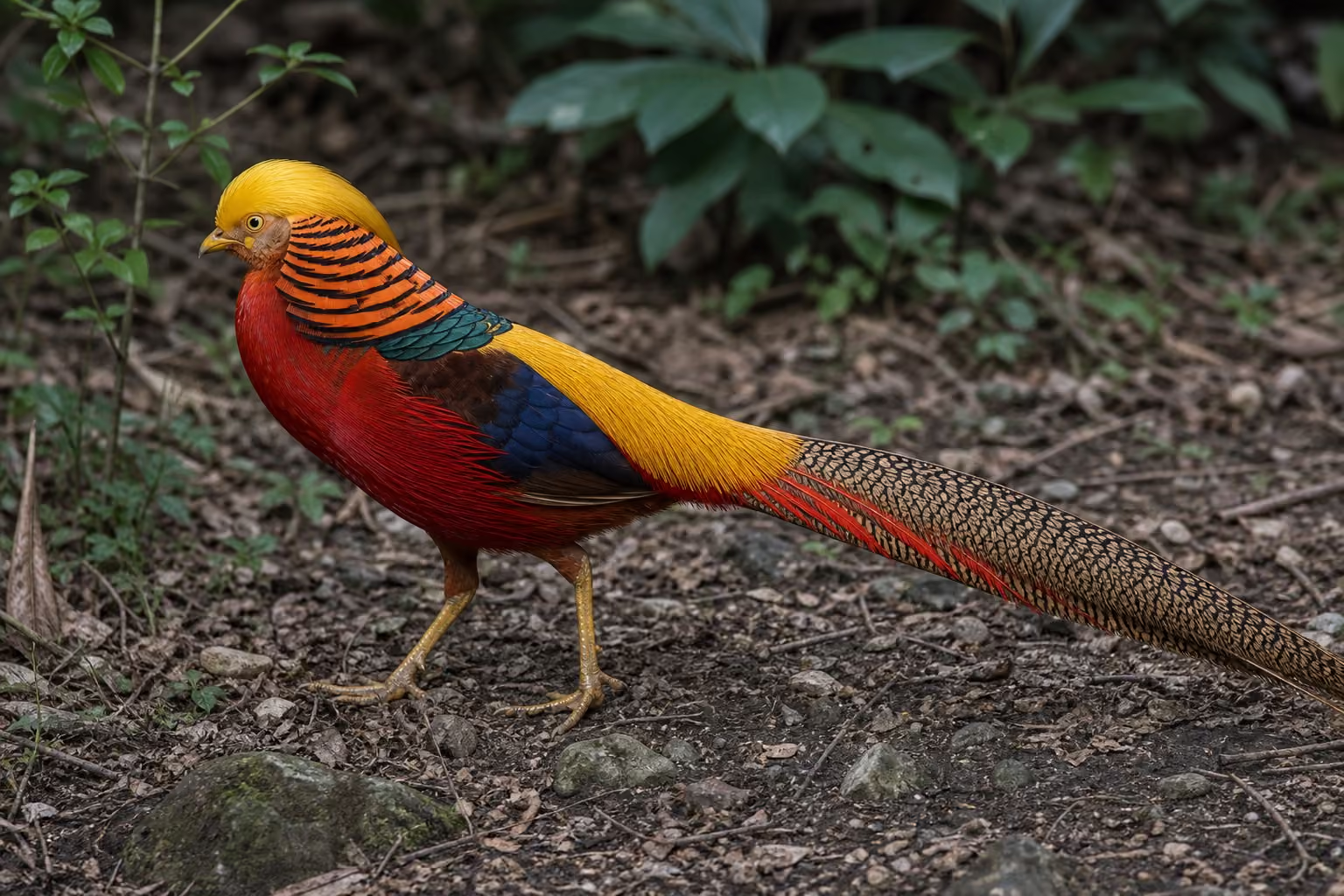
A large, brilliant pheasant of Himalayan highland forests; males shine with metallic rainbow plumage and a green crest.
Range

Habitat range map
Native range Occasional / Transient
PalearcticPalearcticPalearcticPalearcticPalearcticPalearcticPalearcticPalearcticPalearcticPalearcticPalearcticPalearcticPalearcticPalearcticPalearcticPalearcticPalearcticPalearcticPalearcticPalearcticPalearcticPalearcticPalearcticPalearcticIndomalayanIndomalayanIndomalayanIndomalayanIndomalayanIndomalayanIndomalayanIndomalayanIndomalayanIndomalayanIndomalayanIndomalayanIndomalayanIndomalayanIndomalayan

Map: Ecoregions 2017 © RESOLVE (CC BY 4.0) · Natural Earth (PD)

Details

Habitat

Uses Himalayan conifer, mixed, and rhododendron forests, plus edges of alpine meadows, moving by elevation seasonally.

Appearance

Males glow green, blue, and copper with a pale back and long crest. Females are brown and finely marked for camouflage.

Behavior

It digs in soil for food and descends to lower elevations in winter. Males appear in open areas during breeding.

Feeding

Roots, bulbs, shoots, seeds, insects, and larvae are eaten, often uncovered by strong digging.

Reproduction

Ground nests are placed on slopes or among rocks. Females incubate, and chicks follow soon after hatching.

Notes

A protected flagship bird in parts of its range, it faces concern from hunting, forest use, and local declines.