798 Featured Specimen
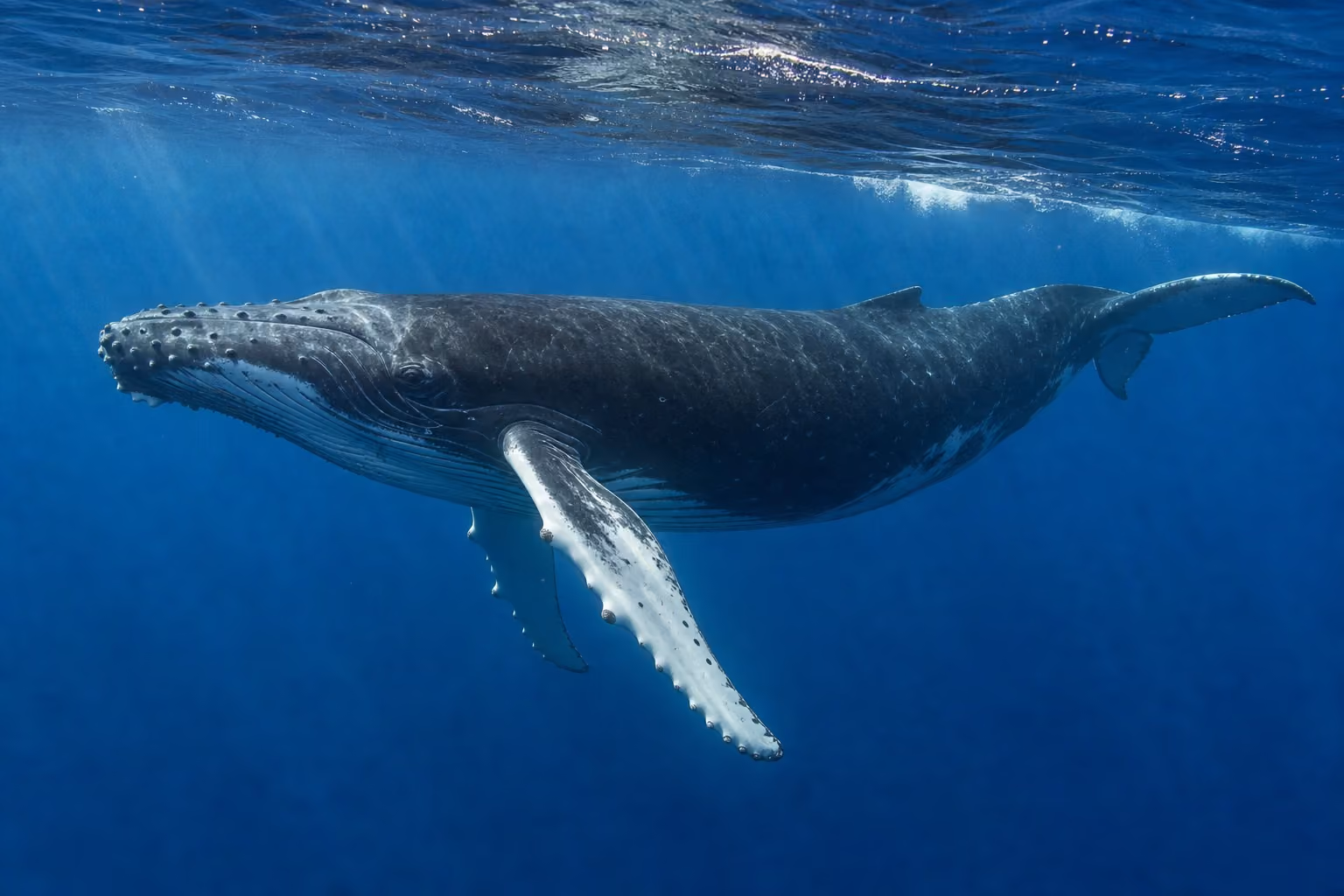
Humpback whale

Details

Humpback whale

Megaptera novaeangliae

Size
Total length 12–16 m · 25–40 t
Diet
Carnivore
Activity
Seasonal
Sociality
Loose group
Lifespan

A large baleen whale known for long pectoral fins and complex song. It migrates between high-latitude feeding grounds and warm breeding areas.
Range

Habitat range map
Native range Occasional / Transient
Pacific OceanPacific OceanPacific OceanAtlantic OceanAtlantic OceanAtlantic OceanAtlantic OceanAtlantic OceanIndian OceanSouthern Ocean

Map: Ecoregions 2017 © RESOLVE (CC BY 4.0) · Natural Earth (PD)

Details

Habitat

Humpbacks use both open ocean and coasts. They feed in cold productive waters and breed in warmer shallow seas or around islands.

Appearance

Very long pectoral fins, a knobbly head, and patterned fluke undersides are distinctive. Fluke patterns help identify individuals.

Behavior

Breaching, tail slapping, and song are conspicuous behaviors. During feeding, groups may use bubble nets to concentrate fish or krill.

Feeding

They filter krill and small schooling fish through baleen. In breeding areas they feed little and rely heavily on stored fat.

Reproduction

Mating and calving occur in warm waters. Calves grow quickly on rich milk before migrating with mothers to feeding grounds.

Notes

Many populations have recovered from commercial whaling, but ship strikes, entanglement, and noise remain important threats.