009 Featured Specimen
Blue whale

Details

Blue whale

Balaenoptera musculus

Size
24–30 m · 50–150 t
Diet
Carnivore
Activity
Cathemeral
Sociality
Loose group
Lifespan
70–90 years

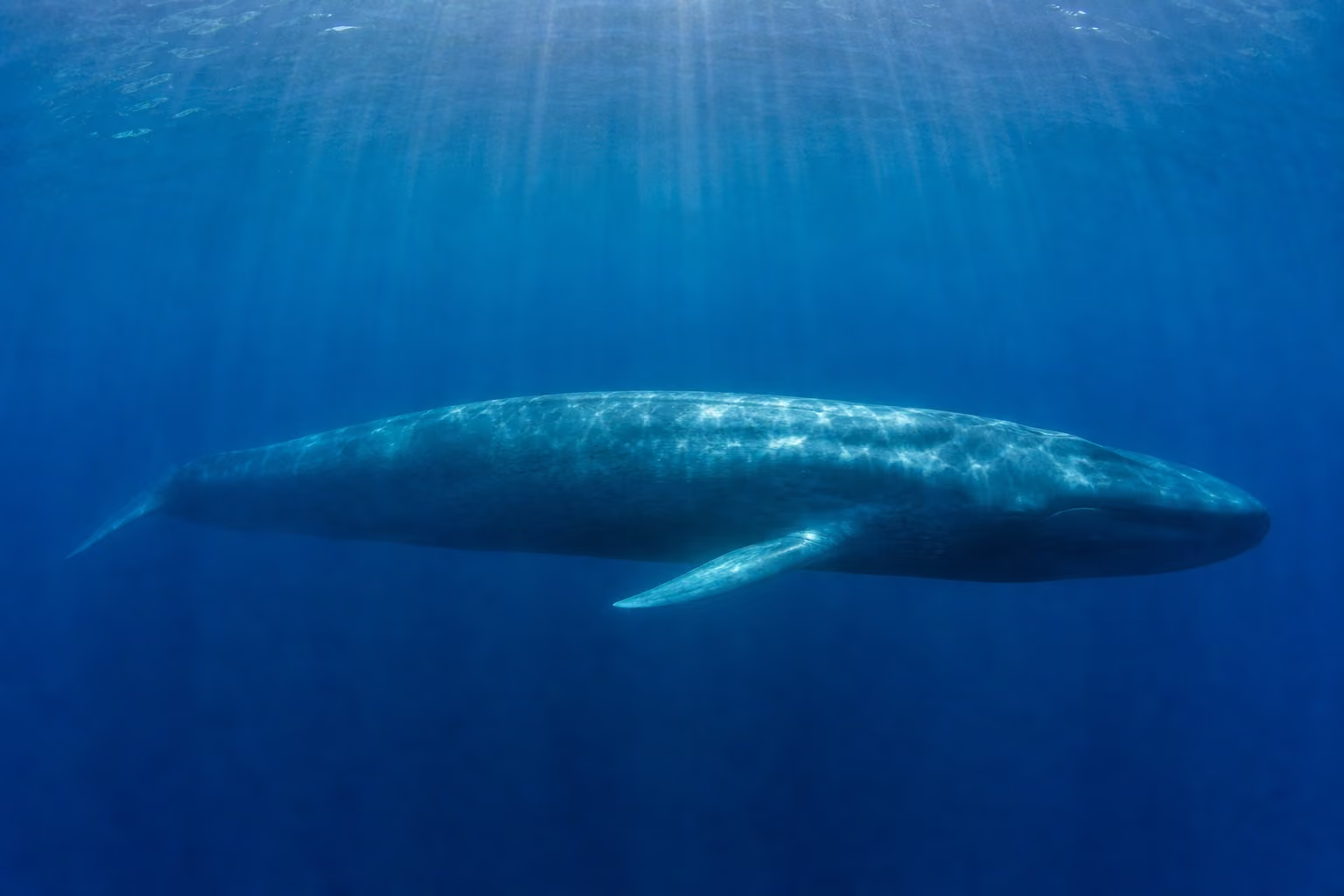
The largest animal known to have ever lived, reaching up to 30 metres and 150 tonnes. It sustains its colossal body almost entirely on tiny shrimp-like krill, and its deep, drawn-out calls carry across whole ocean basins.
Range

Habitat range map
Native range Occasional / Transient
Pacific OceanPacific OceanPacific OceanAtlantic OceanAtlantic OceanAtlantic OceanAtlantic OceanAtlantic OceanIndian OceanSouthern Ocean

Map: Ecoregions 2017 © RESOLVE (CC BY 4.0) · Natural Earth (PD)

Details

Habitat

Found in oceans worldwide, though largely absent from the Arctic and a few enclosed seas. Most populations migrate seasonally, feeding in cold polar waters in summer and moving to warmer temperate or tropical seas to breed in winter.

Appearance

A slender, torpedo-shaped giant 24 to 30 metres long and weighing 50 to 150 tonnes. The upper body is mottled greyish-blue, paler beneath, with dozens of pleated throat grooves and a strikingly tiny dorsal fin set far back on the body.

Behavior

Usually solitary or in small groups, gathering in larger numbers where prey is abundant. It produces some of the loudest, lowest-frequency sounds in the animal kingdom, between 8 and 25 hertz, which travel vast distances through the sea.

Feeding

An almost exclusive krill-eater that filter-feeds by lunging into dense swarms, engulfing a huge volume of water and straining it through baleen plates. It requires several tonnes of krill each day to fuel its enormous body.

Reproduction

Mating occurs from autumn into winter, with a gestation of 10 to 12 months. A single calf is born around 7 metres long and 2 to 3 tonnes, gaining roughly 90 kilograms a day on rich milk. It nurses for 6 to 8 months, and females calve every 2 to 3 years.

Notes

Twentieth-century commercial whaling drove the species to the brink before hunting was banned in 1966. Populations are still recovering, and ship strikes, ocean noise, and shifting prey remain ongoing threats.