030 Featured Specimen
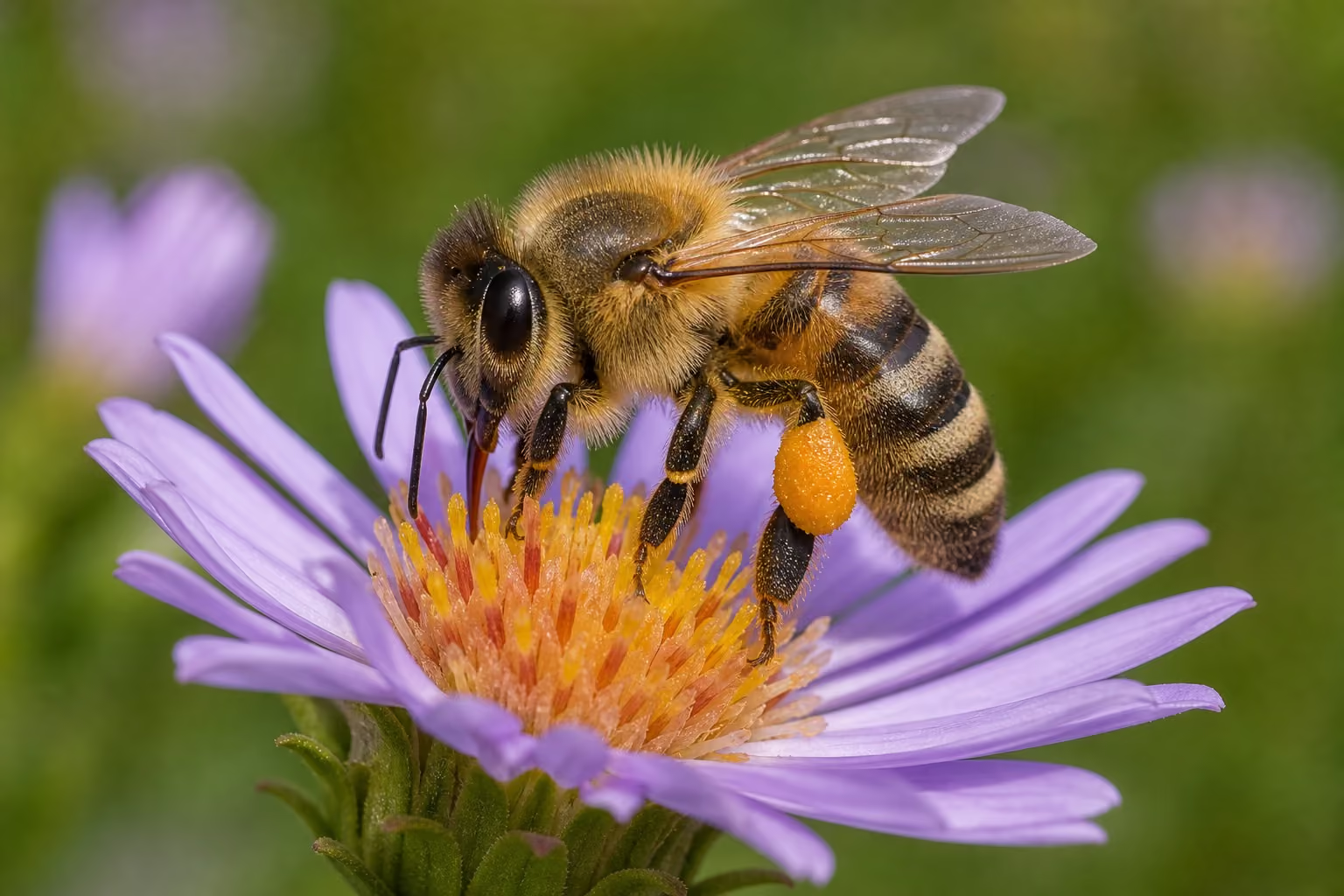
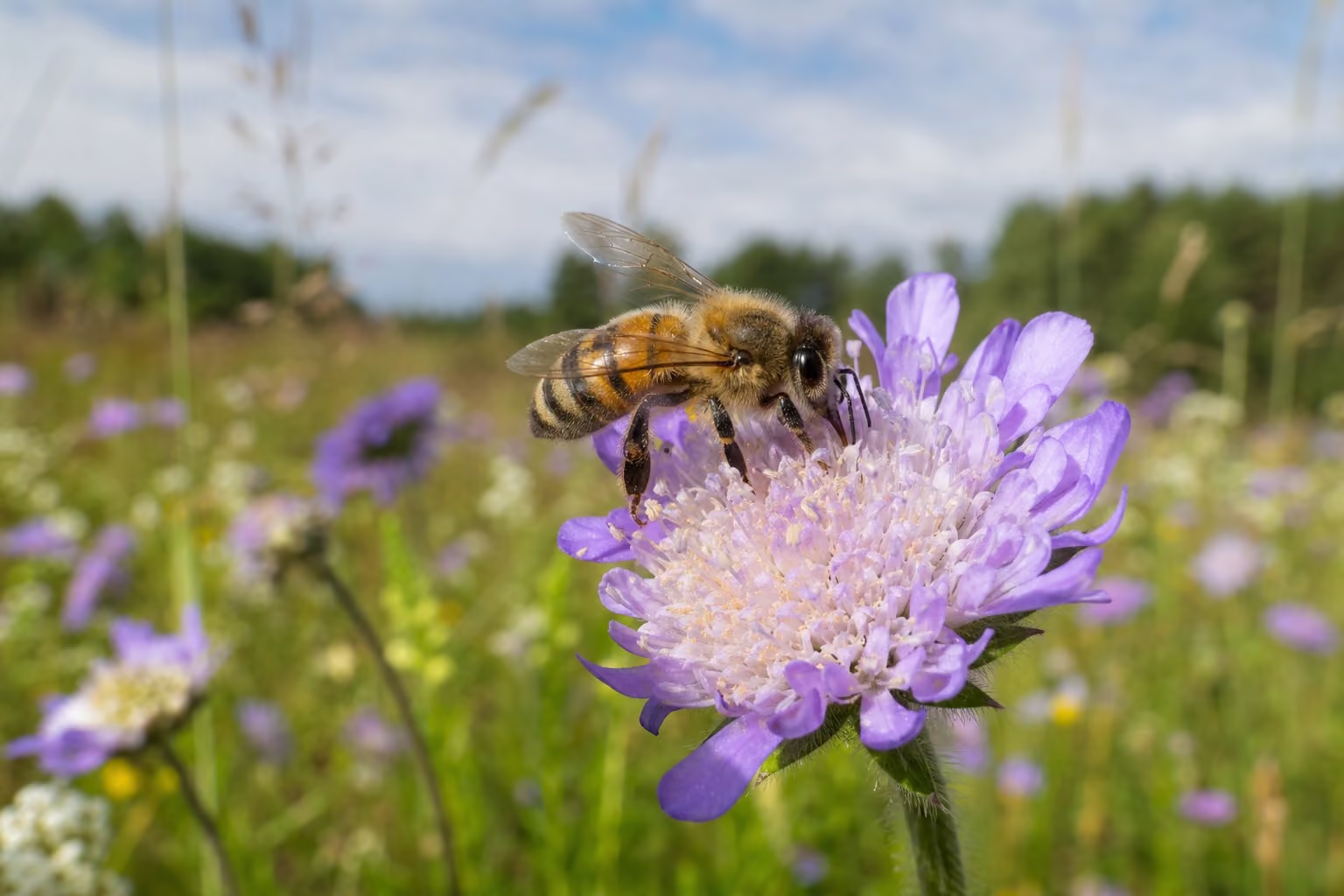
Western honey bee

Details

Western honey bee

Apis mellifera

Size
1–2 cm
Diet
Nectarivore
Activity
Diurnal
Sociality
Social
Lifespan
Worker bees live for a few weeks to a few months

A highly social insect that gathers nectar and pollen and lives in colonies of tens of thousands centered on a single queen. Foragers share the direction and distance of flowers through a waggle dance, and the colony turns nectar into honey. Long kept by people, it underpins the pollination of crops worldwide.
Range

Habitat range map
Native range Occasional / Transient
PalearcticPalearcticPalearcticPalearcticPalearcticPalearcticPalearcticPalearcticPalearcticPalearcticPalearcticPalearcticPalearcticPalearcticPalearcticPalearcticPalearcticPalearcticPalearcticPalearcticPalearcticPalearcticPalearcticPalearcticNearcticNearcticNearcticNearcticNearcticNearcticNearcticNearcticNearcticNearcticNearcticNearcticNearcticNearcticNearcticNearcticNearcticNearcticNearcticNearcticNearcticNearcticNearcticNearcticNearcticNearcticNearcticNearcticNearcticNearcticNearcticNearcticNearcticNearcticNearcticNearcticNearcticNearcticNearcticNearcticNearcticNeotropicalNeotropicalNeotropicalNeotropicalNeotropicalNeotropicalNeotropicalNeotropicalAfrotropicalAfrotropicalAfrotropicalAfrotropicalIndomalayanIndomalayanIndomalayanIndomalayanIndomalayanIndomalayanIndomalayanIndomalayanIndomalayanIndomalayanIndomalayanIndomalayanIndomalayanIndomalayanIndomalayanAustralasianAustralasianAustralasianAustralasianAustralasianAustralasianAustralasianAustralasianAustralasianAustralasianAustralasianAustralasianAustralasianAustralasianAustralasianAustralasianAustralasian

Map: Ecoregions 2017 © RESOLVE (CC BY 4.0) · Natural Earth (PD)

Details

Habitat

Originating in Africa and spreading naturally through Africa, the Middle East and Europe, it was carried by people to the Americas and Oceania from the 1600s onward and now occurs on every continent except Antarctica. It thrives anywhere flowers bloom, from grasslands and forests to farmland and city edges.

Appearance

A small insect roughly 1 to 2 cm long, with colour varying by subspecies from bright gold to dark brown. The queen is larger than her workers, with a rounder, longer abdomen, while drones are about one and a half times the size of workers.

Behavior

Active by day, the colony of one queen, many sterile female workers and a few drones functions as a single superorganism. Bees coordinate through pheromones and the waggle dance, and when a hive grows crowded the old queen and about two-thirds of the workers fly off together in a swarm to found a new nest.

Feeding

Nectar and pollen gathered from flowers are its food, collected by workers ranging from bloom to bloom. Back at the hive, workers evaporate the nectar until it is concentrated enough to resist mould, transforming it into honey.

Reproduction

A queen mates with several drones in flight and at peak season can lay over 2,500 eggs a day. Development from egg to adult takes about three weeks; larvae fed only royal jelly become queens, while those switched to pollen-rich bee bread mature into workers.

Notes

People have harvested honey from managed hives for thousands of years, and the bee is now indispensable for pollinating food crops. Yet colonies are threatened by Varroa mite infestations, colony collapse disorder and pesticide exposure.