017 Featured Specimen
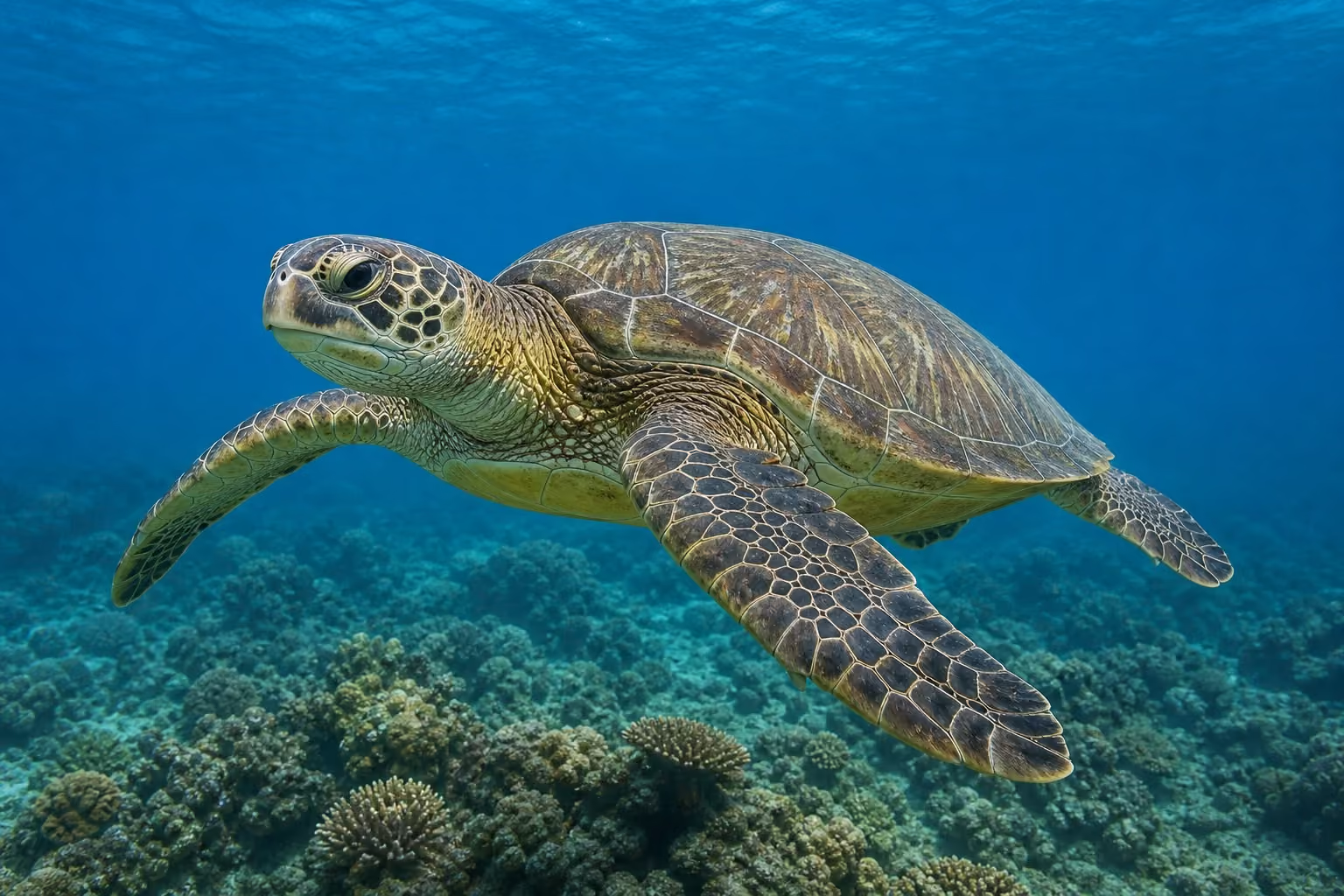
Green sea turtle

Details

Green sea turtle

Chelonia mydas

Size
0.8–1.2 m · 65–200 kg
Diet
Herbivore
Activity
Diurnal
Sociality
Solitary
Lifespan
60 years or more

One of the largest hard-shelled sea turtles, found in tropical and subtropical oceans worldwide. Its name comes not from its shell but from the greenish fat beneath it, tinted by a diet of seagrass. It is renowned for long migrations between feeding and nesting grounds.
Range

Habitat range map
Native range Occasional / Transient
Pacific OceanPacific OceanPacific OceanAtlantic OceanAtlantic OceanAtlantic OceanAtlantic OceanAtlantic OceanIndian Ocean

Map: Ecoregions 2017 © RESOLVE (CC BY 4.0) · Natural Earth (PD)

Details

Habitat

Ranges across the Pacific, Atlantic and Indian Oceans in tropical to subtropical waters, favouring shallow coastal areas with lush seagrass beds and coral reefs. In Japan it nests mainly on the Ogasawara Islands.

Appearance

A large turtle, 80 to 120 cm in carapace length and weighing 65 to 200 kg. The carapace ranges from olive-green to nearly black, with a pale or yellowish underside, while streamlined shell and paddle-like flippers suit a life of swimming.

Behavior

Largely solitary, it rests at night wedged beneath rocks or on the seabed. Adults migrate between feeding and nesting sites, some swimming thousands of kilometres to return to the beach where they hatched.

Feeding

Adults are almost entirely herbivorous, grazing on seagrasses and algae. Juveniles drifting in the open ocean are less selective, also taking jellyfish, salps and other small animals.

Reproduction

Females breed every few years, returning to their natal beach to nest. A single clutch holds roughly 80 to 150 eggs, laid several times in a season. Eggs hatch in about 45 to 70 days, with sex set by nest temperature, and maturity takes over twenty years.

Notes

Hatchlings emerge at night and face heavy predation from crabs and gulls, so very few survive to adulthood. Long hunted for their meat and eggs, the species now faces serious threats from fishing bycatch and the ingestion of marine debris.