249 Featured Specimen
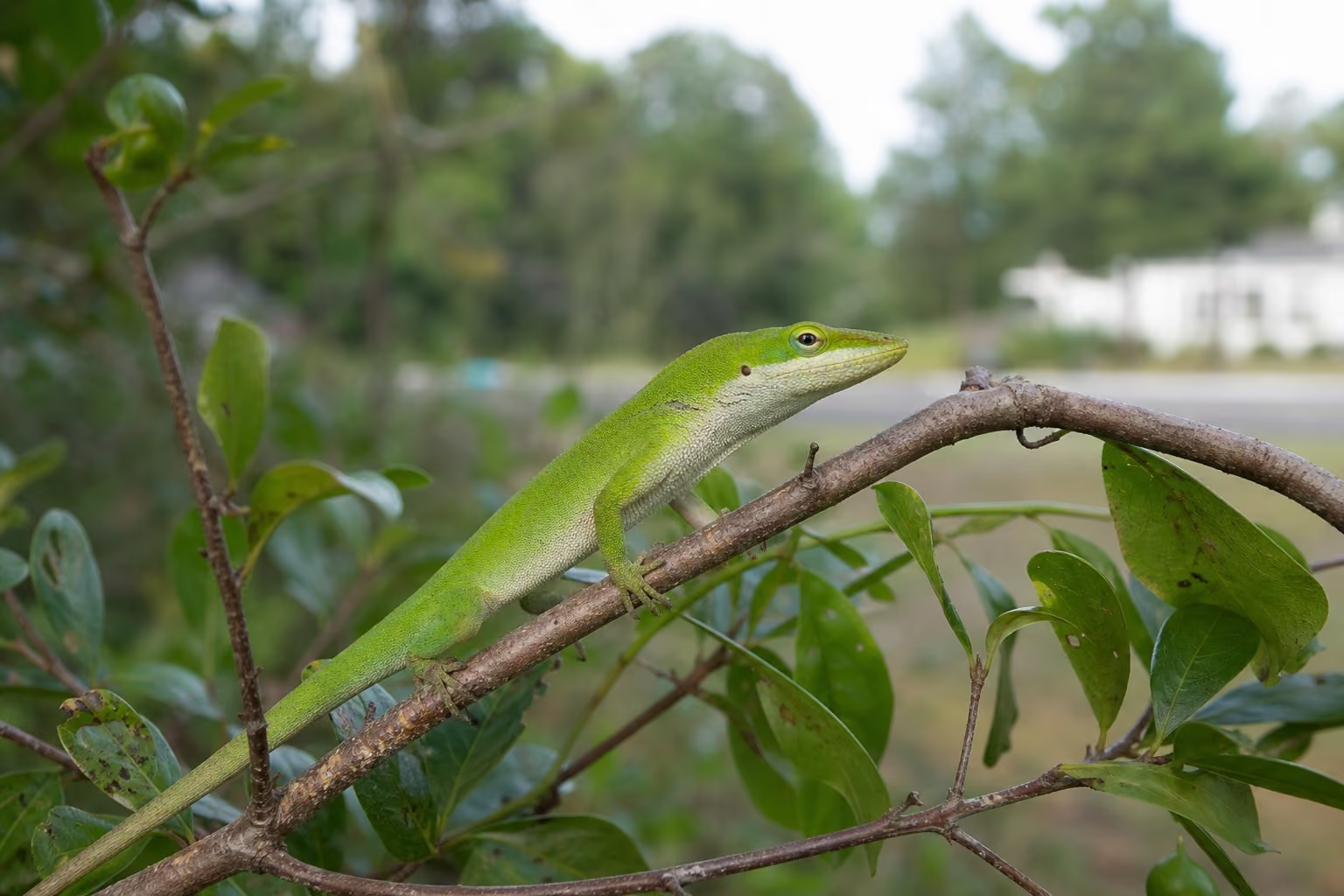
Green anole

Details

Green anole

Anolis carolinensis

Size
13–20 cm · 3–7 g
Diet
Carnivore
Activity
Diurnal
Sociality
Solitary
Lifespan
10-40 years

The green anole is a small lizard of Nearctic forests and urban greenery. Diurnal and solitary, it signals with head bobs and an expandable throat fan.
Range

Habitat range map
Native range Occasional / Transient
NearcticNearcticNearcticNearcticNearcticNearcticNearcticNearcticNearcticNearcticNearcticNearcticNearcticNearcticNearcticNearcticNearcticNearcticNearcticNearcticNearcticNearcticNearcticNearcticNearcticNearcticNearcticNearcticNearcticNearcticNearcticNearcticNearcticNearcticNearcticNearcticNearcticNearcticNearcticNearcticNearctic

Map: Ecoregions 2017 © RESOLVE (CC BY 4.0) · Natural Earth (PD)

Details

Habitat

It uses forest, edges, gardens, parks, shrubs, and green spaces around buildings. Branches, leaves, fences, and other climbing surfaces are useful.

Appearance

Length is about 13-20 cm and weight about 3-7 g. It has a slim body and long tail, can shift from green to brown, and males show a pink dewlap.

Behavior

It is active by day on leaves and branches, where it displays with head movements. Individuals live alone and defend small territories.

Feeding

It is carnivorous, eating insects, spiders, and other small arthropods. It spots prey from perches and captures it in short lunges.

Reproduction

In warm seasons, females lay small eggs one at a time in soil or leaf litter. Hatchlings feed on tiny insects and are independent immediately.

Notes

Its status is listed as Least Concern. It adapts to urban habitats, though interactions with introduced relatives can shift where it perches locally.