100 Featured Specimen
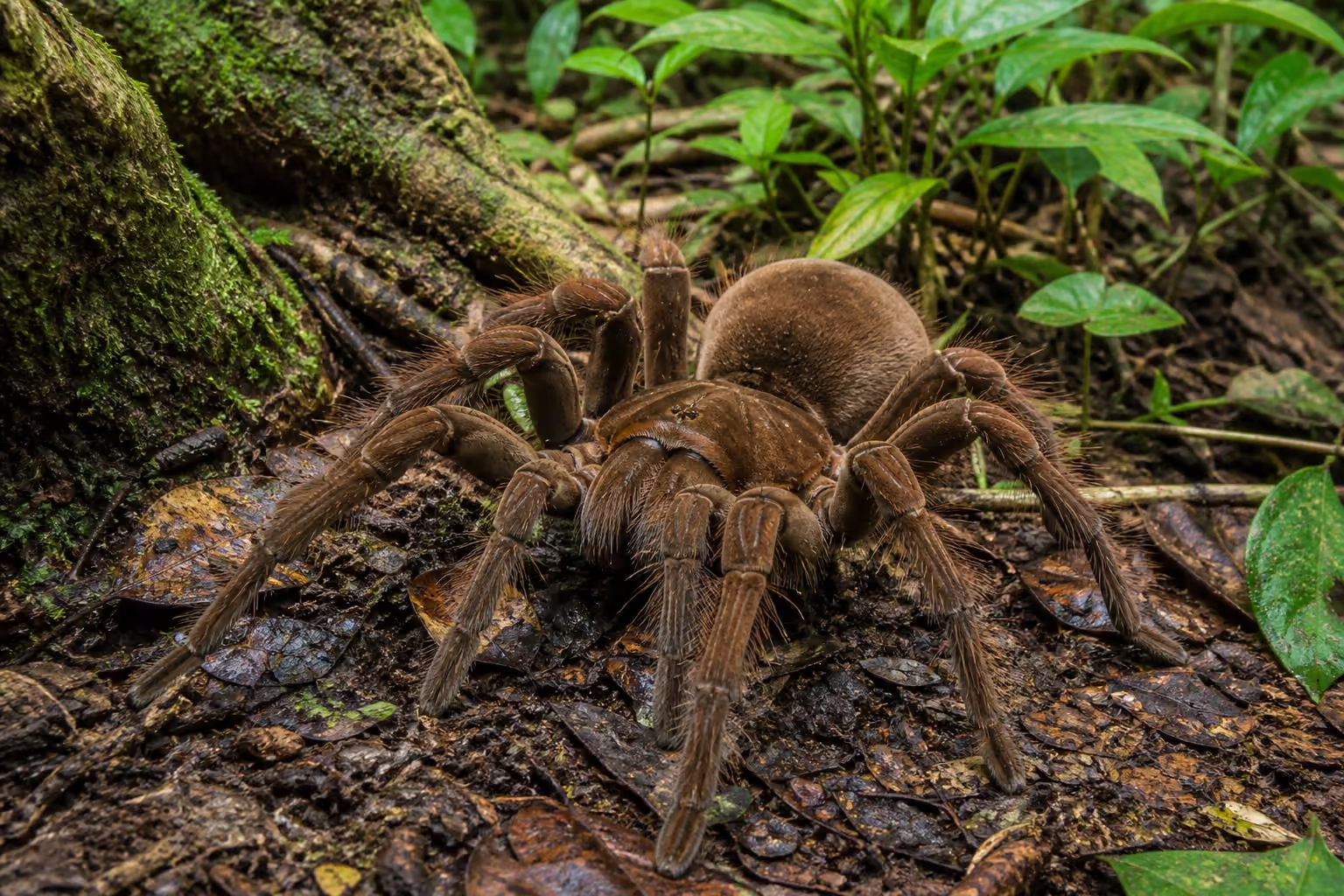
Goliath birdeater

Details

Goliath birdeater

Theraphosa blondi

Size
10–13 cm · 100–170 g
Diet
Carnivore
Activity
Nocturnal
Sociality
Solitary
Lifespan
Varies by species and environment

The heaviest and one of the largest spiders on Earth, prowling the floor of South American rainforests. Its leg span approaches 30 cm, and when alarmed it kicks irritating hairs from its abdomen. Despite the name, it rarely eats birds.
Range

Habitat range map
Native range Occasional / Transient
NeotropicalNeotropicalNeotropicalNeotropicalNeotropicalNeotropicalNeotropicalNeotropical

Map: Ecoregions 2017 © RESOLVE (CC BY 4.0) · Natural Earth (PD)

Details

Habitat

Found across northern South America, including Suriname, Guyana, French Guiana, northern Brazil and southern Venezuela. It lives in deep burrows dug into the floor of upland rainforest, often in marshy or swampy ground.

Appearance

The body reaches 10–13 cm and the spider can weigh around 170 g, making it the world's heaviest spider by mass. Coloration runs from dark to light brown with faint leg markings, the fangs measure 2–4 cm, and the body and legs are clad in dense hairs.

Behavior

Nocturnal and solitary, it shelters in its burrow by day. When threatened it stridulates by rubbing its legs and flicks urticating hairs from its abdomen, a severe irritant to skin and mucous membranes. Its venom is weak and comparable to a wasp sting.

Feeding

A carnivorous ambush predator, it takes arthropods and worms as well as small vertebrates such as frogs, lizards, snakes and rodents. Prey is dragged into the burrow and liquefied before being consumed.

Reproduction

Females mature in three to six years and lay 100 to 200 eggs, which hatch into spiderlings within six to eight weeks. Females are long-lived at 15–25 years, whereas males survive only about three to six years.

Notes

In parts of northeastern South America the spider is eaten, its hairs singed off before roasting in banana leaves, with a flavor likened to shrimp. It is also kept as a pet where temperature and humidity can be controlled.