408 Featured Specimen
European garden spider

Details

European garden spider

Araneus diadematus

Size
0.6–2 cm · 0.1–1.2 g
Diet
Carnivore
Activity
Diurnal
Sociality
Solitary
Lifespan
1–2 years

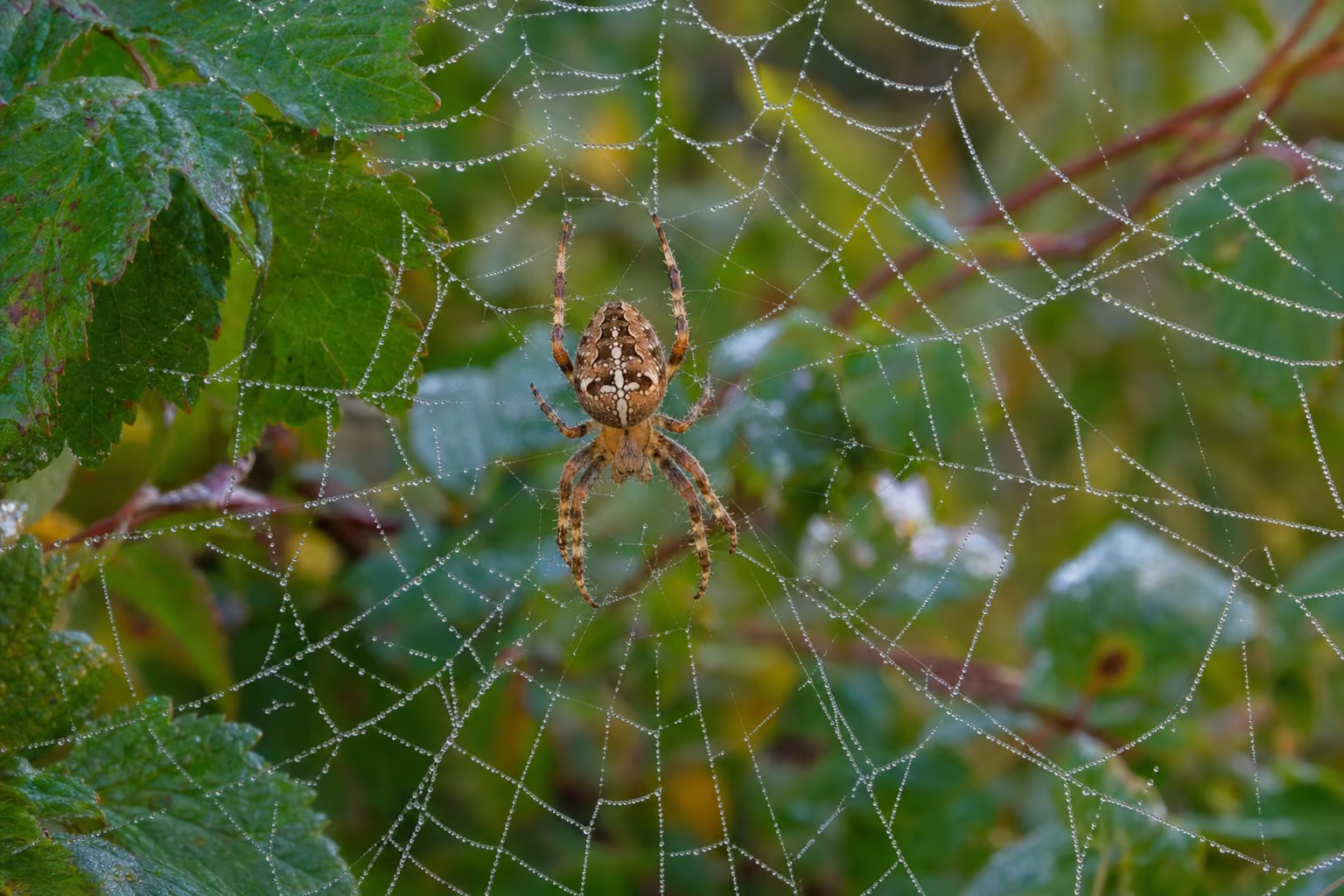
The European garden spider is an orb-weaver with a pale cross on the abdomen. It spins webs in gardens and woodland edges to catch flying insects.
Range

Habitat range map
Native range Occasional / Transient
PalearcticPalearcticPalearcticPalearcticPalearcticPalearcticPalearcticPalearcticPalearcticPalearcticPalearcticPalearcticPalearcticPalearcticPalearcticPalearcticPalearcticPalearcticPalearcticPalearcticPalearcticPalearcticPalearcticPalearcticNearcticNearcticNearcticNearcticNearcticNearcticNearcticNearcticNearcticNearcticNearcticNearcticNearcticNearcticNearcticNearcticNearcticNearcticNearcticNearcticNearcticNearcticNearcticNearcticNearcticNearcticNearcticNearcticNearcticNearcticNearcticNearcticNearcticNearcticNearcticNearcticNearcticNearcticNearcticNearcticNearctic

Map: Ecoregions 2017 © RESOLVE (CC BY 4.0) · Natural Earth (PD)

Details

Habitat

It inhabits forests, grassland, and urban greenspace in the Palearctic, the Nearctic. Shrubs, tall herbs, fences, and buildings provide web sites.

Appearance

Length 0.6-2 cm; weight 0.05 g-1.2 g. White spots form a cross on the rounded abdomen, and body color varies from brown to orange. Females are larger than males.

Behavior

Diurnal and solitary, it waits in or near the center of an orb web. Damaged webs are rebuilt, and prey is detected by vibration.

Feeding

A carnivore, it eats flies, moths, wasps, and other insects caught in the web. Prey is wrapped in silk and subdued with venom.

Reproduction

Females make egg sacs in autumn and protect the eggs. Spiderlings disperse the following season and grow on small webs.

Notes

It is listed as Least Concern, though local populations can still be affected by habitat change, collection, or pollution.