021 Featured Specimen
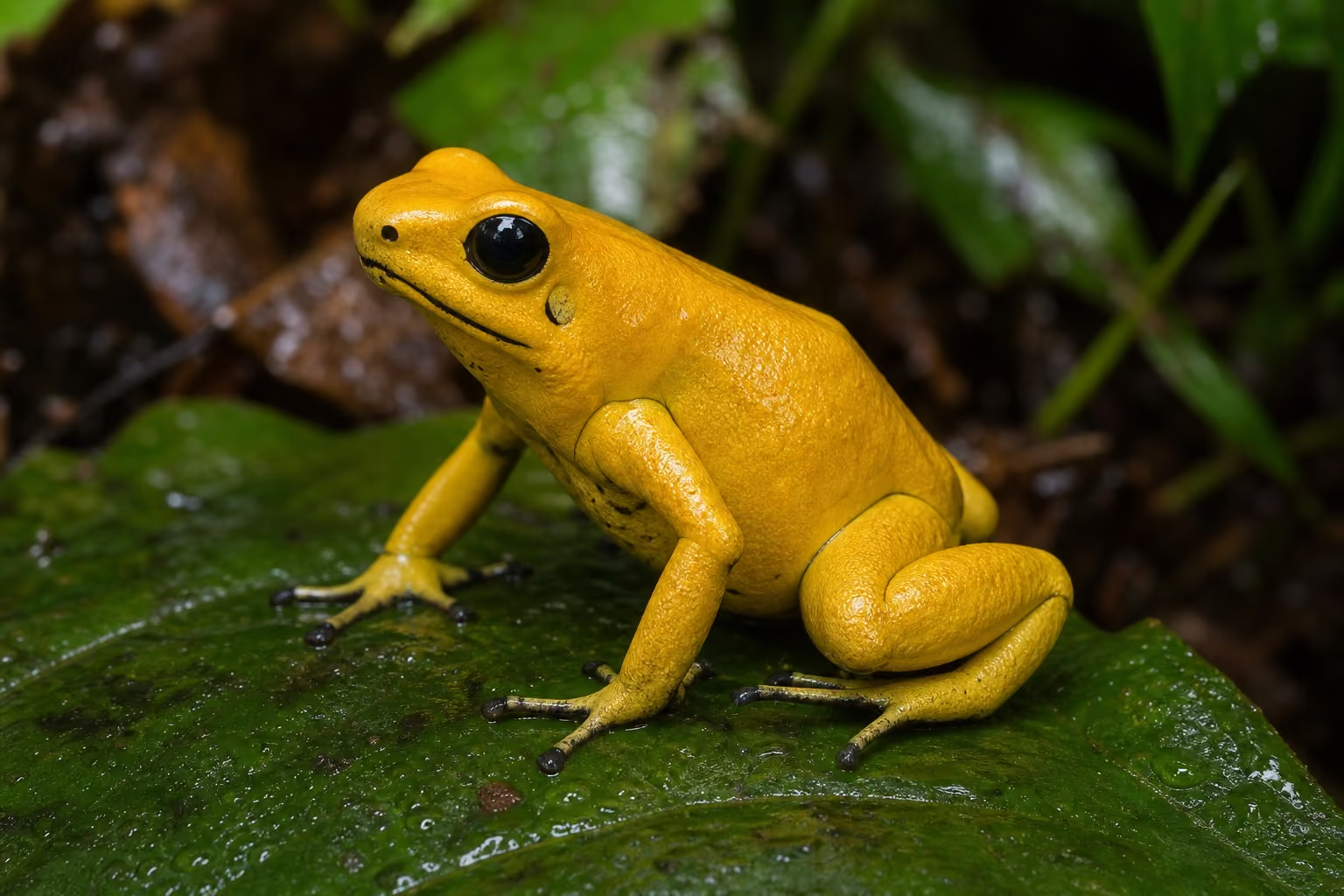
Golden poison frog

Details

Golden poison frog

Phyllobates terribilis

Size
4–6 cm
Diet
Carnivore
Activity
Diurnal
Sociality
Solitary
Lifespan
6–10 years

A small, brilliantly yellow poison frog widely regarded as one of the most toxic animals on Earth. The batrachotoxin stored in its skin is potent enough to kill several people from a single frog, and its vivid color serves as a warning to predators.
Range

Habitat range map
Native range Occasional / Transient

Map: Ecoregions 2017 © RESOLVE (CC BY 4.0) · Natural Earth (PD)

Details

Habitat

Endemic to the hot, perpetually wet rainforests of the Chocó region on Colombia's Pacific coast. It lives on the floor of lowland forests soaked by some of the highest rainfall on the continent, within a very small range.

Appearance

The largest member of its genus, measuring roughly 4 to 6 centimeters long. Adults are a uniform, dazzling yellow, though orange and mint-green color forms also occur. Juveniles are black with golden dorsal stripes that fade to solid color as they mature.

Behavior

Active by day, it lives alone, spaced evenly across the forest floor rather than gathering in groups. Males call with a trilling whistle to attract females and engage in tactile, stroking courtship.

Feeding

Carnivorous, it ambushes ants along with other small insects and invertebrates on the forest floor. The compounds behind its powerful toxin are thought to be acquired through this prey.

Reproduction

Eggs are laid on leaf-littered ground and fertilized externally. The hatching tadpoles cling to a parent's back and are carried up into the canopy, then released into tree holes and water-filled bromeliads to develop.

Notes

Its toxin is diet-derived, and captive frogs raised on commercial insects become harmless. Indigenous Emberá people coated blowgun darts with its poison for hunting, giving the species its name. Habitat loss has driven declines, and it is listed as Endangered.