019 Featured Specimen
Red-eyed tree frog

Details

Red-eyed tree frog

Agalychnis callidryas

Size
5–7 cm
Diet
Carnivore
Activity
Nocturnal
Sociality
Solitary
Lifespan
About 5 years

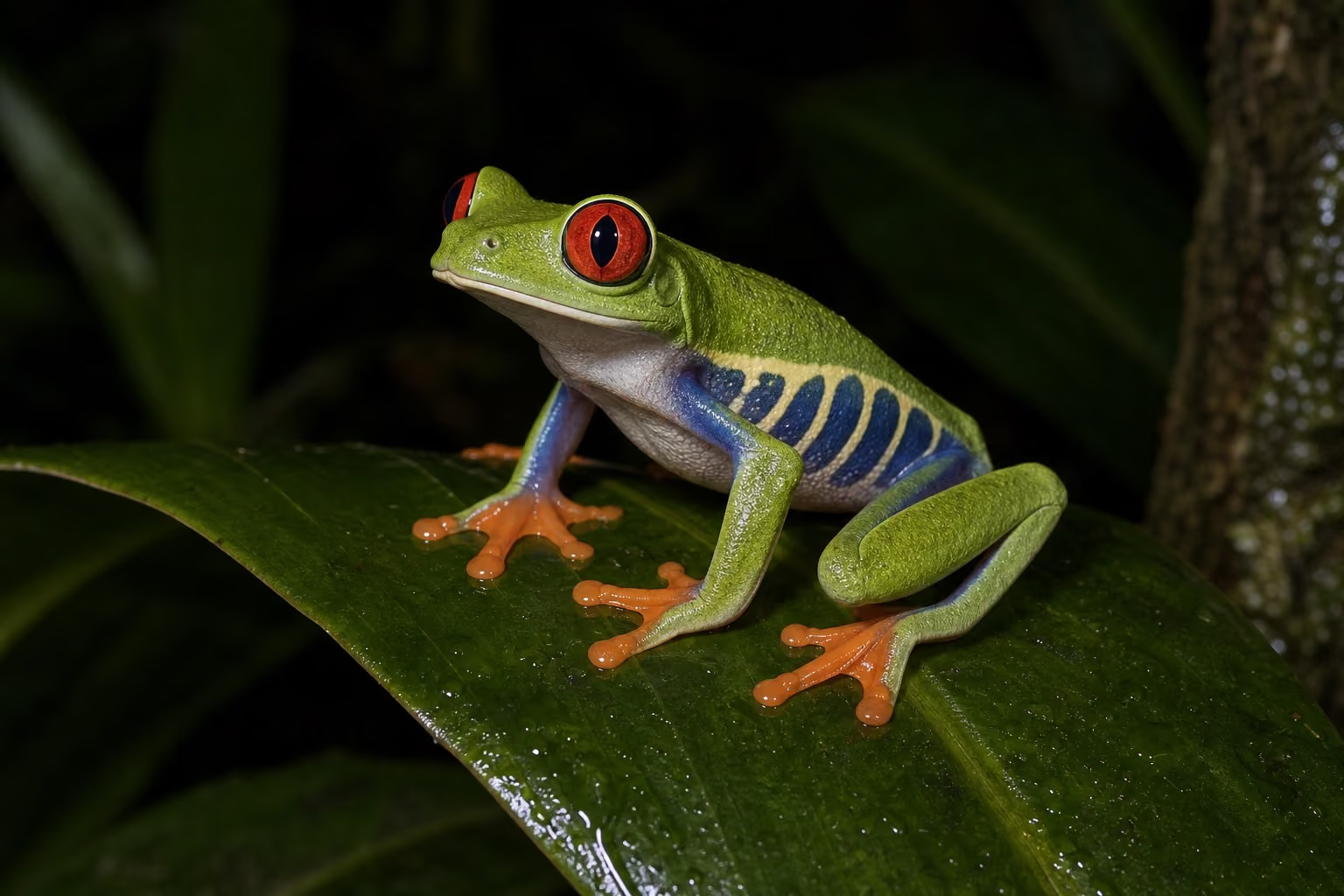
A vivid green arboreal frog of Central American rainforests, famous for its blazing red eyes. By day it rests on a leaf with eyes shut and limbs tucked in, vanishing into the foliage; when startled it flashes its red eyes, orange feet, and blue flanks to momentarily confuse a predator.
Range

Habitat range map
Native range Occasional / Transient

Map: Ecoregions 2017 © RESOLVE (CC BY 4.0) · Natural Earth (PD)

Details

Habitat

Found across the Neotropics from southern Mexico through Honduras, Costa Rica, and Panama to northern Colombia, it inhabits humid tropical rainforest and secondary forest. It lives on canopy leaves overhanging ponds and pools, the water it needs to breed.

Appearance

It measures 5 to 7 cm long, with females larger than males. The back is bright green, the flanks bear blue and yellow-white stripes, and the orange toes end in suction pads for gripping leaves. Its hallmark is the bright red eye with a vertical pupil; it lacks true eyelids but has a nictitating membrane.

Behavior

Nocturnal, arboreal, and solitary, it spends the day pressed flat against a leaf with eyes closed and limbs drawn in, showing only its green back as camouflage. If a predator strikes, it suddenly reveals its red eyes, orange feet, and blue flanks in a startle display, then escapes in the confusion.

Feeding

A carnivore, it preys mainly on insects such as moths, crickets, grasshoppers, flies, and mosquitoes, and will take small frogs. It ambushes prey at night from a perch on a leaf, lunging at anything that comes within reach.

Reproduction

It breeds during the rainy season (roughly October to March), the male clasping the female in amplexus to fertilize the eggs. The female lays gelatinous clutches of about 10 to 70 eggs on the underside of leaves above water. Eggs hatch in 6 to 8 days, and the tadpoles drop straight into the water below; embryos can hatch early if vibrations signal a predator.

Notes

The IUCN lists it as Least Concern thanks to its wide range and habitat tolerance, but populations are declining from logging, development, chytrid fungus, and the pet trade. It lives about five years in the wild.