028 Featured Specimen
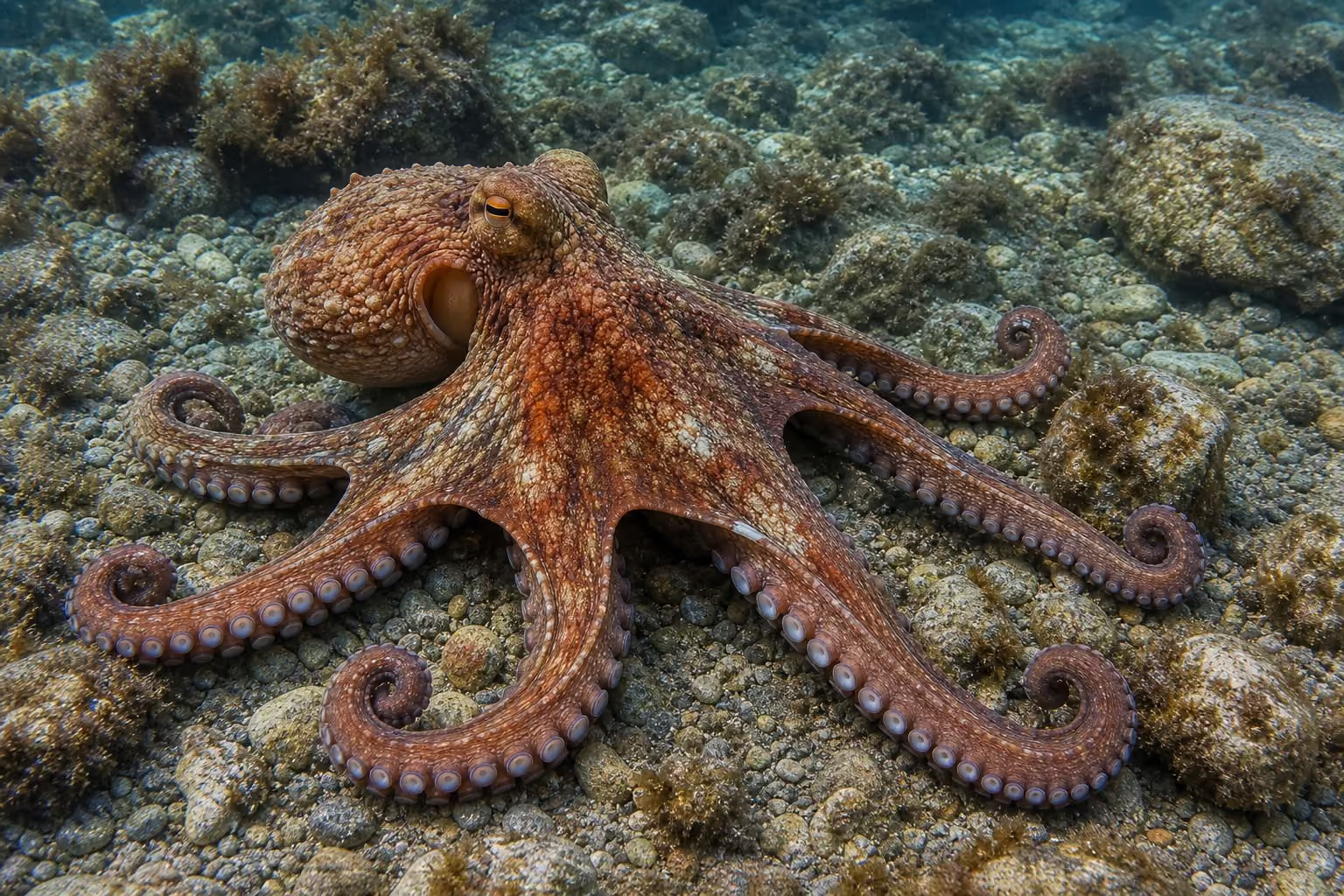
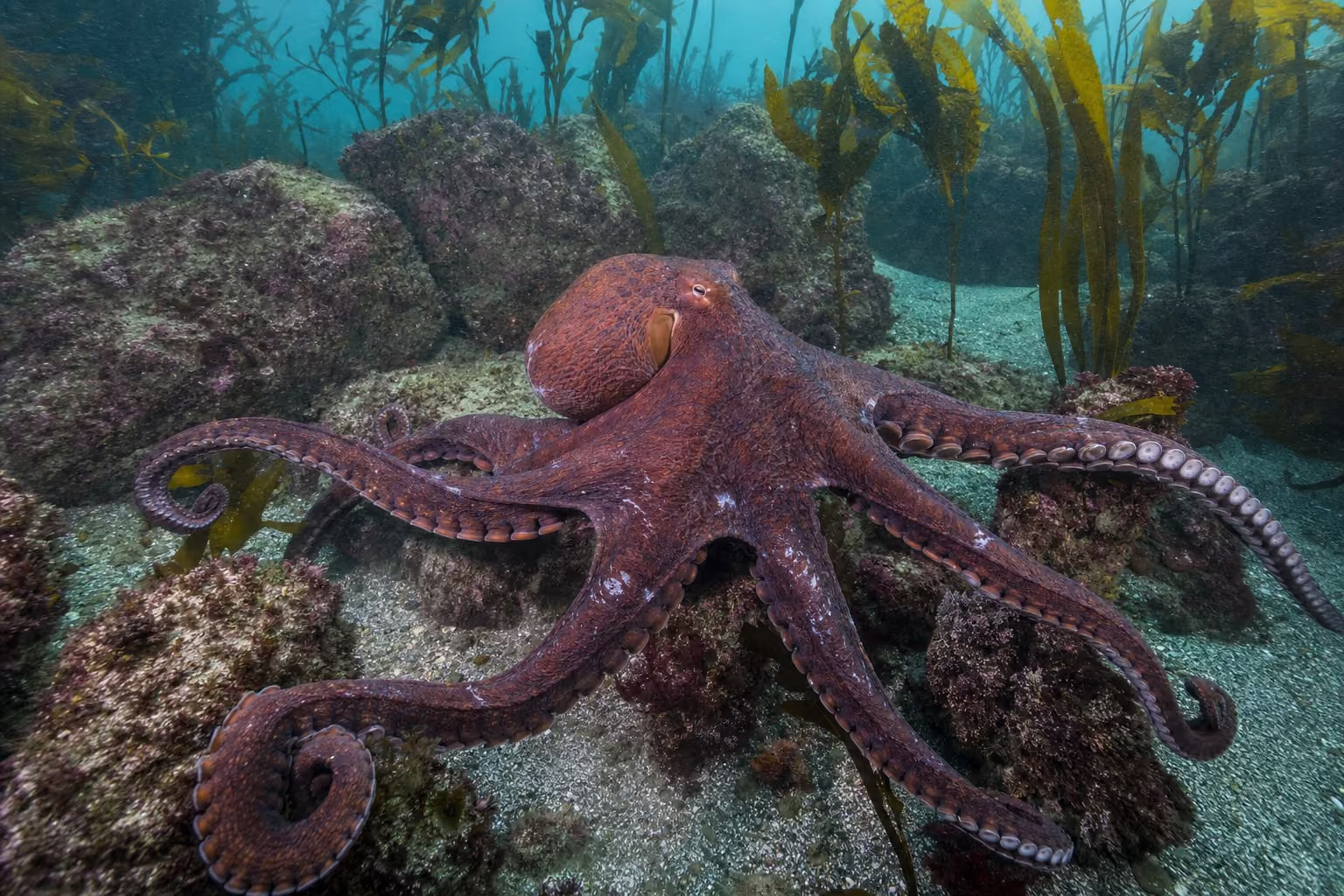
Common octopus

Details

Common octopus

Octopus vulgaris

Size
Total length 0.3–1 m · 3–10 kg
Diet
Carnivore
Activity
Nocturnal
Sociality
Solitary
Lifespan
1–2 years

A solitary cephalopod renowned for its intelligence, with around half a billion neurons and a talent for learning tasks such as unscrewing jars. It is a master of disguise, changing the colour and texture of its skin in an instant to vanish against rock or sand.
Range

Habitat range map
Native range Occasional / Transient
Pacific OceanPacific OceanPacific OceanAtlantic OceanAtlantic OceanAtlantic OceanAtlantic OceanAtlantic OceanIndian Ocean

Map: Ecoregions 2017 © RESOLVE (CC BY 4.0) · Natural Earth (PD)

Details

Habitat

Widespread through tropical to temperate coastal waters across the Atlantic, Pacific and Indian oceans. It favours rocky reefs, coral and sandy bottoms usually shallower than 200 m, sheltering in crevices and holes that serve as a den.

Appearance

A sack-like mantle bears eight roughly equal arms; the mantle reaches about 15 cm and total length runs from 30 cm to 1 m, with adults weighing 3 to 10 kg. The skin is dark brown to yellowish and covered in a fine, net-like pattern of granules.

Behavior

A solitary animal that emerges at night to crawl over the seabed in search of food before returning to the same den. It camouflages itself by altering its colour and surface texture, and shows striking intelligence, even clearing scraps and debris from its lair.

Feeding

Carnivorous, it hunts crabs, shrimp and bivalve molluscs above all. It prises shells open with its arms, and when that fails it drills through them with its radula and paralyses prey using a salivary toxin, cephalotoxin.

Reproduction

The male uses a specialised arm to transfer sperm packets into the female's mantle. The female lays many eggs in hanging clusters from spring through autumn, tending them for roughly four weeks until they hatch and then dying. The hatchlings, about 3.5 mm long, drift as plankton before settling to the bottom.

Notes

Lifespan is short, around one to two years. It is a major food species, especially in Japan, where it is eaten as takoyaki and sashimi, traditionally caught in baited pots, with regional catches such as Akashi octopus marketed as a premium brand.