212 Featured Specimen
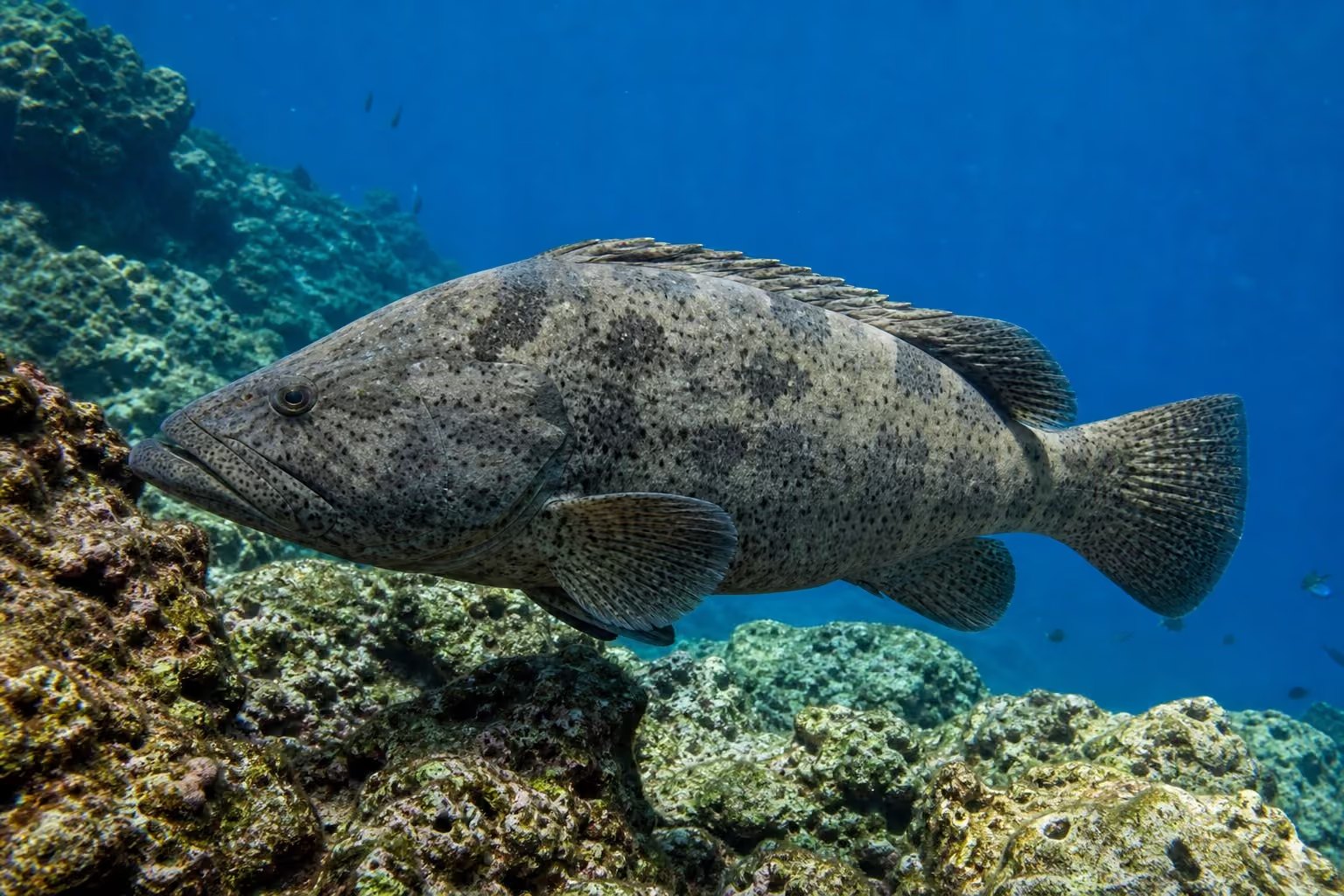
Giant grouper

Details

Giant grouper

Epinephelus lanceolatus

Size
1.5–2.7 m · 100–400 kg
Diet
Carnivore
Activity
Cathemeral
Sociality
Loose group
Lifespan
5-20 years

The giant grouper is a massive reef fish of the Indian and Pacific oceans. Active across day and night, it anchors its life around caves, ledges, and coral structure.
Range

Habitat range map
Native range Occasional / Transient
Pacific OceanPacific OceanPacific OceanIndian Ocean

Map: Ecoregions 2017 © RESOLVE (CC BY 4.0) · Natural Earth (PD)

Details

Habitat

It uses coral reefs, rocky reefs, lagoons, and deeper coastal slopes. Large adults often settle near caves or heavy reef cover.

Appearance

Length is about 150-270 cm and weight about 100-400 kg. A very thick body, huge mouth, and brown to gray mottling give adults a commanding presence.

Behavior

It usually lives alone or loosely spaced near other reef fish, waiting close to cover. Within its range, a large adult is a dominant reef predator.

Feeding

It is carnivorous, swallowing fish, crustaceans, and cephalopods. The broad mouth expands quickly, drawing prey in with a powerful suction strike.

Reproduction

Adults may gather at reef sites to spawn seasonally. Eggs and larvae drift in the sea, while juveniles use shallower reef habitat.

Notes

Its status is listed as Vulnerable. Slow-growing, large reef fishes are sensitive to heavy harvest, so protecting mature adults is especially important.