022 Featured Specimen
Clownfish

Details

Clownfish

Amphiprion ocellaris

Size
8–11 cm
Diet
Omnivore
Activity
Diurnal
Sociality
Herd
Lifespan
6–10 years

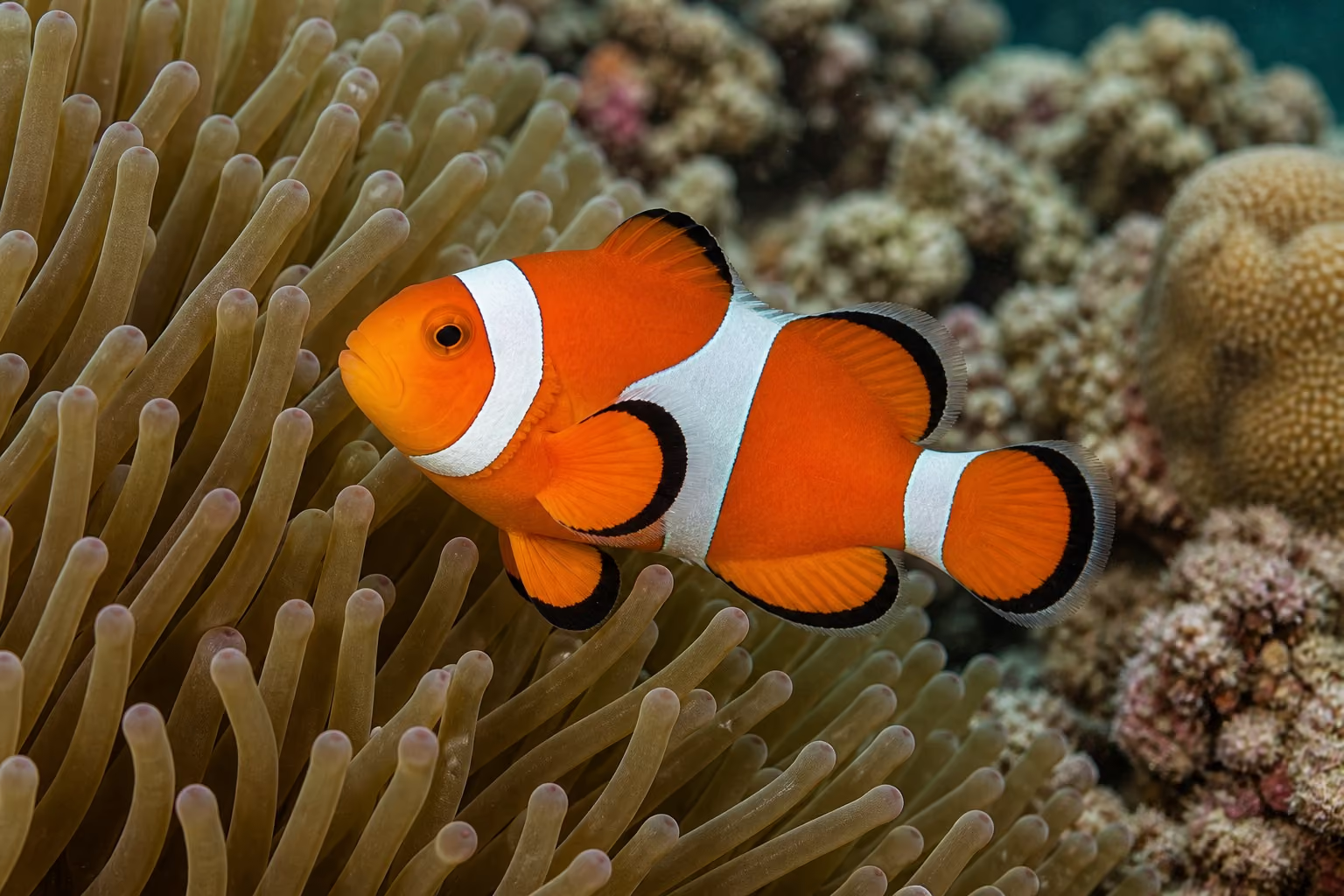
A small coral-reef fish, orange with three black-edged white bands, that lives nestled among the stinging tentacles of sea anemones. A protective mucus coat lets it shelter unharmed in a host that would sting other fish, forming an inseparable partnership. It is the species made famous by the film Finding Nemo.
Range

Habitat range map
Native range Occasional / Transient
Pacific OceanPacific OceanPacific OceanIndian Ocean

Map: Ecoregions 2017 © RESOLVE (CC BY 4.0) · Natural Earth (PD)

Details

Habitat

It ranges across the coral reefs of the eastern Indian Ocean and western Pacific, from Southeast Asia and northern Australia to southern Japan. It keeps to outer reef slopes and sheltered lagoons down to about 15 metres, never straying far from its host anemone.

Appearance

A small fish of about 8 to 11 cm, laterally compressed and oval in shape. The bright orange body carries three white bands outlined in black, and each fin is edged with a fine black line. It has 11 dorsal-fin spines, distinguishing it from the very similar percula clownfish, which has 10.

Behavior

Diurnal and strongly territorial around its host anemone, it lives in small groups built on a strict hierarchy: a single large dominant female, a dominant male, and several non-breeding subordinates. Higher-ranked fish suppress the growth of those below them.

Feeding

Omnivorous, it feeds chiefly on zooplankton, copepods, and algae, and also takes scraps left by its host anemone. It forages close to the tentacles, darting back into their protection at any sign of danger.

Reproduction

It is a protandrous hermaphrodite: the largest fish in a group becomes the female, and if she dies the dominant male changes sex to replace her. The pair spawns on rock near the anemone, where the male mainly tends the clutch, fanning healthy eggs and removing dead ones. The eggs hatch in about 6 to 8 days.

Notes

Listed as Least Concern by the IUCN, it is nonetheless a prized aquarium fish, with certain colour forms heavily sought in trade. A growing threat is the bleaching and loss of host anemones as sea temperatures rise. Because it breeds readily in captivity, it is widely reared commercially and used in research.