411 Featured Specimen
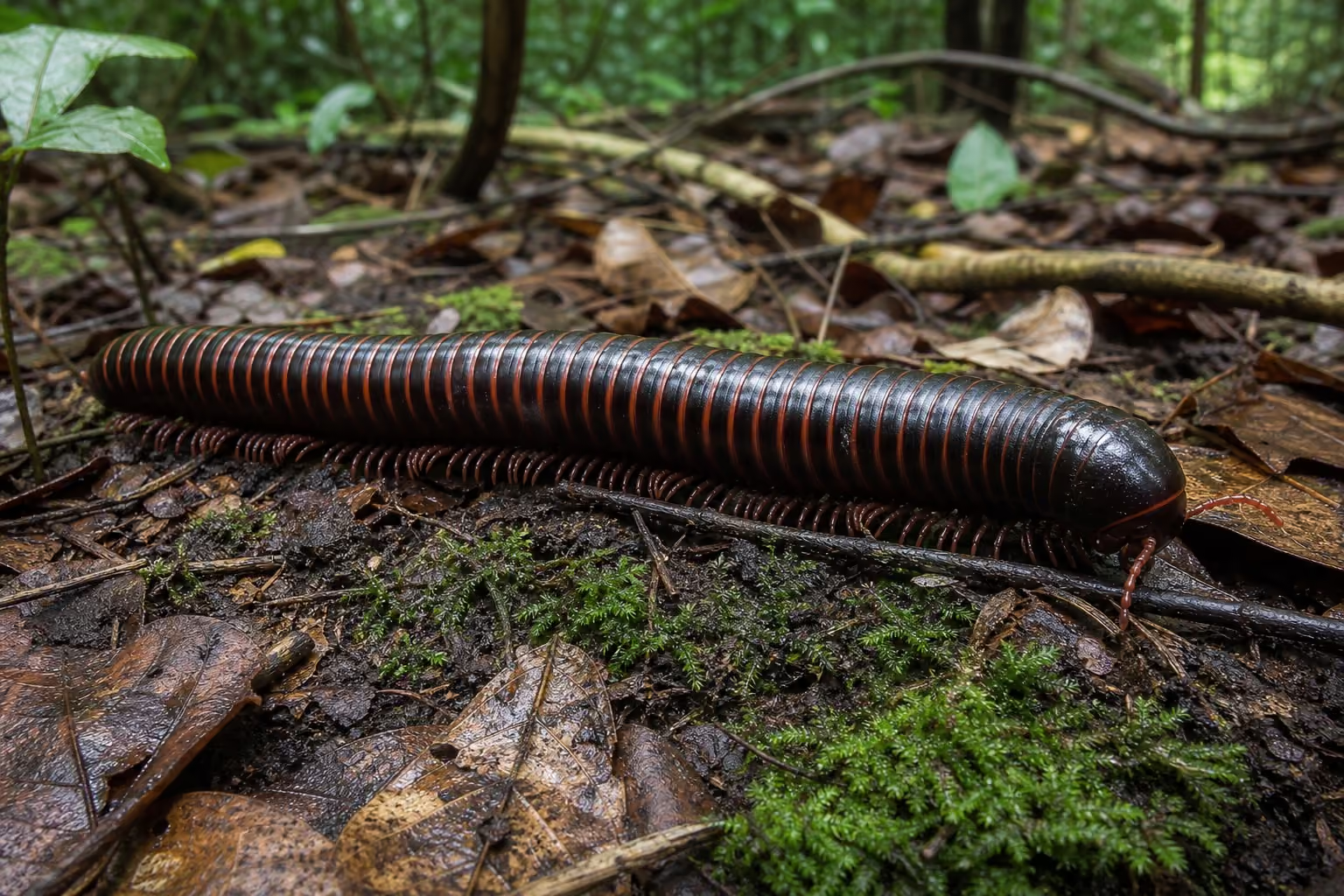
Giant African millipede

Details

Giant African millipede

Archispirostreptus gigas

Size
20–38 cm · 50–130 g
Diet
Detritivore
Activity
Nocturnal
Sociality
Solitary
Lifespan
5–7 years

The giant African millipede is a large forest detritivore that recycles fallen plant material. It moves slowly and defends itself by coiling and releasing irritating chemicals.
Range

Habitat range map
Native range Occasional / Transient
AfrotropicalAfrotropicalAfrotropicalAfrotropical

Map: Ecoregions 2017 © RESOLVE (CC BY 4.0) · Natural Earth (PD)

Details

Habitat

It inhabits humid Afrotropical forests. Leaf litter, rotting wood, and rich humus on the forest floor provide food and shelter, while daytime cover is found under logs or soil.

Appearance

Length 20-38 cm; weight 50-130 g. The dark cylindrical body is divided into many ringlike segments, each bearing rows of short legs. A thick exoskeleton helps protect it from drying and predators.

Behavior

Nocturnal and mainly solitary, it spends daylight hidden. When disturbed it coils tightly with legs tucked inside and may secrete a strong-smelling defensive fluid.

Feeding

A detritivore, it eats fallen leaves, decaying wood, and soft fruit remains. By shredding plant matter it helps return nutrients to the forest soil.

Reproduction

After mating, females lay eggs in the soil. Young hatch with fewer segments and gain more body rings and legs through successive molts.

Notes

It is listed as Least Concern. As a conspicuous decomposer it is also collected for the pet trade, so local pressure can vary.