568 Featured Specimen
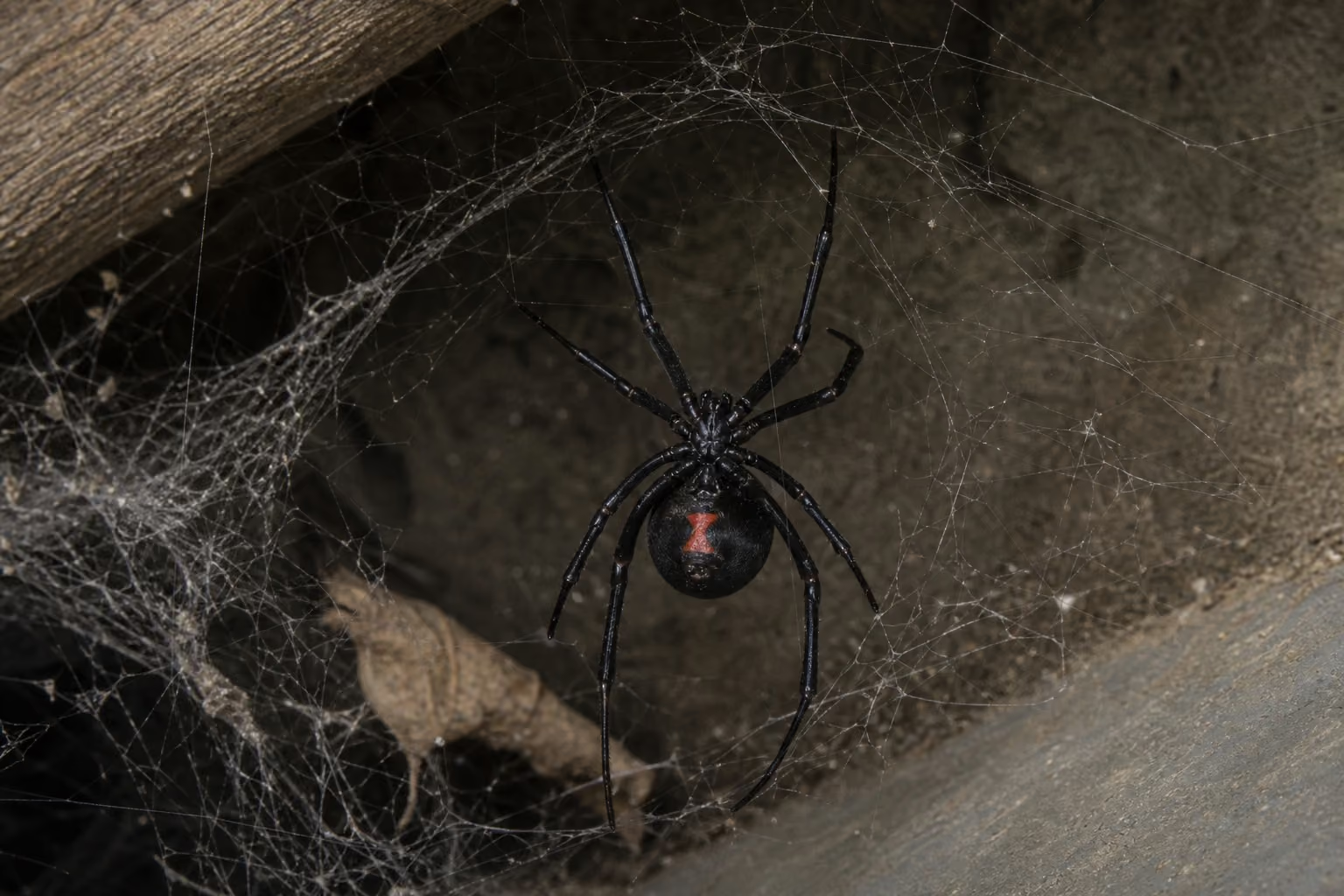
Black widow spider

Details

Black widow spider

Latrodectus mactans

Size
0.8–3.8 cm
Diet
Carnivore
Activity
Nocturnal
Sociality
Solitary
Lifespan

The black widow spider is a glossy black cobweb spider of southern North America. Females are known for the red hourglass mark and potent venom, though they usually stay hidden.
Range

Habitat range map
Native range Occasional / Transient
NearcticNearcticNearcticNearcticNearcticNearcticNearcticNearcticNearcticNearcticNearcticNearcticNearcticNearcticNearcticNearcticNearcticNearcticNearcticNearcticNearcticNearcticNearcticNearcticNearcticNearcticNearcticNearcticNearcticNearcticNearcticNearcticNearcticNearcticNearcticNearcticNearcticNearcticNearcticNearcticNearctic

Map: Ecoregions 2017 © RESOLVE (CC BY 4.0) · Natural Earth (PD)

Details

Habitat

It occurs from the southern United States into Mexico around grassland, dry edges, sheds, stonework, debris and towns. Webs are built in dark, undisturbed crevices.

Appearance

Females are about 1 cm in body length and over 3 cm across the legs. A shiny black body and red hourglass on the underside are typical, while males are smaller and paler.

Behavior

Nocturnal and solitary, it waits in an irregular three-dimensional web. It usually retreats when disturbed but may bite if pressed or trapped.

Feeding

Small insects and other arthropods are caught in the web. Silk wraps the prey, and venom subdues it before fluids are consumed.

Reproduction

Females make round egg sacs and guard them within the web. Young disperse after hatching and later build solitary webs.

Notes

Bites can cause pain and muscle symptoms, so handling should be avoided. Around buildings, gloves and reducing clutter lower the chance of accidental contact.