534 Featured Specimen
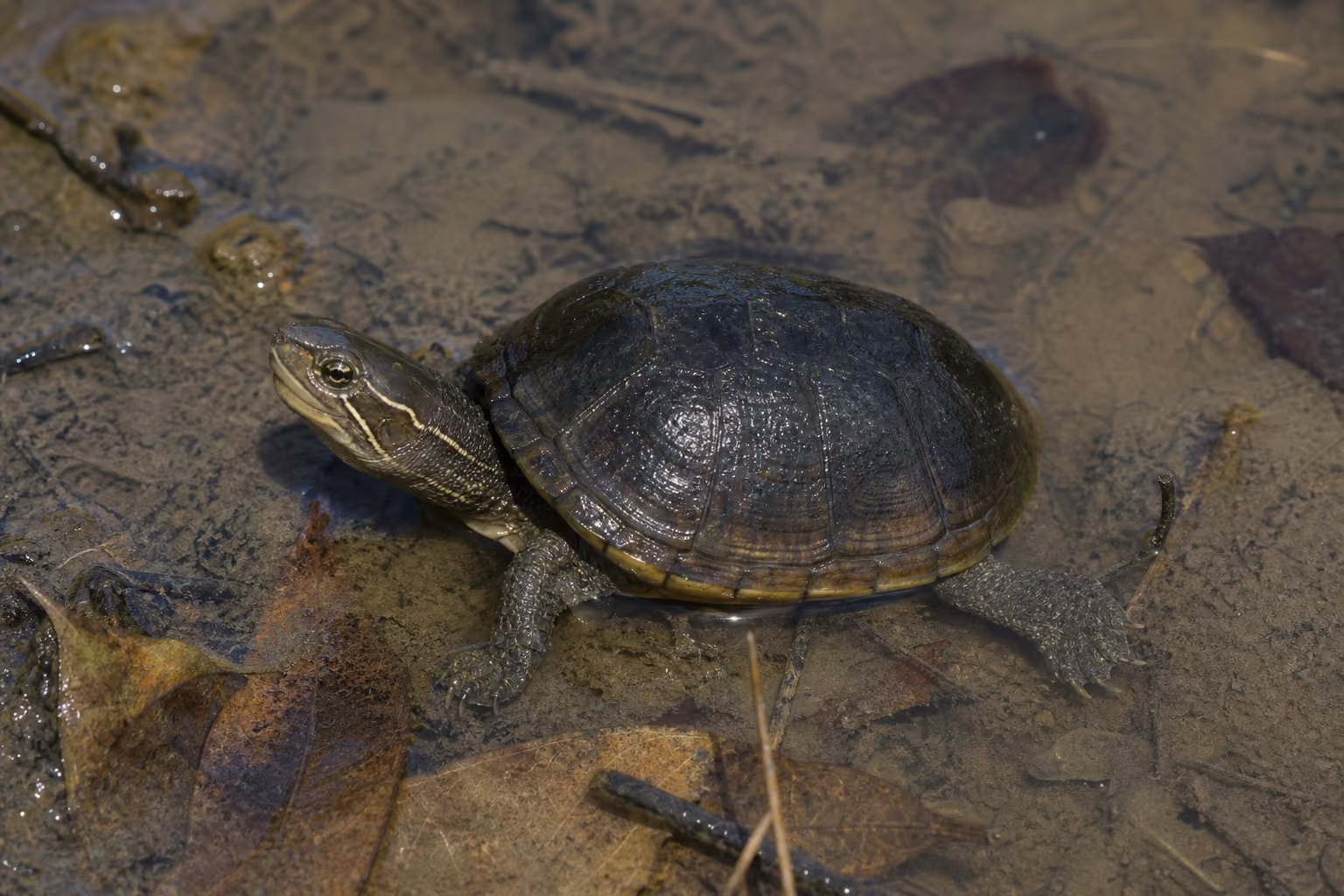
Common musk turtle

Details

Common musk turtle

Sternotherus odoratus

Size
Total length 8–14 cm · 150–600 g
Diet
Omnivore
Activity
Nocturnal
Sociality
Solitary
Lifespan

The common musk turtle is a small aquatic turtle of eastern North America. When threatened, it can release a strong musky odor, earning the name stinkpot.
Range

Habitat range map
Native range Occasional / Transient
NearcticNearcticNearcticNearcticNearcticNearcticNearcticNearcticNearcticNearcticNearcticNearcticNearcticNearcticNearcticNearcticNearcticNearcticNearcticNearcticNearcticNearcticNearcticNearcticNearcticNearcticNearcticNearcticNearcticNearcticNearcticNearcticNearcticNearcticNearcticNearcticNearcticNearcticNearcticNearcticNearctic

Map: Ecoregions 2017 © RESOLVE (CC BY 4.0) · Natural Earth (PD)

Details

Habitat

It ranges from southeastern Canada through much of the eastern United States. Shallow ponds, marshes, slow streams and muddy wetlands with woody debris are typical.

Appearance

Adults are 8-14 cm long and about 150-600 g. A high dark shell, small plastron and fine yellow head stripes are key field marks.

Behavior

It often walks along the bottom at night and may bask on logs or banks. It is not a powerful swimmer, but it can climb surprisingly well.

Feeding

This omnivore eats mollusks, insects, worms, small fish, carrion and aquatic plants. It forages by nosing through mud and debris.

Reproduction

Females nest on land in spring or summer and lay small clutches of eggs. Nests are placed in soil, humus or rotting wood near water.

Notes

The species is common overall, but wetland degradation and road mortality affect northern and local populations. Its small size has made it familiar in captivity.