542 Featured Specimen
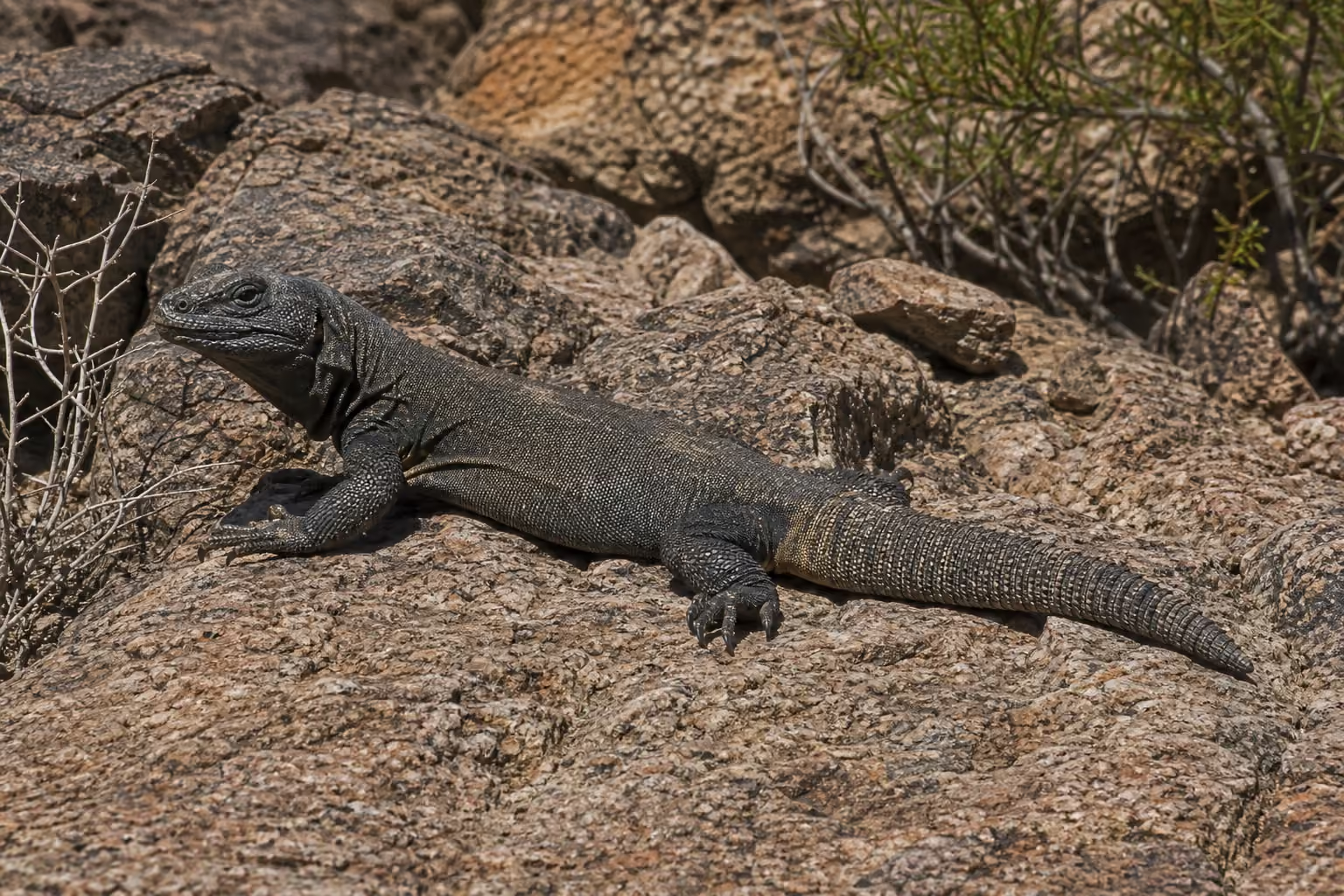
Common chuckwalla

Details

Common chuckwalla

Sauromalus ater

Size
Total length 30–45 cm · 450–900 g
Diet
Herbivore
Activity
Diurnal
Sociality
Solitary
Lifespan

The common chuckwalla is a large iguanid of the Sonoran and Mojave deserts. When threatened, it wedges into rock crevices and inflates its body.
Range

Habitat range map
Native range Occasional / Transient
NearcticNearcticNearcticNearcticNearcticNearcticNearcticNearcticNearcticNearcticNearcticNearcticNearcticNearcticNearcticNearcticNearcticNearcticNearcticNearcticNearcticNearcticNearcticNearcticNearcticNearcticNearcticNearcticNearcticNearcticNearcticNearcticNearcticNearcticNearcticNearcticNearcticNearcticNearcticNearcticNearctic

Map: Ecoregions 2017 © RESOLVE (CC BY 4.0) · Natural Earth (PD)

Details

Habitat

It ranges through the southwestern United States, Baja California and Sonora. Dry rocky hillsides, lava flows and desert slopes are typical habitat.

Appearance

Adults are 30-45 cm long and about 450-900 g. The body is flat with a rounded belly and blunt tail; males often have black heads and paler bodies.

Behavior

Diurnal and heat-loving, it basks on rocks in the morning. Males defend good rocky territories and display with push-up-like movements.

Feeding

It is mainly herbivorous, feeding on leaves, flowers, fruit and cactus. Juveniles and opportunistic adults may take small amounts of insects.

Reproduction

Breeding occurs in spring to early summer, and females lay about 5-16 eggs. Hatchlings emerge in late summer or autumn and shelter among rocks.

Notes

Harmless to people, the chuckwalla depends on intact desert rock habitat. It is stable overall, though collection and local habitat change can affect populations.