656 Featured Specimen
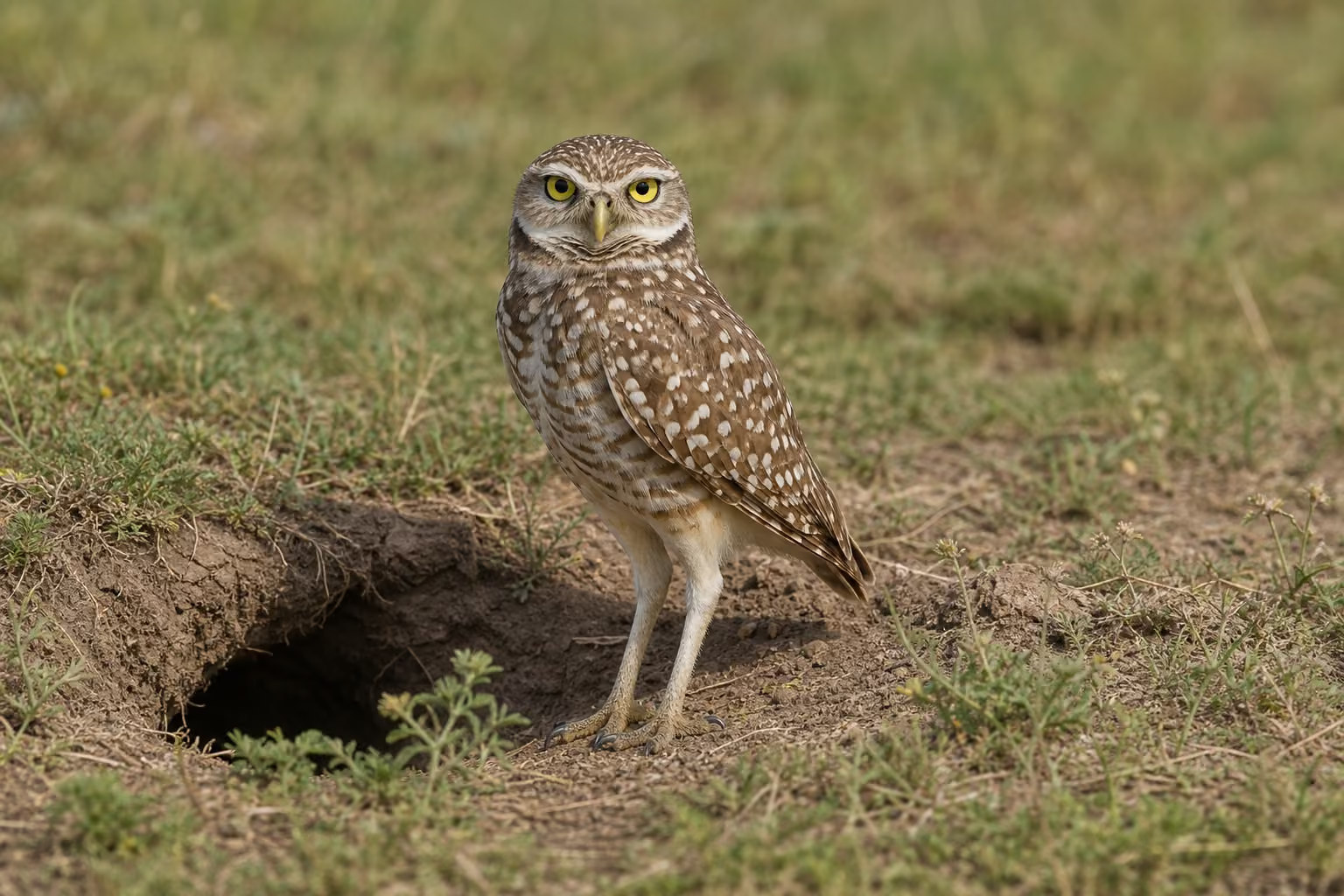
Burrowing owl

Details

Burrowing owl

Athene cunicularia

Size
19–28 cm · 140–240 g
Diet
Carnivore
Activity
Cathemeral
Sociality
Pair
Lifespan

A small ground-dwelling owl of grasslands and deserts, with long legs and a habit of standing by burrow entrances even by day.
Range

Habitat range map
Native range Occasional / Transient
NearcticNearcticNearcticNearcticNearcticNearcticNearcticNearcticNearcticNearcticNearcticNearcticNearcticNearcticNearcticNearcticNearcticNearcticNearcticNearcticNearcticNearcticNearcticNearcticNearcticNearcticNearcticNearcticNearcticNearcticNearcticNearcticNearcticNearcticNearcticNearcticNearcticNearcticNearcticNearcticNearcticNeotropicalNeotropicalNeotropicalNeotropicalNeotropicalNeotropicalNeotropicalNeotropical

Map: Ecoregions 2017 © RESOLVE (CC BY 4.0) · Natural Earth (PD)

Details

Habitat

Ranges from North to South America in grassland, semi-desert, pasture, vacant lots, and airports, often using existing burrows.

Appearance

It is small with a rounded head, yellow eyes, long legs, and brown plumage dotted with white spots.

Behavior

The owl stands at burrow entrances, bobbing its head while watching the surroundings, and retreats underground when threatened.

Feeding

Insects, small mammals, lizards, and small birds are eaten, with hunting by day, dusk, and night.

Reproduction

Old burrows of prairie dogs, ground squirrels, or similar mammals are used for underground nesting, and parents defend the entrance.

Notes

Grassland development and declines of burrowing mammals have reduced some populations, though it can persist in urban open lots.